Plant Overview
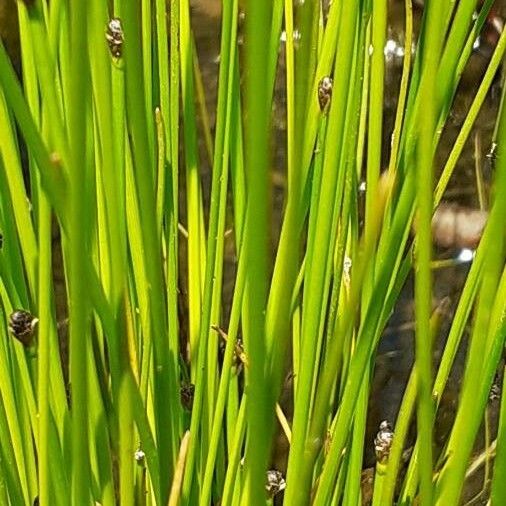
Often called the Ovoid Spike-rush, this delicate wetland dweller looks like a collection of bright green knitting needles topped with tiny, decorative pinecones. Found hugging the muddy edges of ponds and marshes across the Northern Hemisphere, it serves as a silent architect for water filtration and erosion control. It is a favorite for nature lovers looking to add a vertical, minimalist architectural element to backyard water features or bog gardens.
🔍 How to Identify
- 🌿 The Stems: Slender, bright green, and cylindrical. Unlike most plants, the stems are leafless and perform all the photosynthesis.
- 🥚 The Flower Head: A single, egg-shaped (ovoid) brownish spikelet that sits directly at the very tip of the stem.
- 👣 The Base: The bottom of each stem is wrapped in a tight, reddish-brown sheath, though you won't find any traditional flat leaf blades.
🏡 In Your Garden
- 💧 Wetland Specialist: This plant thrives with "wet feet." It is happiest when planted in mud or submerged in a few inches of standing water, making it perfect for pond margins.
- 🌱 Non-Aggressive Growth: While many sedges can take over a garden, the Ovoid Spike-rush is an annual or short-lived perennial that spreads primarily by seed, making it much easier to manage than its "bully" cousins.
- ☀️ Sun Seeker: To keep those stems upright and vibrant, it requires a position in full sun; in too much shade, the stems tend to go floppy and lose their architectural "pop."
⚠️ Safety & Toxicity
- ✅ Safe Status: Non-toxic and generally recognized as safe for residential environments.
- 🐾 Pet Friendly: There are no known toxic effects for cats, dogs, or horses. It is also safe for use in ponds containing koi or other ornamental fish.
✨ Fun Fact
The genus name Eleocharis is derived from the Greek words elos (marsh) and charis (grace), beautifully translating to "the grace of the marsh."

Detailed Care Instructions
To grow Eleocharis Ovata (also known as Hair Grass), you can follow these steps:
- Lighting: Provide moderate to high lighting for the plant. Intense light helps the plant grow compactly, while low light can result in taller growth and less vibrant color.
- Substrate: Use a nutrient-rich substrate for better growth. You can either use a specialized planted tank substrate or add nutrients to your existing substrate. A fine-grained substrate is preferable to anchor the plant effectively.
- CO2 Injection: Consider injecting CO2 into your aquarium to promote lush growth. CO2 helps plants photosynthesize more efficiently and encourages faster growth.
- Water quality: Provide clean and stable water conditions. Ensure a temperature range of 68-82°F (20-28°C) and a pH level around 6-7.
- Planting: Split the Eleocharis Ovata plant into small sections and plant them about an inch apart in a grid pattern. Press the roots gently into the substrate without burying the entire plant.
- Maintenance: Trim the plant regularly to maintain its desired height and prevent it from overshadowing other plants. Remove any dead or decaying plant material promptly to prevent algae growth.
- Fertilization: Use a liquid or root fertilizer to supplement the nutrients in the substrate. Follow the instructions provided with the fertilizer and avoid over-fertilizing, as it can harm the plant.
- Water changes: Perform regular water changes to maintain water quality and remove excess nutrients. This will prevent algae growth and aid in the healthy growth of the plant.
- Avoid overcrowding: Make sure the Eleocharis Ovata has enough space to spread and grow without being obstructed by other plants or decorations. Proper spacing allows the plant to receive adequate light and nutrients.
- Patience: Eleocharis Ovata can take some time to acclimate and spread, so be patient and allow the plant to establish itself in your aquarium.
By following these guidelines, you can create optimal conditions for growing Eleocharis Ovata and enjoy lush, green carpets of hair grass in your aquarium.

Place in a bright room that is sun drenched almost all day. Or directly in a south-facing window.

To water this plant, you should first make sure that the soil is slightly damp but never waterlogged. You can achieve this by watering the plant thoroughly when the top inch of soil feels dry to the touch. It is important to avoid watering the leaves or getting water on the plant's foliage, as this can lead to leaf spotting or fungal growth. Instead, water at the base of the plant and allow excess water to drain away. It is also important to make sure the plant has good drainage and is not sitting in standing water, as this can lead to root rot. Depending on the temperature, humidity, and season, you may need to adjust your watering frequency to ensure the plant stays healthy and hydrated.
To fertilize this aquatic plant, you should use a liquid fertilizer that is specially formulated for aquarium plants. The fertilizer should contain a balance of macronutrients, such as nitrogen, phosphate, and potassium, as well as micronutrients like iron and manganese. It's important to follow the manufacturer's instructions for dosage and frequency of application, as too much fertilizer can harm the plant and create imbalances in the aquarium ecosystem. Additionally, you should regularly test the water parameters to ensure that the plant is receiving the right nutrients and that the water chemistry is within the appropriate range for the species.
The ideal soil mixture for Eleocharis Ovata plant should be a combination of nutrient-rich soil, sand, and clay. A good ratio to follow is 2:1:1 of soil:sand:clay. This mixture should be well-draining and provide good aeration to the roots. The soil should be slightly acidic with a pH range of 6.0-6.5 and have a high organic matter content. It is important to avoid using soil that is too dense or compact as this can hinder the growth of the plant. A layer of gravel or small stones can be added to the bottom of the pot to improve drainage.
There are a few ways to propagate this plant.
- Division - Carefully remove the plant from its pot and separate the root clump into multiple sections. Each section should have some roots and stems. Plant each divided section into its own pot with fresh soil and water thoroughly.
- Cuttings - Using a sharp, clean pair of scissors or pruning shears, cut a stem from the mother plant that is at least a few inches long. Trim off any leaves on the bottom half of the stem and insert it into a container of water or moist soil. Keep in a warm, bright location and change the water regularly. Roots should start to grow in a couple of weeks. Once the roots are a few inches long, plant the cutting in fresh soil.
- Runners - Eleocharis Ovata plants grow runners (long, thin stems with small plantlets) that can be replanted. Simply detach the plantlet from the runner and plant it in fresh soil. Water thoroughly and keep in a warm, bright location.
No matter which method you choose, it is important to water the newly propagated plants regularly and keep them in a warm, humid environment until they become established.








