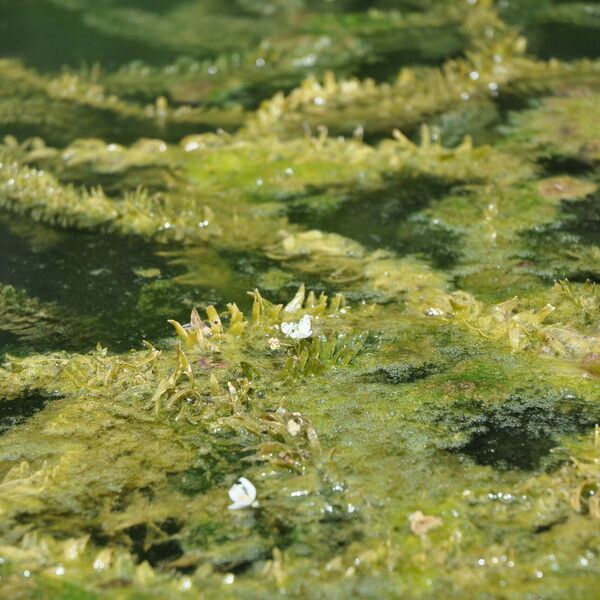
Plant Overview
Often known as "Brazilian Waterweed" or "Water Thyme," Elodea densa is the ultimate underwater multitasker. This South American native is a staple in home aquariums and school science labs worldwide, beloved for its vibrant green plumes and its almost supernatural ability to turn a murky tank into a lush, oxygen-rich environment. While it looks like a delicate fern, it is a hardy survivor that creates dense "forests" for aquatic life.
🔍 How to Identify
- 🌿 Leaf Structure: Features small, bright green, lance-shaped leaves that grow in dense "whorls" (circles) around the stem, usually in groups of four to eight.
- 🌊 Growth Habit: This is a submerged aquatic plant; its stems are long and brittle, branching out to create thick, brush-like mats that provide excellent cover for fry and shrimp.
- 🌸 Seasonal Blooms: If the plant reaches the surface, it produces tiny, three-petaled white flowers that look like they are floating on delicate, invisible threads.
🏡 In Your Garden (or Aquarium)
- ☀️ The Nutrient Sponge: It is a heavy feeder that sucks up nitrates and phosphates directly from the water column. This "starves" nuisance algae, making it one of the best natural tools for keeping water crystal clear.
- ⚓ Planting Flexibility: Because it doesn't rely on a complex root system, you don't need to bury it in soil. It can be weighed down at the bottom or left to float freely, absorbing nutrients through its leaves.
⚠️ Safety & Toxicity
- 🐾 Pet Safety: It is completely non-toxic to cats, dogs, and humans. In fact, many goldfish and pond snails consider it a delicious and healthy snack.
- 🚫 Environmental Warning: Because it can regenerate an entire new plant from just a tiny broken fragment, it is a major invasive threat. Never discard this plant in local ponds, rivers, or storm drains; always compost it or dispose of it in the trash.
✨ Fun Fact
🧪 Visible Breath: Elodea densa is a superstar in biology classrooms because it is one of the few plants where you can easily see photosynthesis in action. Under bright light, you can watch "pearling"—the release of visible bubbles of pure oxygen from the leaves.

Detailed Care Instructions
Elodea Densa, also known as Brazilian waterweed, is a popular aquatic plant used in aquariums and ponds. Here are some tips on how to grow it successfully:
- Light: Elodea Densa requires moderate to high light levels to thrive. Make sure to place the plant where it will receive plenty of natural or artificial light.
- Water conditions: This plant prefers clean, freshwater with a neutral pH level. Regular water changes and water testing will help maintain optimal conditions for growth.
- Nutrients: Elodea Densa is a fast-growing plant that requires nutrient-rich water to support its growth. You can add liquid or solid aquarium plant fertilizers to provide essential nutrients.
- Temperature: The ideal temperature range for Elodea Densa is between 60-80 degrees Fahrenheit. Keep the water temperature stable to prevent stress on the plant.
- Propagation: Elodea Densa can be easily propagated by cutting off healthy stems and replanting them in the substrate. Make sure to trim the plant regularly to prevent overcrowding and promote new growth.
- Pruning: Regular pruning is essential to prevent the plant from becoming too dense and blocking light to other aquatic plants. Trim back overgrown stems to maintain a healthy and vibrant appearance.
By following these care tips, you can successfully grow and maintain Elodea Densa in your aquarium or pond.
Elodea Densa plants should be watered regularly to maintain proper hydration levels. When watering, it is important to ensure that the soil is evenly moist but not waterlogged. The best way to water an Elodea Densa plant is to water the soil directly at the base of the plant, allowing the water to soak in slowly and thoroughly. Additionally, it is important to avoid getting the leaves wet, as this can lead to issues such as rot or fungal growth. It is recommended to water Elodea Densa plants in the morning or evening, to prevent evaporation and reduce the risk of excessive moisture lingering on the leaves. Regular monitoring of the soil moisture levels is also recommended to ensure that the plant is receiving the proper amount of water.
To fertilize Elodea Densa, use a liquid aquarium plant fertilizer according to the manufacturer's instructions. Be sure to dose the fertilizer regularly, typically once a week or as directed. It is important not to over-fertilize as this can harm the plant. Monitor the plant's growth and adjust fertilization as needed. Additionally, consider supplementing with root tabs for additional nutrient uptake.
The ideal type of soil for Elodea densa plants is nutrient-rich and well-draining. It should have a slightly acidic to neutral pH level for optimal growth. A mix of organic matter such as peat moss or compost can provide the necessary nutrients for the plant to thrive. It is also important that the soil is free of any contaminants or pollutants that can harm the plant. Additionally, a substrate with a fine texture can help the roots of Elodea densa anchor securely and absorb nutrients efficiently. Overall, a well-balanced and fertile soil mixture is essential for the successful cultivation of Elodea densa plants.
Elodea Densa plants can be propagated through a process called cuttings. To propagate these plants, you will need to carefully cut a healthy stem from the mother plant using sharp, clean scissors or pruning shears. The stem should ideally be at least 4-6 inches in length.
Once you have obtained the cutting, remove any leaves from the lower part of the stem to expose a bare section. This section will be submerged in water to encourage root growth. Place the cutting in a container filled with clean, room temperature water, making sure that the bare section is fully submerged.
Place the container in a location with bright, indirect sunlight and change the water every few days to prevent stagnation and rot. Over the course of a few weeks, you should start to see roots develop from the bare section of the stem. Once the roots are well-established, you can transplant the cutting into a pot with well-draining soil to continue its growth.
By following these steps, you can successfully propagate Elodea Densa plants and expand your collection without having to rely on purchasing new plants.








