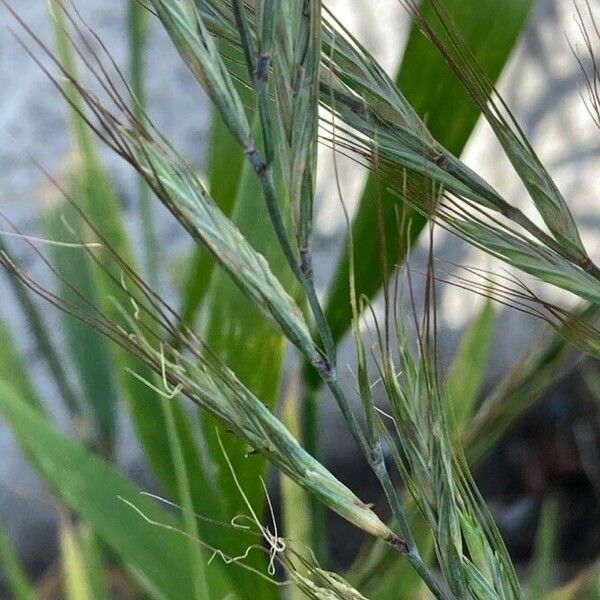
Plant Overview
Known as Japanese Wheatgrass, Elymus tsukushiensis is a graceful, clump-forming perennial that paints East Asian landscapes with its slender, nodding seed heads. It is a rugged cousin to modern wheat, often found dancing along roadsides or stabilizing mountain slopes in Japan, Korea, and China. While it possesses a wild, "weedy" charm, it is increasingly appreciated by minimalist gardeners for its architectural movement and blue-toned foliage.
🔍 How to Identify
- 🌿 Slender Foliage: The leaves are typically narrow, flat, and a soft grayish-green or bluish-green, growing in dense, fountain-like tufts that sway easily in the breeze.
- 🌾 Nodding Spikes: Its most distinct feature is the long, elegant flower spikes (inflorescences) that bow slightly at the tips, giving the plant a relaxed, weeping silhouette.
- 📏 Growth Habit: This grass grows in neat clumps rather than spreading aggressively by runners, usually reaching about 2 to 3 feet in height when in full bloom.
🏡 In Your Garden
- 🌱 Low Maintenance Roots: This plant is incredibly resilient because of its deep root system. It thrives in poor soils and survives periods of drought that would wither more pampered garden grasses, making it perfect for "neglected" corners.
- 🏔️ Erosion Expert: In its native habitat, it is a natural hero of soil conservation. It is often used to hold earth together on steep embankments or disturbed ground where other plants struggle to take hold.
⚠️ Safety & Toxicity
- ✅ Pet Friendly: Elymus tsukushiensis is generally considered non-toxic to humans, cats, and dogs, making it a safe textural addition to a family backyard.
- 🌾 Pollen Sensitivity: Like many wild grasses, it produces fine wind-borne pollen during its peak flowering season, which may cause minor sniffles or "hay fever" for those with seasonal allergies.
✨ Fun Fact
- 🧬 A Genetic Treasure: Because it is a distant wild relative of modern bread wheat, scientists study this specific grass to find "hidden" genes for disease resistance and salt tolerance to help protect our global food supply!

Detailed Care Instructions

Place in a bright room that is sun drenched almost all day. Or directly in a south-facing window.

Some plants require more regular watering than others, which should be done every few days. It's critical to maintain the soil moist all of the time. The water requirements of the same plant placed in pots with varying sizes will differ. Because the water in the smaller pot evaporates faster than the water in the larger pot, it will require more watering. Regardless of pot size, the surface should constantly be maintained moist.








