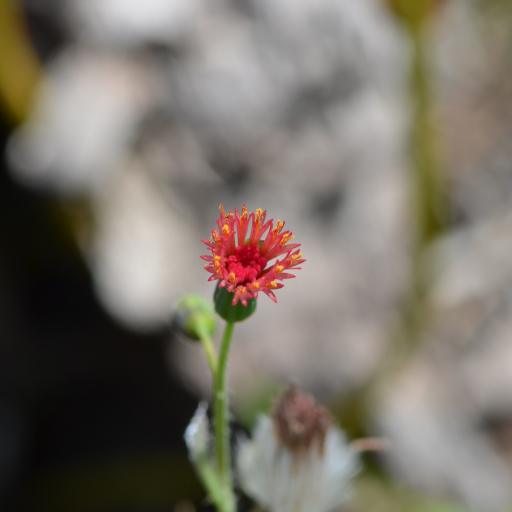
Plant Overview
Often called the Cupid’s Shaving Brush or Florida Tassel-flower, Emilia fosbergii is a charming, slender annual that looks like it belongs in a miniature fairy garden. Though many gardeners treat it as a "pretty weed," its fiery red tassels provide a splash of wild color to sunny landscapes. It is a world-traveler, having migrated from its tropical origins to become a common sight in Florida, the Caribbean, and many Pacific islands.
🔍 How to Identify
- 🖌️ The "Shaving Brush": The flowers are small, cylindrical heads (capitula) that look like tiny, soft brushes. They lack traditional ray petals, consisting instead of a cluster of vibrant red or deep pink tubular florets.
- 🍃 Variable Leaves: The lower leaves are usually broader and have "wings" on the stems, while the upper leaves are narrow and "clasp" the main stem directly, wrapping slightly around it.
- 🌬️ Dandelion-like Seeds: After the red brush fades, it transforms into a white, fluffy puffball. These silky hairs (pappus) allow the seeds to catch the wind and travel great distances.
🏡 In Your Garden
- 🌞 The Sun Seeker: This plant is a "pioneer species," meaning it is often the first to pop up in disturbed soil or empty garden beds. It craves full sun and will become leggy and pale if tucked away in the shade.
- 🌱 The Gentle Invader: While it isn't usually considered aggressively invasive in a harmful sense, it is a prolific self-seeder. If you don't want a lawn full of "shaving brushes" next year, it is best to deadhead the flowers before they turn into fluffy white seed heads.
⚠️ Safety & Toxicity
- 🐾 Mildly Toxic: Like many members of the sunflower family (Asteraceae), Emilia fosbergii contains pyrrolizidine alkaloids. These compounds can be toxic to the liver if ingested in large quantities.
- 👶 Keep Out of Reach: While it isn't known to cause skin irritation upon touching, it should be kept away from curious pets and toddlers who might be tempted to nibble on the bright red flowers.
✨ Fun Fact
The genus name Emilia is shrouded in mystery—botanists aren't entirely sure who it was named after! However, the plant is a favorite of the Little Metalmark butterfly, which frequently visits the red tassels for a nectar snack.

Detailed Care Instructions
To grow Emilia fosbergii, also known as Tassel Flower, follow these steps:
- Choose a suitable location: Select an area with full sunlight to partial shade. The plant can tolerate different soil types but prefers well-draining soil.
- Prepare the soil: Dig a hole that is slightly larger than the plant's root ball. Mix organic matter, such as compost, into the soil to improve fertility and drainage.
- Planting: Place the Emilia fosbergii plant into the hole, making sure the top of the root ball is level with the soil surface. Backfill the hole with soil, gently firming it around the base of the plant.
- Watering: Water the plant immediately after planting to moisten the soil. Emilia fosbergii requires consistent watering, especially during dry spells. Water deeply, allowing the soil to dry slightly between waterings.
- Mulching: Apply a layer of mulch around the base of the plant to retain moisture, suppress weeds, and regulate soil temperature. Use organic mulch, such as wood chips or straw, and avoid piling it against the stem.
- Fertilization: Feed Emilia fosbergii with a balanced, slow-release fertilizer during the growing season. Follow the manufacturer's instructions for dosage and application frequency.
- Pruning: Pinch back the tips of the plant to promote branching and more compact growth. This can help prevent legginess and encourage more abundant flowering.
- Propagation: Emilia fosbergii can be propagated through seeds or stem cuttings. Collect seeds from the flowers and sow them in a well-prepared seed-starting mix or directly in the garden bed. For stem cuttings, take 4-6 inch cuttings from healthy plants and place them in a moist, well-draining rooting medium. Keep the cuttings in a warm, bright location until roots develop.
- Pests and diseases: Monitor the plant regularly for signs of pests, such as aphids or spider mites, and treat them promptly with appropriate insecticides or natural remedies. Emilia fosbergii is generally resistant to diseases but can be susceptible to root rot if overwatered.
- Enjoy the flowers: Emilia fosbergii produces attractive tassel-like flowers in various colors, including orange, red, and yellow. They bloom from summer to fall, adding vibrant colors to your garden. Enjoy their beauty, and consider cutting some flowers for indoor arrangements.
By following these steps, you can grow and enjoy Emilia fosbergii in your garden.

Place in a bright room that is sun drenched almost all day. Or directly in a south-facing window.

1. Start by observing the plant closely and checking its soil. Emilia Fosbergii prefers well-draining and slightly moist soil.
2. When watering, use room temperature or lukewarm water. This helps prevent shock to the plant.
3. Always water directly at the base of the plant. Avoid watering the foliage as this can lead to fungal growth and other issues.
4. Emilia Fosbergii prefers frequent and light watering rather than infrequent and heavy watering. Aim to water every few days, depending on the current climate and temperature.
5. If you're unsure whether to water or not, simply stick your finger about an inch into the soil. If it feels dry, it's time to water.
6. To prevent waterlogging and ensure good drainage, consider adding a layer of rocks or pebbles at the bottom of the pot.
7. During winter or cooler months, slow down on the watering frequency to prevent the roots from rotting.
8. Lastly, always be mindful of the plant's specific needs based on its growing conditions. Adjust watering accordingly, considering factors like humidity levels, sunlight exposure, and temperature.
Emilia Fosbergii plants prefer an evenly moist, well-draining soil. Fertilize every two weeks during the active growing season with a balanced liquid fertilizer. During the winter months, fertilize once a month. Avoid fertilizing when the soil is dry, as this can burn the plant's roots.
Emilia Fosbergii plant prefers well-draining soil that is loose and fertile with a pH range of 5.5 to 6.5. The soil should be enriched with organic matter such as compost or manure. It is best to avoid heavy soils that retain water, as this can lead to root rot and other plant diseases. A mix of sandy loam and peat moss can also be used, as long as the soil is not too compacted. It is important to ensure adequate water drainage and to avoid waterlogging the soil as this can be detrimental to the plant's health. Overall, a well-draining, loose, and fertile soil with good water drainage and adequate nutrient content is ideal for Emilia Fosbergii plant.
To propagate this plant, a healthy stem cutting should be taken during its growing season. The cutting should be approximately 4-6 inches in length and should have multiple leaves. Any lower leaves should be removed from the stem to prevent rotting. The cutting should be planted in fertile, well-draining soil with good moisture retention and should be kept in a warm, bright location out of direct sunlight. The soil should be kept moist but not overly wet. Roots should begin to form after 2-3 weeks and the new plant can be transplanted into a larger pot or outdoor location once it has established itself.








