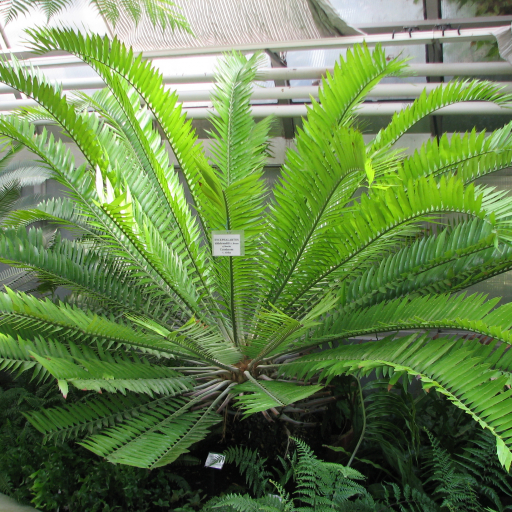
Plant Overview
Known as Hildebrandt's Cycad, this architectural marvel is a "living fossil" that has remained virtually unchanged since the era of the dinosaurs. Native to the coastal forests of East Africa, it brings a prehistoric, tropical drama to any landscape. While it looks like a palm tree at first glance, it is actually a gymnosperm, more closely related to pine trees than to coconuts.
🔍 How to Identify
- 🌿 The Fronds: Features long, arching, glossy green leaves that can reach up to 3 meters (9 feet) in length. The leaflets are stiff and end in sharp, prickly points—a natural defense mechanism.
- 🪵 The Trunk: It develops a stout, woody trunk (caudex) that is covered in the scars of old leaf bases, giving it a rugged, textured appearance.
- 🍍 The Cones: Instead of flowers, it produces massive, prehistoric-looking cones. Male cones are slender and cylindrical, while female cones are much larger, egg-shaped, and usually a vibrant, waxy yellow or dull orange.
🏡 In Your Garden
- 🏜️ Drainage is Key: Like most cycads, it is highly susceptible to root rot. It demands sandy, well-draining soil and "hates" sitting in standing water. Think of it as a slow-motion desert survivor that enjoys a bit of humidity.
- ⏳ Patience Required: This plant is the definition of "slow and steady." It may only produce one new "flush" of leaves per year, so it is often purchased as a mature specimen for an immediate structural focal point in xeriscapes or tropical gardens.
⚠️ Safety & Toxicity
- 🚫 Highly Toxic: Every part of this plant—the trunk, the leaves, and especially the bright seeds—contains potent neurotoxins and carcinogenic compounds (cycasin).
- 🐾 Pet & Child Hazard: The seeds are particularly dangerous because they can look like fruit to children or toys to dogs. Ingestion can lead to permanent liver failure or death in pets. Wear gloves when pruning to avoid the sharp leaf tips.
✨ Fun Fact
Cycads like Encephalartos hildebrandtii don't rely on the wind for pollination as much as previously thought; they have a secret partnership with specific species of tiny weevils that travel between the male and female cones!

Detailed Care Instructions








