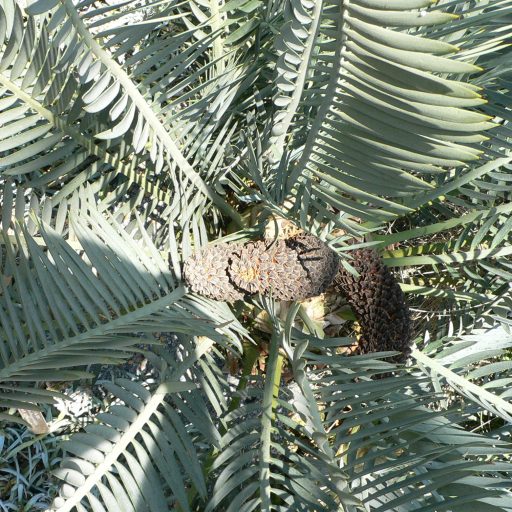
Plant Overview
Often called the Karoo Cycad, Encephalartos lehmannii is a living fossil that looks like it stepped straight out of a prehistoric landscape. Known for its striking, metallic blue foliage, this South African native is a prized "architectural" plant that has survived for millions of years. It brings an air of ancient mystery and rugged elegance to any drought-tolerant garden or conservatory.
🔍 How to Identify
- 🛡️ The Foliage: The most distinctive feature is the stiff, sword-like leaves coated in a thick, waxy powder that gives them a stunning silvery-blue or glaucous tint.
- 🗡️ The Leaflets: Each leaf is composed of narrow, sharply pointed leaflets that lack teeth along the edges but end in a formidable prickly tip.
- 🪵 The Trunk: As it matures, it develops a stout, thick trunk that can reach up to 6 feet in height, though it grows at a "geological" pace, often taking decades to reach its full potential.
- 🏮 The Cones: Being a cycad, it doesn't flower; instead, it produces large, singular cones. These are typically a contrasting dark red or brownish-green color.
🏡 In Your Garden
- ☀️ The Blue Hue: To maintain its famous blue color, this plant requires full, intense sunlight. In deep shade, the new leaves will often emerge a duller green as the protective wax layer fails to develop.
- 🏜️ Drainage is Vital: Coming from the rocky slopes of the Eastern Cape, it hates "wet feet." It is highly susceptible to root rot, so it requires exceptionally gritty, well-draining soil—think cactus mix rather than standard potting soil.
- ⏳ Patience Required: This is not a plant for those seeking instant gratification. It may only produce one new "flush" of leaves per year (or even every few years), making every new leaf a celebratory event.
⚠️ Safety & Toxicity
- 🚫 Toxic Status: All parts of the Karoo Cycad are highly toxic if ingested.
- 🐾 Pets & Kids: The seeds, in particular, contain high concentrations of cycasin, which can cause severe liver failure in dogs, cats, and humans.
- ⚔️ Physical Hazard: The tips of the leaves are very sharp and rigid; they can easily puncture skin or eyes, so it should be planted away from walkways or play areas.
✨ Fun Fact
The intense blue color isn't just for show—it is a sophisticated survival mechanism. The silver-blue wax acts like a natural sunscreen, reflecting the harsh South African sun and sealing in moisture to help the plant survive extreme droughts.

Detailed Care Instructions
| Humidity | Dry |
| Lighting | Full Sun |
| Difficulty | Medium |
| Hardiness Zones | 9 - 10 |
To grow Encephalartos Lehmannii (commonly known as the Lehmann's cycad), follow these steps:
- Acquisition: Obtain a healthy plant from a reputable nursery or specialized cycad collector.
- Potting: Choose a well-draining pot or container that is slightly larger than the current root system. A mix of equal parts peat moss, coarse sand, and perlite can be used as the soil.
- Light: Place the potted cycad in a spot where it receives bright, indirect sunlight. Avoid placing it in direct sunlight, which can scorch the leaves.
- Watering: Water the plant thoroughly but allow the soil to dry out slightly between waterings. Overwatering can lead to root rot, so ensure that the pot has drainage holes.
- Temperature and Humidity: Encephalartos Lehmannii thrives in warm temperatures ranging from 65-85°F (18-29°C). Maintain moderate humidity levels by misting the leaves occasionally or placing a tray with water nearby.
- Fertilization: Apply a slow-release balanced fertilizer formulated for cycads during the growing season (spring and summer). Follow the package instructions for proper dosage.
- Pruning: Remove any dried or damaged fronds as needed to maintain the plant's appearance and promote healthy growth.
- Repotting: Every 2-3 years, transfer the cycad to a slightly larger pot with fresh soil to accommodate its growing root system.
- Pest control: Inspect the plant regularly for common pests such as scale insects or mealybugs. If detected, treat with an appropriate pesticide or a natural alternative.
- Patience: Encephalartos Lehmannii is a slow-growing plant that requires time and patience to reach its full potential. As it grows, it will gradually develop its characteristic thick trunk and crowning of fronds.
Remember that growing cycads can present challenges, and they are protected plants in some regions due to their endangered status in the wild. It is crucial to ensure compliance with local regulations and conservation efforts when obtaining and growing these plants.
Encephalartos Lehmannii is a type of cycad plant that requires regular watering to thrive. When watering this plant, it is important to avoid getting water on the leaves or crown, as this can lead to rot and disease.
To water Encephalartos Lehmannii, first, ensure that the soil is dry to the touch before watering. This plant prefers well-draining soil, so make sure that the pot or planting area allows excess water to drain away.
When watering, use a watering can or hose with a gentle stream to add water to the soil around the base of the plant. Aim to water deeply, until the soil is moist but not waterlogged. Avoid overwatering, as this can cause root rot and other problems for the plant.
During hot summer months, Encephalartos Lehmannii may require more frequent watering to maintain healthy growth. However, be sure to monitor the soil carefully to avoid overwatering.
Overall, Encephalartos Lehmannii requires consistent and careful watering to thrive, but with proper care, it can be a beautiful and unique addition to any garden or landscape.
To fertilize this plant, use a slow-release fertilizer that is specifically formulated for cycads. Apply the fertilizer in early spring before the new growth appears and again in early summer after the first flush of growth. Mix the fertilizer with soil or sprinkle it around the base of the plant and water thoroughly. Avoid over-fertilization as excess nutrients can burn the roots and harm the plant.
The Encephalartos Lehmannii plant prefers well-draining soil with a slightly acidic to neutral pH level. The soil should be a mixture of sand, gravel, and organic matter such as peat moss or coconut coir. It is important to ensure that the soil does not become waterlogged, as this can cause root rot. The plant also benefits from occasional fertilization with a balanced, slow-release fertilizer.
Encephalartos Lehmannii is a type of cycad plant that can be propagated through seed propagation or vegetative propagation. To propagate the plant through seed, it is important to obtain fresh seeds from a healthy plant. The seeds should be planted in a well-draining soil mixture and kept in a warm, humid environment until they germinate. Once the seedlings have reached a suitable size, they can be transplanted to a larger container or planted in the ground.
Vegetative propagation, on the other hand, involves taking a cutting from an existing plant and encouraging it to grow roots and develop into a new plant. To propagate Encephalartos Lehmannii through vegetative propagation, a portion of the stem or a side shoot should be carefully cut and allowed to dry for a day or two. Once the cut has dried, it can be planted in a soil mix that is moist but not waterlogged. The cutting should be kept in a warm, humid environment and watered regularly until new growth begins to emerge. With proper care, the cutting will develop into a new plant that is genetically identical to the parent plant.








