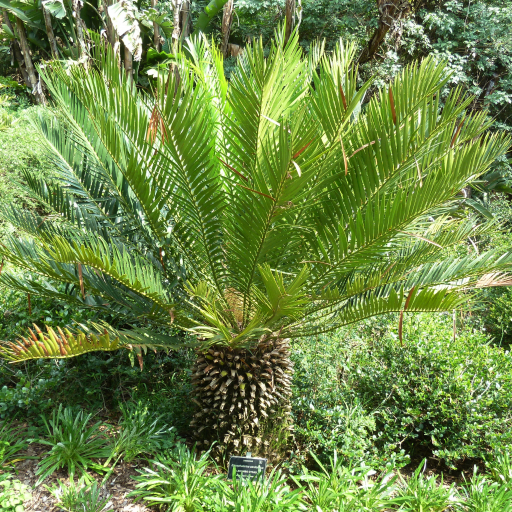
Plant Overview
Known as the Lebombo Cycad, Encephalartos senticosus is a botanical "living fossil" that looks like a rugged cross between a fern and a palm tree. Hailing from the steep, rocky slopes of the Lebombo Mountains in South Africa, these resilient plants have survived relatively unchanged since the era of the dinosaurs. They are prized by collectors for their architectural symmetry and their incredible ability to outlive the humans who plant them.
🔍 How to Identify
- 🌿 The Foliage: Features long, stiff, arching fronds that can reach over a meter in length. The individual leaflets are glossy green and edged with sharp, tooth-like spines.
- 🪵 The Trunk: A stout, barrel-shaped stem (caudex) that is covered in the diamond-shaped scars of old leaf bases. Over many decades, it can grow into a tall, upright column.
- 🟡 The Cones: Instead of flowers, it produces striking apricot-to-yellow cones. Male cones are slender and cylindrical, while female cones are much larger and egg-shaped.
🏡 In Your Garden
- ⛰️ Drainage is Non-Negotiable: In the wild, these cycads cling to rocky cliffs. In a garden or pot, they will suffer quickly if their roots stay wet. They require "sharp" drainage—think gravelly, porous soil that mimics a mountain slope.
- 🐢 The Long Game: This is a slow-motion plant. It may only produce one new "flush" of leaves per year. Because it develops a deep, sensitive taproot, it hates being transplanted; pick a permanent "forever home" for it from the start.
⚠️ Safety & Toxicity
- 🚫 High Toxicity: Like all cycads, this species contains potent neurotoxins and carcinogenic compounds (cycasin). It is extremely dangerous if any part of the plant is ingested.
- 🐾 Risk to Pets & Kids: The seeds inside the female cones are the most toxic part and can be fatal to dogs or cats if chewed. Additionally, the leaf tips are incredibly sharp and can cause painful punctures or skin irritation.
✨ Fun Fact
Cycads are so ancient that they evolved long before bees or butterflies existed. To reproduce, Encephalartos senticosus relies on a primitive relationship with specialized weevils that live inside the cones, moving pollen from plant to plant in a partnership that is millions of years old.

Detailed Care Instructions
To grow Encephalartos senticosus plants, you can follow these steps:
- Obtain seeds or seedlings: Acquire Encephalartos senticosus seeds or seedlings from a reputable nursery or online supplier.
- Select a suitable location: Choose a sunny spot in your garden with well-draining soil. Encephalartos senticosus plants prefer full sun to partial shade.
- Prepare the soil: Encephalartos senticosus plants thrive in well-draining soil. Amend heavy or clay soils with organic matter, like compost, to improve drainage.
- Planting seeds: If you are starting from seeds, soak them in water for 24 hours before planting. Plant the seeds about 1 inch deep in the soil, keeping them evenly spaced.
- Planting seedlings: If using seedlings, dig a hole wide and deep enough to accommodate the root system. Place the seedling in the hole and backfill with soil, gently firming it around the base of the plant.
- Watering: Water the plants deeply after planting and maintain regular watering to keep the soil moist but not waterlogged. Encephalartos senticosus plants prefer evenly moist conditions.
- Mulching: Apply a layer of organic mulch, such as wood chips or straw, around the base of the plant to help conserve moisture and suppress weeds.
- Fertilizing: Encephalartos senticosus plants benefit from occasional feeding. Use a balanced, slow-release fertilizer according to the package instructions, typically in spring and summer.
- Pruning: Remove any dead, damaged, or diseased leaves as needed. Trim back any excessive growth to maintain a tidy appearance.
- Protect from frost: Encephalartos senticosus is sensitive to frost and cold temperatures. If you live in a colder climate, consider growing it in a container that you can move indoors during winter or provide protection, such as covering the plant with a frost cloth or relocating it to a sheltered spot.
- Patience: Encephalartos senticosus is a slow-growing plant, so it requires patience. It may take a few years for it to establish and develop into a mature plant.
Remember to check the specific requirements of Encephalartos senticosus plants, as environmental conditions can vary based on your location.
Encephalartos Senticosus is a type of plant that requires proper watering to ensure its healthy growth. Here are some important details on how to water this plant effectively:
- Watering Frequency: Encephalartos Senticosus should be watered regularly, especially during the growing season, which typically spans from spring to summer. Aim to keep the soil slightly moist but not waterlogged. It is crucial to allow the topsoil to dry out between watering sessions to promote healthy root growth.
- Soil and Drainage: This plant prefers well-draining soil to prevent waterlogging, which can lead to root rot. Use a mix that consists of equal parts of peat moss, perlite, and coarse sand. The soil should allow excess water to drain away quickly, preventing the roots from sitting in standing water.
- Watering Technique: To water Encephalartos Senticosus, thoroughly saturate the soil until water starts to drain from the bottom of the pot or container. It is important to provide enough water to reach the deeper roots of the plant. Avoid frequent, shallow watering as it can encourage shallow root growth and make the plant more susceptible to drought.
- Water Quality: Encephalartos Senticosus prefers water that is free from chemicals, such as chlorine and fluoride, which can be harmful to its health. If your tap water contains high levels of these chemicals, consider using rainwater or filtered water for watering the plant.
- Weather Considerations: During the winter months, Encephalartos Senticosus goes through a period of dormancy and requires less water. Reduce the frequency of watering and allow the soil to dry out more between each session. However, ensure the plant does not completely dry out.
- Observation and Adjustments: Keep a close eye on the plant and observe any signs of under or over-watering. Wilting or yellowing leaves might indicate under-watering, while leaves turning brown or appearing mushy can be an indication of over-watering. Adjust your watering routine accordingly based on these observations.
Remember, each plant's watering needs may vary, so it is essential to closely monitor the moisture levels and health of the Encephalartos Senticosus plant to ensure it receives the appropriate amount of water.
Encephalartos Senticosus plants require regular fertilization to thrive. Here are some instructions on fertilizing this plant:
- Use a balanced fertilizer: Select a slow-release balanced fertilizer with an NPK (nitrogen, phosphorus, potassium) ratio of around 10-10-10 or 14-14-14.
- Timing: Begin fertilizing in early spring when new growth emerges. Repeat the application every two to three months throughout the growing season. Avoid fertilizing during winter as the plant is dormant.
- Dilution: Dilute the fertilizer according to the manufacturer's instructions. Typically, this involves mixing a certain amount of fertilizer with a specific quantity of water.
- Application: Apply the diluted fertilizer evenly around the base of the plant, ensuring you cover the root zone. Avoid directly applying the fertilizer to the foliage as it may cause burning or damage.
- Quantity: Apply the recommended amount of fertilizer based on the plant's size and the instructions provided with the fertilizer product. Generally, Encephalartos Senticosus plants require about one-fourth to one-half cup of fertilizer per plant.
- Watering: After applying the fertilizer, thoroughly water the plant to help dissolve and distribute the nutrients into the soil.
- Avoid over-fertilization: It's crucial not to over-fertilize your Encephalartos Senticosus plant, as this can lead to nutrient burn or other detrimental effects. Follow the specific fertilizer's instructions and avoid applying more than recommended.
- Observation: Monitor the plant's response to the fertilizer. If the leaves start to show signs of burning or the plant becomes yellow or unhealthy-looking, reduce the amount of fertilizer or halt fertilization temporarily.
Remember to always follow the specific guidelines provided with your chosen fertilizer and adjust accordingly based on the individual needs and condition of your Encephalartos Senticosus plant.
Encephalartos Senticosus is a cycad plant that requires well-draining soil. It thrives in sandy or loamy soil with good drainage. The soil should be slightly acidic to neutral, with a pH range between 6.0 and 7.5.
To create an ideal soil mix for Encephalartos Senticosus, you can blend standard potting soil with coarse sand or perlite to improve drainage. Adding organic matter like peat moss or compost can also enhance the soil structure and provide added nutrients.
The soil should retain adequate moisture but should not become waterlogged, as excessive moisture can lead to root rot. Therefore, maintaining a balance between moisture retention and drainage is crucial for the health of the plant. Watering the plant when the top inch of soil feels dry is generally recommended.
Additionally, it is beneficial to incorporate slow-release fertilizers into the soil mix. These fertilizers gradually release nutrients over time, ensuring a steady supply of essential elements for the plant's growth. Cycads, including Encephalartos Senticosus, are often supplemented with micronutrients like magnesium, manganese, and iron, so using a balanced fertilizer with micronutrients is advantageous.
Overall, providing well-draining, slightly acidic to neutral soil, rich in organic matter and supplemented with slow-release fertilizers, will create an optimal growing environment for Encephalartos Senticosus.
Encephalartos senticosus is a cycad plant belonging to the family Zamiaceae. It is a rare and endangered species native to South Africa. Propagation of Encephalartos senticosus can be done through various methods such as seed propagation and sucker removal. Here's a detailed description of each method:
- Seed propagation:
- Obtain mature seeds from a healthy Encephalartos senticosus plant.
- Clean the seeds by carefully removing any pulp or debris.
- Soak the seeds in warm water for 24-48 hours to soften the seed coat. This helps improve germination rates.
- Prepare a well-draining propagation mix by combining peat moss, perlite, and coarse sand in equal parts.
- Fill seed trays or pots with the propagation mix and water it thoroughly.
- Place the seeds on the surface of the mix, making sure they are not buried too deep.
- Cover the seeds lightly with a thin layer of propagation mix.
- Provide a warm and humid environment, ideally using a heated propagation mat and a plastic dome or bag to create a mini greenhouse effect.
- Maintain a constant temperature of around 75-85°F (24-29°C) and keep the propagation mix slightly moist but not waterlogged.
- Germination can take anywhere from a few months to over a year, so be patient.
- Once the seedlings have developed a few leaves and are robust enough, they can be transplanted into individual pots filled with a well-draining soil mix suitable for cycads.
- Provide them with bright, indirect light and gradually acclimate them to outdoor conditions if desired.
- Obtain mature seeds from a healthy Encephalartos senticosus plant.
- Sucker removal:
- Locate the suckers, which are new offsets or shoots growing from the base of the Encephalartos senticosus plant.
- Wait until the suckers have developed their own set of roots and a few leaves.
- Using a sharp and sterilized knife or garden tool, carefully sever the sucker from the parent plant.
- Prepare pots or containers with a suitable potting mix, preferably one that drains well.
- Plant the suckers in the pots, ensuring the roots are covered with soil but the growing point (apical bud) is exposed.
- Water the newly planted suckers thoroughly and place them in a location with bright, indirect light.
- Maintain a consistently moist but not waterlogged soil, and avoid overwatering to prevent root rot.
- Over time, the suckers will establish themselves and grow into independent plants.
It's important to note that Encephalartos senticosus, like other cycad species, grows slowly and requires specific care. Ensuring the plants receive adequate light, proper watering, well-draining soil, and protection from extreme temperatures is crucial for their successful propagation and long-term health.
- Locate the suckers, which are new offsets or shoots growing from the base of the Encephalartos senticosus plant.








