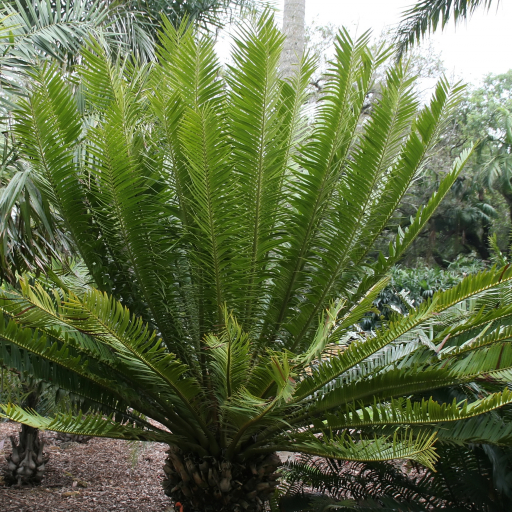
Plant Overview
Imagine a plant that has remained virtually unchanged since the Triassic period. This Kenyan native, often called the Kenyan Giant Cycad, is a true "living fossil" that brings a prehistoric, architectural grandeur to any space. With its massive trunk and stiff, exploding crown of green, it looks less like a modern garden plant and more like something a dinosaur might have brushed past.
🔍 How to Identify
- 🍃 The Fronds: It features long, arching leaves (up to 6 feet) that are deep, glossy green. The leaflets are narrow and arranged in a way that slightly overlaps, resembling the layout of roof tiles.
- 🏗️ The Trunk: Unlike smaller cycads, this species is a giant. Over many decades, it develops a thick, woody trunk that can reach heights of nearly 20 feet in the wild, though it remains a slow-growing "shrub" for many years in cultivation.
- 🍍 The Cones: As a gymnosperm, it doesn't produce flowers. Instead, it grows large, egg-shaped cones. Male cones are slender and yellowish, while female cones are much larger, heavier, and turn a striking orange-yellow when mature.
🏡 In Your Garden
- ⛰️ Drainage is King: In its native Kenya, it thrives on rocky slopes and hillsides. In a garden setting, this means it hates "wet feet." You must plant it in extremely well-draining, gritty soil to prevent root rot.
- ⏳ Exercise Patience: This is not a "filler" plant for a quick landscape. It is a legacy plant. It grows slowly, often producing only one "flush" of new leaves per year, making every new leaf an event to celebrate.
- ☀️ Light Nuance: While it loves bright light, young plants can get scorched in intense, direct afternoon sun. It prefers a "head in the sun, feet in the shade" approach until it is established.
⚠️ Safety & Toxicity
- 🚫 High Toxicity: WARNING. Like all cycads, this plant contains potent toxins (cycasin and BMAA). It is extremely dangerous if ingested.
- 🐾 Pet & Child Risk: The seeds, located inside the large cones, are particularly toxic and can cause permanent liver damage or death in dogs and cats.
- ⚔️ Physical Hazard: The leaflets end in sharp, prickly points. Wear gloves when pruning or weeding around the base to avoid painful stabs.
✨ Fun Fact
The species name tegulaneus comes from the Latin word tegula, meaning "roof tile." This refers to the unique way the leaflets overlap one another, creating a natural waterproof "shingled" effect that helps the plant channel rainwater directly toward its central trunk and roots!

Detailed Care Instructions
Encephalartos tegulaneus is a species of cycad native to Africa, specifically Kenya. It's a beautiful and ancient plant that can be a great addition to your garden if you live in a suitable climate. Here are some steps and tips to help you grow this plant successfully:
Seed Collection and Preparation
- Seed Collection: If you are lucky enough to have a female plant producing cones, you can collect the seeds once they have matured. Otherwise, you can purchase seeds from a reputable source.
- Clean the Seeds: Remove the fleshy fruit coating from around the seeds. This can be done by soaking the seeds in water for a few days to help soften the flesh and then scrubbing it off.
- Soak and Scarify: Soak the seeds in warm water for 2-3 days to help soften the seed coat. Some growers also gently scarify (scratch or nick) the seed coat to help water penetrate.
Germination
- Prepare the Growing Medium: Fill pots or seed trays with a well-draining mixture like a combination of sand, perlite, and peat moss or cactus mix.
- Plant the Seeds: Plant the seeds approximately 1-2 inches deep in the growing medium with the pointed end facing down.
- Provide Warmth and Humidity: Place the pots in a warm area with temperatures around 75-85°F (24-29°C). Keep the soil moist but not waterlogged. A humidity dome or plastic bag can help maintain the appropriate humidity.
- Patience: Germination can take several months, so patience is crucial.
Transplanting and Growing
- Transplanting Seedlings: Once the seedlings have a few leaves and a small caudex (the swollen stem base), they can be transplanted to individual pots.
- Soil: Use a well-draining potting mix suitable for cycads or cactus. Encephalartos species do not tolerate waterlogged conditions.
- Light: Provide bright, indirect light. They do well in a greenhouse or a shaded outdoor area where they receive filtered sunlight.
- Watering: Water sparingly but regularly. Allow the soil to dry out slightly between waterings. Overwatering can lead to root rot.
- Fertilizing: Feed your plant with a balanced, slow-release fertilizer during the growing season. Be cautious not to over-fertilize, as this can harm the plant.
Long-Term Care
- Climate: Encephalartos tegulaneus prefers warm conditions. They are not frost-tolerant and should be protected from cold temperatures.
- Pests and Diseases: Watch out for common pests like scale insects and mealybugs. Treat infestations promptly with appropriate measures.
- Growth Rate: Cycads grow slowly. It may take several years for your plant to reach a noticeable size.
Outdoor Planting (if climate permits)
- Location: Choose a spot with well-draining soil and partial shade to full sun. If you are in an area that experiences frost, plant the cycad in a protected location.
- Planting: Dig a hole slightly larger than the root ball and set the plant in, ensuring it is at the same depth it was in the pot. Backfill with soil and water thoroughly.
- Mulching: Apply a layer of mulch around the base to help retain moisture and regulate soil temperature.
Special Considerations
- Protection: In colder climates, you may need to grow Encephalartos tegulaneus in a container that can be moved indoors during winter.
- Conservation: Many Encephalartos species are endangered in the wild. Ensure you are sourcing seeds or plants ethically and legally.
By following these guidelines, you can successfully grow and enjoy Encephalartos tegulaneus in your home or garden. Remember that cycads are ancient plants with slow growth rates, so patience is key.
Encephalartos Tegulaneus is a plant that requires regular watering to maintain its health and growth. It is important to water the plant properly to avoid overwatering, which can lead to root rot and under watering that can cause dehydration or yellowing of leaves.
One way to ensure proper watering is to check the soil moisture level frequently. The soil should be moist but not waterlogged or dry. If the top layer of soil is dry, it's time to water the plant. Use a watering can or hose with a gentle stream to water the soil around the base of the plant, making sure not to wet the leaves.
During the winter, when Encephalartos Tegulaneus is dormant, it requires less frequent watering. Reduce watering to once every two to three weeks, only when the soil is completely dry.
It's also important to remember that Encephalartos Tegulaneus does not like water sitting in its crown, which can cause rot. Therefore, it is best to avoid getting water on the crown or removing any water that accumulates in the crown after watering.
In summary, Encephalartos Tegulaneus requires regular watering with moist but not waterlogged soil. It's important to check the soil moisture level frequently and avoid getting water on the crown.
Encephalartos tegulaneus is a cycads that appreciates well-timed fertilization for optimal growth. Here are some fertilizing instructions:
- Season and Frequency: Fertilize during the growing season, which typically extends from late spring through early fall. A good rule of thumb is to apply fertilizer once every 6-8 weeks during this period.
- Type of Fertilizer: Use a balanced, slow-release granular fertilizer with an N-P-K ratio around 3:1:2 or 3:1:3. An example would be a formula such as 12-4-8 or 15-5-15. Alternatively, you can use a palm or cycad fertilizer which often has micronutrients tailored for these plants.
- Application Amount: Follow the package instructions for the specific fertilizer you are using. Generally, you'll apply about 1/2 to 1 cup of granular fertilizer per plant, depending on its size. Scatter the granules evenly in a circle around the base of the plant, avoiding direct contact with the trunk.
- Watering: After applying the fertilizer, water the plant thoroughly to help the nutrients penetrate the soil and reach the roots. Ensure the soil drains well to prevent root rot.
- Organic Options: If you prefer organic fertilization, consider using compost, fish emulsion, or well-rotted manure. These should also be applied during the growing season and can be used more frequently, typically every 4-6 weeks.
- Micronutrients: Cycads can sometimes suffer from deficiencies in micronutrients such as magnesium and iron. To address this, you can use a micronutrient spray or soil drench, following the manufacturer’s instructions.
- Observation and Adjustment: Pay attention to your plant's response to fertilization. Yellowing leaves may indicate either over-fertilization (burn) or nutrient deficiencies. Adjust the type and amount of fertilizer accordingly if you notice signs of stress or imbalance.
Remember, over-fertilization can be harmful, so it's better to err on the side of caution and use a moderate amount. Happy growing!
Encephalartos Tegulaneus plant prefers a well-draining soil that is rich in organic matter. It is recommended to use a mixture of perlite, sand, and peat moss to ensure adequate drainage and provide nutrients to the plant. The soil pH should be slightly acidic to neutral, with a range of 6.0-7.5. It is important to avoid using heavy clay soils or soils that retain moisture for extended periods, as this may cause root rot and other issues. The soil should be kept consistently moist but not waterlogged, and it is recommended to fertilize the plant with a balanced fertilizer every six months.
Propagating Encephalartos tegulaneus, an ancient cycad species, involves several steps. It primarily propagates through seeds, but can also propagate through offsets, or "pups," that grow at the base. Here is a detailed guide on both methods:
Propagation by Seeds:
- Seed Collection:
- Wait for the female cones to mature, which can take several months.
- Collect the seeds from the cones when they start to disintegrate naturally. Be sure to wear gloves as the cones can be irritating to the skin.
- Wait for the female cones to mature, which can take several months.
- Seed Preparation:
- Clean the seeds thoroughly to remove any pulp, as leftover organic material can lead to fungal issues.
- Soak the seeds in water for 24 to 48 hours to rehydrate and improve germination rates. Discard any seeds that float, as they are likely not viable.
- Clean the seeds thoroughly to remove any pulp, as leftover organic material can lead to fungal issues.
- Scarification and Stratification (Optional but Recommended):
- Scarify the seeds lightly using sandpaper to help water penetrate the hard seed coat.
- Stratify the seeds by placing them in a moist medium (like sand or vermiculite) and refrigerate them for several weeks to simulate natural winter conditions.
- Scarify the seeds lightly using sandpaper to help water penetrate the hard seed coat.
- Sowing:
- Use a well-draining potting mix with components like coarse sand and perlite.
- Plant the seeds about 1-2 inches deep in pots or trays.
- Maintain humidity by covering the pots with clear plastic bags or using a propagation dome.
- Use a well-draining potting mix with components like coarse sand and perlite.
- Germination:
- Place the pots in a warm environment, preferably between 75-85°F (24-29°C).
- Maintain consistent moisture levels but avoid waterlogging, as seeds can rot.
- Germination can take several weeks to several months, so patience is required.
Propagation by Offsets:
- Place the pots in a warm environment, preferably between 75-85°F (24-29°C).
- Identifying Offsets:
- Look for offsets or "pups" growing around the base of the parent plant. These are smaller plants that can be separated and grown independently.
- Look for offsets or "pups" growing around the base of the parent plant. These are smaller plants that can be separated and grown independently.
- Separation:
- Carefully dig around the base of the pup to expose the connection to the parent plant.
- Use a sterile, sharp knife to carefully cut the pup away, making sure to include roots with it if possible.
- Let the cuts dry and callous for a few days to minimize the risk of rot.
- Carefully dig around the base of the pup to expose the connection to the parent plant.
- Planting Offsets:
- Prepare a well-draining potting mix similar to that used for seed propagation.
- Plant the offset in a pot, ensuring the base is just level with the soil surface.
- Water lightly to settle the soil but avoid waterlogging.
- Prepare a well-draining potting mix similar to that used for seed propagation.
- Aftercare:
- Place the newly potted offset in an area with bright, indirect light to reduce stress as it establishes roots.
- Maintain a warm and humid environment to encourage root development.
- Gradually acclimate the offset to normal conditions after a few weeks of growth.
General Care Tips:
- Place the newly potted offset in an area with bright, indirect light to reduce stress as it establishes roots.
- Light: Provide bright, indirect light; some morning sun exposure is beneficial.
- Watering: Water thoroughly but allow the soil to dry between watering. Overwatering can lead to root rot.
- Soil: Use a well-draining mix, preferably one suited for succulents or cacti.
- Temperature: Keep in a warm environment, ideally between 65-85°F (18-29°C). Protect from frost.
- Fertilization: Use a balanced fertilizer during the growing season, but avoid excessive feeding.
Successful propagation of Encephalartos tegulaneus requires patience and attention to detail. By following these methods and care tips, you can increase your chances of cultivating healthy new plants.








