Plant Overview
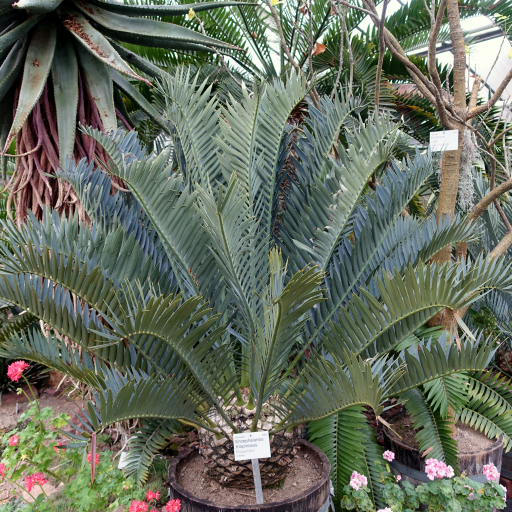
Known as the Three-Toothed Cycad, this South African native looks like a living sculpture plucked straight from a prehistoric landscape. Found naturally in the rocky scrublands of the Eastern Cape, it is a "living fossil" that has survived relatively unchanged for millions of years. Its striking metallic-blue foliage makes it one of the most sought-after species for collectors and desert-themed gardens.
🔍 How to Identify
- 💙 The Blue Hue: The leaves possess a distinct waxy, silvery-blue coating. This isn't just for show; the wax acts as a "sunscreen" to reflect intense heat and conserve moisture in arid climates.
- 🔱 The "Three Teeth": True to its name (trispinosus), the rigid leaflets usually feature three sharp, prominent lobes or "teeth" near the tips, giving the fronds a jagged, architectural silhouette.
- 🍍 The Cones: Instead of flowers, this plant produces large, barrel-shaped cones. Depending on whether the plant is male or female, these cones can be a bright yellow or greenish-yellow, emerging from the center of the crown.
🏡 In Your Garden
- ☀️ Sun for Color: This cycad thrives in full, direct sunlight. In fact, the more sun it receives, the more intense its signature blue color becomes. In deep shade, the leaves may revert to a duller green.
- 🏜️ Drainage is Non-Negotiable: Because it evolved on rocky slopes, it has a sensitive root system that hates "wet feet." It requires gritty, fast-draining soil. If planted in heavy clay, it is highly susceptible to root rot.
- 🐢 Slow and Steady: Don't expect rapid changes. This is a very slow-growing plant that puts its energy into building a thick, sturdy trunk and a deep taproot, making it incredibly drought-tolerant once established.
⚠️ Safety & Toxicity
- 🚫 High Toxicity: All parts of the Encephalartos trispinosus are toxic if ingested, containing a neurotoxin called cycasin.
- 🐾 Pets & Kids: The seeds, often found in the cones, are particularly dangerous and can lead to severe liver failure or death in dogs, cats, and humans.
- 🌵 Physical Injury: The leaflets are incredibly stiff and sharp. Planting it away from walkways is recommended to avoid painful scratches to passersby or curious pets.
✨ Fun Fact
Cycads like the Encephalartos are older than the dinosaurs! They were the dominant plant life on Earth during the Jurassic period, and while the T-Rex went extinct, this hardy blue plant managed to survive several mass extinctions.

Detailed Care Instructions
To grow Encephalartos Trispinosus, also known as the Eastern Cape blue cycad, you should follow these steps:
- Climate: Ensure that you live in a suitable climate for Encephalartos Trispinosus. This cycad thrives in warm, subtropical to tropical conditions. It is native to South Africa and prefers temperatures between 20-30°C (68-86°F).
- Sunlight: Encephalartos Trispinosus requires full sun to partial shade. Choose a location in your garden where the plant will receive at least six hours of direct sunlight daily.
- Soil: Use a well-draining soil mix with a pH level ranging from 5.5 to 7.5. A mixture of sand, perlite, and peat moss can provide good drainage. Avoid heavy clay soils that retain water.
- Watering: Water the plant deeply but infrequently. Encephalartos Trispinosus is drought-tolerant and prefers to be slightly dry between waterings. Avoid overwatering, as this can lead to root rot. During winter, reduce watering even more as the plant enters a resting period.
- Fertilizer: Apply a slow-release cycad-specific fertilizer in early spring and midsummer. Follow the manufacturer's instructions for dosage. Avoid using high-nitrogen fertilizers, as they can harm the plant.
- Propagation: Encephalartos Trispinosus can be propagated through seeds or by division. Seeds take several years to germinate, so division is the quicker method. To divide the plant, remove young growth or offsets from the main plant during spring or early summer. Plant the divided sections in a well-draining soil mix and keep them in a warm, shaded area until they establish roots.
- Pests and diseases: Encephalartos Trispinosus is generally pest and disease-resistant. However, keep an eye out for common cycad pests like scale insects and mealybugs. Treat any infestations promptly with insecticidal soap or horticultural oil.
- Pruning: Minimal pruning is necessary for Encephalartos Trispinosus. Remove any dead or damaged fronds to maintain the plant's overall aesthetics and health.
Remember that cycads are slow-growing plants, so be patient with the growth process. Additionally, if you are in a region where cultivating the Eastern Cape blue cycad is regulated or requires permits, ensure you have all the necessary permissions before proceeding.
Possible ways to provide care instructions for watering Encephalartos Trispinosus plant using non-common description could be:
- Moisture needs: This type of cycad thrives in soil that is evenly moist but never waterlogged. Hence, water it regularly enough to keep the topsoil slightly damp, but avoid saturating the roots or letting them dry out completely.
- Water quality: Encephalartos Trispinosus prefers clean, non-chlorinated water that is free of salts, minerals, or other chemicals that might harm the plant. Rainwater or filtered tap water is a good option, as long as it's not too acidic or alkaline.
- Drainage system: In addition to proper watering, it's crucial to provide good drainage for the soil. This can be achieved by using a well-draining potting mix, adding perlite or sand to the soil, or placing a layer of gravel at the bottom of the pot. Avoid standing water or water that accumulates in the saucer, as it can promote root rot.
- Seasonal variations: The watering needs of Encephalartos Trispinosus may vary depending on the season, temperature, humidity, and light conditions. During the growing season (usually spring and summer), the plant may require more water, whereas in winter or low-light conditions, it may need less frequent watering. Pay attention to how the soil feels and adjust the watering accordingly.
- Watering technique: Rather than spraying or misting the leaves, focus on watering the soil directly and deeply. Use a watering can or a hose with a gentle spray nozzle to wet the soil thoroughly, and allow any excess water to drain away. Avoid splashing water on the plant's crown or any new growth, as this can cause fungal infections or other damage.
To fertilize this plant, you should use a balanced fertilizer with equal parts nitrogen, phosphorus, and potassium. Apply the fertilizer to the soil around the base of the plant once a month during the growing season, which is typically from spring to fall. Be careful not to over-fertilize, as this can lead to excessive growth and potentially harm the plant. Water the soil well after fertilizing to ensure that the nutrients are absorbed properly.
Encephalartos Trispinosus prefers a well-draining, slightly acidic soil with a pH between 5.5 and 6.5. The soil should be rich in organic matter and have good moisture retention properties. It is recommended to use a mixture of peat moss, perlite, and sand to provide adequate drainage and to prevent waterlogging. Avoid using heavy clay soils or soil mixes that contain too much clay as they can be too water retentive and may cause root rot. Additionally, it is important to avoid using fertilizers that are high in nitrogen as they can be harmful to the plant. Instead, use a slow-release, balanced fertilizer.
Encephalartos Trispinosus is a plant that can be propagated through suckers or offsets produced by the parent plant or through the collection and germination of its seeds. To propagate through offsets, carefully remove the offset from the parent plant using a sharp and sterile tool, ensuring that it has some roots. Plant the offset in well-draining soil and keep it moist until roots begin to grow, after which normal watering and care can be applied.
Alternatively, to propagate through seeds, collect mature seeds directly from the parent plant. Clean the seeds to remove any pulp or debris and allow them to dry for a few days. Soak the seeds in warm water for 24 to 48 hours to help with germination. Plant the seeds in well-draining and sterilized soil and keep it moist. It may take several months for the seeds to germinate, and care should be taken to protect them from extreme temperatures and pests.
Propagation of Encephalartos Trispinosus requires patience and attention to detail, but it is a rewarding process that can yield healthy and robust plants.








