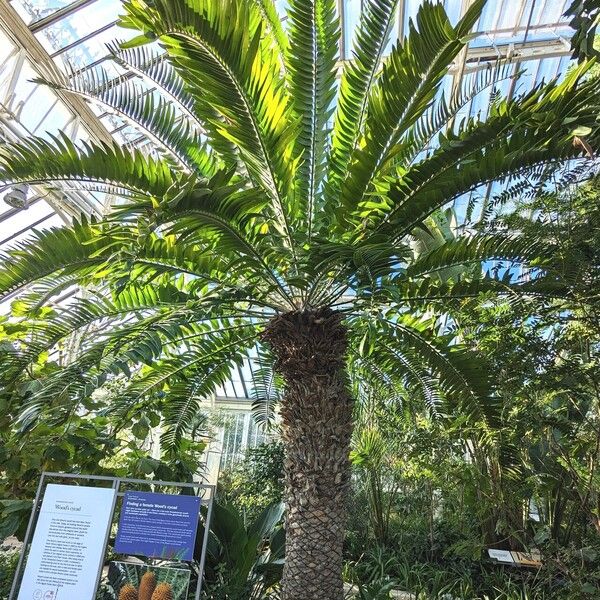
Plant Overview
Known as the "Bachelor of the Forest," Encephalartos woodii is famously dubbed the loneliest plant in the world. Originally discovered in the Ngoye Forest of South Africa in 1895, only a single male specimen was ever found. Since no female has ever been discovered, this ancient survivor cannot reproduce naturally and exists today only through clones kept in botanical gardens.
🔍 How to Identify
- 🌴 The Trunk: It boasts a thick, sturdy trunk that can reach up to 20 feet tall, often covered in a pattern of "scars" from old leaf bases.
- 🌿 The Foliage: The leaves are dark green and glossy, growing in a majestic crown. They are pinnate (feather-like) and curve gracefully downward, with small prickles along the edges.
- 🟠 The Cones: Being a gymnosperm, it produces large, cylindrical cones rather than flowers. These cones are a striking bright orange-yellow and can weigh up to 80 pounds.
🏡 In Your Garden
- ⏳ A Slow Legacy: This plant is the definition of "slow and steady." It grows at a glacial pace, meaning it rarely outgrows its space, but it also takes decades to reach its full architectural beauty.
- 🏜️ Drainage is Vital: Because it evolved in specific forest margins, it is highly sensitive to "wet feet." In a garden or pot, it requires extremely well-draining soil; sitting in water will cause the prehistoric caudex (base) to rot quickly.
- ❄️ Frost Sensitivity: While tough, Wood’s Cycad prefers a subtropical climate. It needs protection from hard freezes, which can damage the delicate crown and prevent new "flushes" of leaves.
⚠️ Safety & Toxicity
- 🚫 Highly Toxic: Like all members of the cycad family, this plant contains toxins called cycasin.
- 🐾 Pet & Child Risk: Every part of the plant—especially the seeds (if they were to exist) and the pith of the trunk—is poisonous if ingested. It can cause severe liver failure in dogs, cats, and humans. Always wear gloves when pruning to avoid skin irritation from the sharp leaf tips.
✨ Fun Fact
Scientists are currently using drones and AI technology to scan the remote forests of South Africa, hoping to find a "lost" female Encephalartos woodii tucked away in the canopy to finally provide the lonely bachelor with a mate.

Detailed Care Instructions







