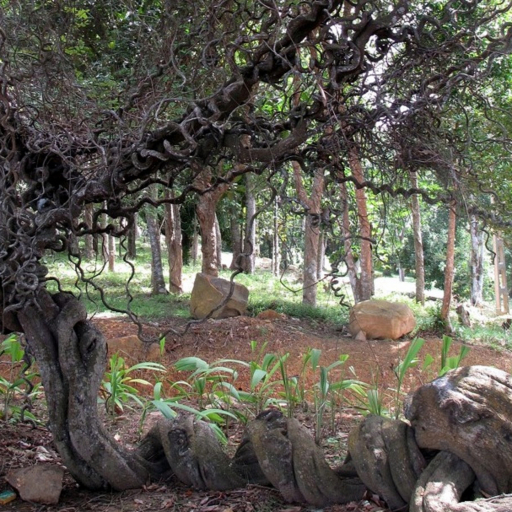
Plant Overview
Often called the "Sea Heart" or "Monkey Ladder," Entada gigas is a plant of legendary proportions. This massive woody vine is famous not just for its size, but for its incredible seeds—large, mahogany-colored hearts that can drift across entire oceans, traveling from the Caribbean to the shores of Europe via the Gulf Stream, still capable of germinating after years at sea.
🔍 How to Identify
- 🪜 The Monkey Ladder: As a "liana" (a woody climbing vine), it grows thick, twisted stems that look like natural ladders coiling up toward the rainforest canopy.
- 📏 The Giant Pods: It produces some of the largest seed pods in the world, which can reach up to 6 feet (2 meters) in length and contain over a dozen huge seeds.
- 🤎 The Sea Heart: The seeds are smooth, hard, and heart-shaped. They have a tough, waterproof outer shell and an internal air pocket that allows them to float across salt water.
🏡 In Your Garden
- 🌳 The Need for Speed: If you are lucky enough to live in a tropical climate and have a very large tree to support it, be prepared for rapid growth. This plant is not meant for small trellises; it seeks the sun and will quickly dominate any structure it climbs.
- 💧 Moisture and Warmth: It thrives in high-humidity environments and acidic, well-draining soil. Because its natural habitat is near riverbanks, it enjoys consistent moisture but hates "cold feet" or frost, which will quickly kill the vine.
⚠️ Safety & Toxicity
- 🐾 Status: Generally considered non-toxic to touch, but the seeds should not be ingested.
- 🧼 Saponin Content: The seeds contain high levels of saponins. While historically used in some cultures to make soap or as a traditional medicine, they can cause stomach upset or nausea in pets and children if chewed or swallowed.
✨ Fun Fact
The "Sea Heart" seeds were once carried by sailors as lucky charms to protect them from drowning and are said to have inspired Christopher Columbus to believe that land lay to the west after he found them washed up on European beaches.

Detailed Care Instructions
To grow Entada gigas, also known as the Sea Heart or Monkeys Comb, follow these steps:
- Obtain seeds: Purchase Entada gigas seeds from a reputable seed supplier or collect them from mature pods that have fallen naturally from the plant.
- Soak the seeds: Place the seeds in a container of warm water and let them soak for at least 24 hours. This softens the hard seed coat and promotes germination.
- Choose a suitable location: Entada gigas prefers a tropical or subtropical climate, so it is best suited for regions with warm temperatures and high humidity. Ensure the chosen location has well-draining soil.
- Prepare the soil: Loosen the soil and remove any weeds or debris. Add organic matter or compost to improve fertility and drainage.
- Plant the seeds: Dig a hole slightly larger than the seed and bury it about 1 inch (2.5 cm) deep. Space multiple seeds at least 3 to 5 feet (1-1.5 meters) apart, as these plants can grow quite large.
- Water regularly: Keep the soil consistently moist but not waterlogged. Entada gigas prefers a well-hydrated environment. Use a misting spray or a drip irrigation system to provide a constant water supply.
- Provide support: As Entada gigas grows, it develops climbing vines that require support. Install a trellis, sturdy stakes, or provide a nearby tree for the plant to climb on.
- Protect from extreme temperatures: Avoid exposing young plants to freezing temperatures. Protect them during cold seasons by covering them with blankets or using a greenhouse.
- Patience: Entada gigas growth may take time. It can take anywhere from 2 to 5 years for the plant to mature and start flowering and producing pods.
- Monitor pests and diseases: Regularly check for pests, such as mites or caterpillars, and apply appropriate pest control measures if necessary. Remove any diseased or damaged parts of the plant.
Remember to research specific care instructions for your specific region and climate conditions.

Place in a bright room that is sun drenched almost all day. Or directly in a south-facing window.

Firstly, it is important to note that Entada Gigas plant requires regular watering to stay healthy and thrive. The frequency and amount of water required may vary depending on the environmental conditions, such as humidity and temperature.
To water the plant, you should start by checking the soil moisture level. You can do this by inserting your finger about an inch deep into the soil. If the soil feels dry, it is time to water the plant.
You should use water that is at room temperature or slightly warm for best results. Carefully pour water onto the soil until it starts to run out of the drainage holes at the bottom of the container. Avoid getting water on the leaves as this can lead to fungal diseases.
After watering, allow the soil to drain completely before returning the plant to its normal location. You should also avoid letting the plant sit in standing water, as this can lead to root rot.
During periods of high heat or low humidity, the plant may require more frequent watering. It is important to monitor the soil moisture level regularly to ensure the plant is getting the right amount of water.
Overall, it is important to maintain a consistent watering schedule to ensure the health and longevity of the Entada Gigas plant.
To fertilize this plant, use a balanced fertilizer containing nitrogen, phosphorus, and potassium. Apply the fertilizer according to package instructions, typically every 2-4 weeks during the growing season. Avoid over-fertilizing as it can harm the plant. Additionally, provide the plant with enough water to prevent it from drying out but do not overwater as it can lead to root rot.
To determine the appropriate soil for the Entada Gigas plant, several factors should be considered. The soil should be well-draining, with a pH level of around 6.0 to 7.5. It should be nutrient-rich and able to retain moisture adequately, while also allowing for airflow around the roots. A mixture of peat moss, perlite, and vermiculite, in equal parts, can provide the required texture and nutrient profile for the Entada Gigas plant to thrive. Additionally, adding organic matter such as compost or aged manure can further improve soil quality and fertility. Regularly testing the soil pH and nutrient levels can help ensure that the soil remains suitable for optimal plant growth and health.
To propagate this plant, one can collect mature seeds from the parent plant and soak them in water for a few hours or overnight. Then, they can be planted in a well-draining soil mix and kept in a warm and humid environment. It is important to keep the soil moist but not waterlogged and provide adequate light. The seeds usually germinate in two to four weeks. Once the seedlings have developed a few leaves, they can be transplanted into individual containers or outdoors into the garden.








