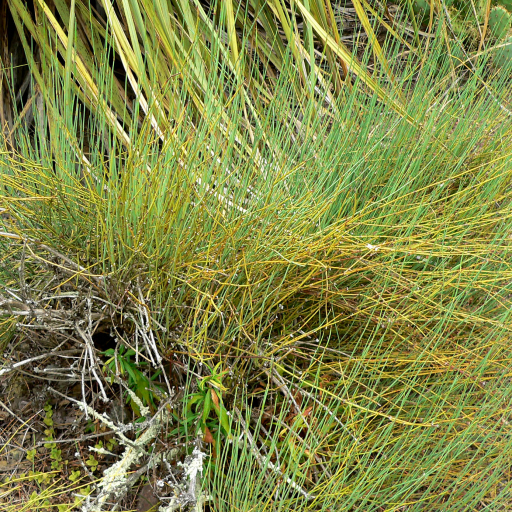
Plant Overview
Known as the California Jointfir or Desert Tea, this resilient shrub looks like a relic from a prehistoric era. Found clinging to the sandy washes and rocky slopes of the Mojave and Sonoran deserts, it appears at first glance to be a bundle of leafless, vibrant green sticks. Historically, it earned the name "Mormon Tea" because early settlers brewed its stems into a stimulating beverage when traditional tea was unavailable.
🔍 How to Identify
- 🎋 Segmented Stems: The plant is made up of thin, rigid, and cylindrical stems that are noticeably "jointed" every few inches, resembling a miniature green bamboo or a prehistoric reed.
- 🍂 Scale-like Leaves: If you look closely at the joints, you won't find broad leaves; instead, there are tiny, brown, papery scales that occur in pairs or trios, allowing the plant to conserve water in harsh heat.
- 🍍 Cone-like Fruit: As a gymnosperm (related to pines), it doesn't produce flowers. Instead, it grows small, papery, cone-like structures that turn a brownish-tan color when mature.
🏡 In Your Garden
- 🏜️ Xeriscape Specialist: This is the ultimate "set it and forget it" plant for arid climates. It thrives in poor, sandy, or gravelly soil where other plants would wither, making it perfect for rock gardens or "fire-wise" landscaping.
- ☀️ Sun Worship: It requires full, relentless sun to maintain its upright, architectural shape. In shaded areas, the stems tend to become floppy and lose their distinctive bright yellow-green hue.
- 💧 Root Sensitivity: While it is extremely drought-tolerant, it is highly sensitive to "wet feet." Ensure your soil drains rapidly, as standing water will cause the root system to rot almost overnight.
⚠️ Safety & Toxicity
- 🍵 Moderate Caution: While Ephedra californica was historically used for tea, it contains various alkaloids. However, unlike its Chinese cousin (Ephedra sinica), the California species contains very little to no ephedrine.
- 🐾 Pet Safety: It is generally considered non-toxic to cats and dogs if brushed against, but ingesting large quantities of the tough, fibrous stems can cause gastrointestinal upset or irritation for curious pets.
✨ Fun Fact
- 🦖 Living Fossil: Ephedra belongs to a group of plants that has remained largely unchanged for over 100 million years. It is a biological "bridge" between primitive conifers and modern flowering plants!

Detailed Care Instructions

Place in a bright room that is sun drenched almost all day. Or directly in a south-facing window.

Some plants require more regular watering than others, which should be done every few days. It's critical to maintain the soil moist all of the time. The water requirements of the same plant placed in pots with varying sizes will differ. Because the water in the smaller pot evaporates faster than the water in the larger pot, it will require more watering. Regardless of pot size, the surface should constantly be maintained moist.








