Plant Overview
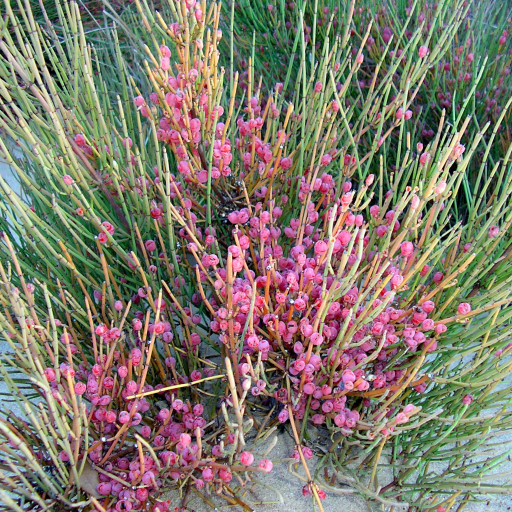
Known as the Joint Pine or Joint-fir, Ephedra fragilis is a botanical time traveler. This Mediterranean native looks more like a bundle of prehistoric reeds than a modern shrub. It is a resilient "scrambler" often found clinging to sun-drenched coastal cliffs or sandy dunes, looking like a green, leafless skeleton that has stood the test of time.
🔍 How to Identify
- 🌿 The Stems: Slender, bright green, and highly jointed—resembling tiny bamboo or horsetails. These stems do the heavy lifting of photosynthesis since the plant lacks traditional leaves.
- 🍂 The "Leaves": If you look closely at the joints, you’ll see tiny, brown scales. These are actually the leaves, evolved to be as small as possible to prevent water loss in hot climates.
- 🔴 The Cones: During the fruiting season, female plants produce fleshy, berry-like red cones. They are strikingly bright and provide a vivid contrast against the olive-green stems.
🏡 In Your Garden
- ☀️ Sun Worshiper: This plant is the definition of "low maintenance" for sunny spots. It thrives in intense heat and is exceptionally drought-tolerant once established, making it a star for xeriscaping.
- 🏜️ Drainage is Key: Its biggest enemy is "wet feet." It requires sandy, rocky, or very well-drained soil. If planted in heavy clay that holds onto winter moisture, the roots will likely rot.
- 🌊 Coastal Warrior: It is highly resistant to salt spray and high winds, making it a perfect choice for stabilizing soil in coastal gardens where other plants might struggle.
⚠️ Safety & Toxicity
- 🛑 Status: Use with caution; contains active alkaloids.
- 💊 Details: Members of the Ephedra genus contain ephedrine and pseudoephedrine. While historically used in traditional medicine, ingestion can cause increased heart rate, high blood pressure, and restlessness.
- 🐾 Pets & Kids: It is best kept out of reach of curious pets or children. While not usually fatal in small nibbles, it can cause significant cardiovascular agitation if consumed.
✨ Fun Fact
Despite its bushy, reed-like appearance, Ephedra is a Gymnosperm. This means it is an evolutionary relative of Conifers (like Pine trees) and Ginkgos, rather than the flowering plants it shares the landscape with!

Detailed Care Instructions
| Humidity | High |
| Lighting | Full Sun |
| Toxicity | Poisonous |
| Difficulty | Medium |
| Hibernation | Cold Period |
To grow Ephedra fragilis, also known as the brittle joint pine or joint fir, you can follow these steps:
- Climate and soil conditions: Ensure that you live in an appropriate climate zone for Ephedra fragilis growth. It prefers dry, arid regions with well-draining soil. Sandy or rocky soils are generally suitable.
- Seed collection: Collect mature seeds from existing Ephedra fragilis plants. Seeds are typically found in female cones.
- Stratification process: Ephedra fragilis seeds need to go through a process called stratification to improve germination rates. Place the seeds in a moist paper towel or sand, seal them in a plastic bag, and refrigerate them for approximately 90 days. This mimics the cold winter season and prepares the seeds for germination.
- Soil preparation: Prepare the soil by removing any weeds or competing vegetation. Ensure that the soil is well-draining and not overly fertile.
- Planting: After the stratification period, remove the seeds from the refrigerator and sow them lightly into the soil. Ephedra fragilis seeds require light to germinate, so do not bury them deep. Sow them just below the surface and lightly cover them with a thin layer of soil.
- Watering: Water the newly planted seeds lightly, ensuring that the soil is moist but not waterlogged. Avoid overwatering, as Ephedra fragilis prefers drier conditions.
- Sun exposure: Place the planting container or bed in an area that receives full sunlight, as Ephedra fragilis requires ample sun to thrive.
- Maintenance: Maintain a moderate watering schedule throughout the growing season, allowing the soil to dry out slightly between watering intervals. Remove any weeds or competing vegetation that may hinder the growth of Ephedra fragilis.
- Propagation: Ephedra fragilis can also be propagated through stem cuttings. Take cuttings from existing plants and root them in a well-draining potting mix. Keep the cuttings in a warm, partially shaded area until new growth emerges.
- Patience: Growing Ephedra fragilis from seeds can be a slow process. It may take several years for the plant to establish and reach a mature size. Be patient and provide the necessary care for optimal growth.
Remember to research any local regulations and restrictions related to growing Ephedra fragilis before planting.

Place in a window with dappled sun or a spot in the middle of a room. Or directly in a window facing west or east.

Ephedra Fragilis plant requires regular watering to maintain its growth. It is recommended to water the plant once a week during the growing season and reduce the frequency during the winter months. The soil should be moist but not waterlogged. Overwatering can lead to root rot and other fungal diseases.
One way to check the moisture level is by sticking your finger in the soil. If the top inch of soil is dry, it is time to water. Alternatively, you can use a moisture meter to measure the moisture level in the soil.
When watering, avoid getting the foliage wet as this can result in fungal diseases. Instead, water at the base of the plant.
It is important to note that the water needs of Ephedra Fragilis plant may vary depending on the environmental conditions, such as humidity, temperature, and light intensity. Observe the plant closely and adjust the watering schedule accordingly.
To properly fertilize the Ephedra Fragilis plant, you should use a slow-release fertilizer that is high in nitrogen and phosphorus. This should be applied in the spring, as growth begins. Be sure to evenly distribute the fertilizer around the base of the plant and water immediately after application. Avoid fertilizing during the hot summer months as this can damage the plant. Regular watering and removal of any dead or damaged stems will also promote healthy growth.
Ephedra Fragilis is a type of shrub that requires well-drained soils with a neutral pH. It is best grown in sandy or loamy soils that are rich in minerals such as nitrogen, phosphorus, and potassium. The plant can tolerate soils that are slightly alkaline or slightly acidic, but it is important to avoid soils that are too acidic or too alkaline, as these can negatively affect growth and development. In addition, Ephedra Fragilis requires soils that are free from contaminants such as heavy metals and pesticides, as these can be toxic to the plant and can lead to poor growth or even death. To provide the best possible growing conditions for Ephedra Fragilis, it is recommended to mix in compost or other organic matter into the soil to ensure nutrient-rich soil that retains moisture without becoming waterlogged.
To propagate this plant, take cuttings from the mature stems during the spring or summer months. The cutting should be around 4-6 inches in length and taken from a healthy stem.
Remove the lower leaves from the cutting and dip the cut end in rooting hormone. Then, plant the cutting in a pot with well-draining soil and place it in a bright location with indirect sunlight.
Keep the soil moist, but not too wet, and cover the pot with a plastic bag or dome to create a humid environment. Within a few weeks, roots should have formed and new growth should be visible.
Once the new plant has established itself, it can be transplanted into a larger pot or into the ground in a suitable location.








