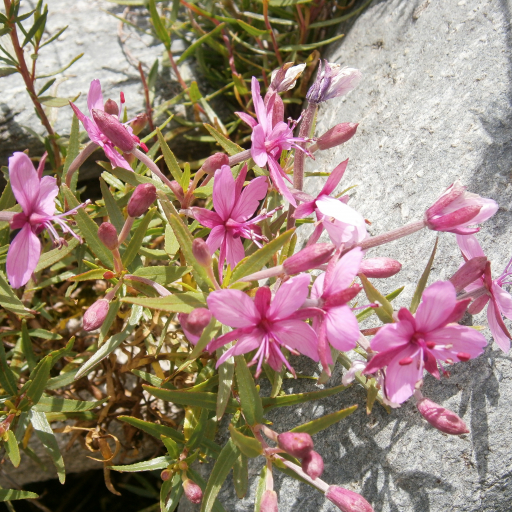
Plant Overview
Known as the "Alpine Willowherb," Epilobium fleischeri is a resilient beauty that calls the high-altitude peaks of the European Alps its home. It is a celebrated "pioneer species," often the first to paint bleak, rocky glacial moraines with splashes of vibrant magenta. This plant is a favorite among rock gardeners who want to capture the rugged, airy spirit of the mountains in their own backyard.
🔍 How to Identify
- 🌸 Vibrant Blooms: It produces large, four-petaled flowers in a striking deep pink or purplish-red, often featuring a prominent white, cross-shaped stigma at the center.
- 🌿 Narrow Foliage: The leaves are slender, lance-shaped, and a soft bluish-green color, designed to withstand the intense UV rays of high altitudes.
- 🏗️ Growth Habit: This is a low-clumping perennial that forms woody bases with upright stems, typically staying between 8 to 16 inches tall.
🏡 In Your Garden
- 🪨 The Drainage Expert: Because its natural habitat is glacial debris and gravel, it requires exceptionally well-draining soil. It is perfect for crevice gardens or alpine troughs where water can move freely away from the roots.
- ☀️ Sun Seeker: To keep its growth compact and its colors vivid, it needs full sun. In shaded areas, the stems may become "leggy" or floppy as they reach for the light.
⚠️ Safety & Toxicity
- ✅ Non-Toxic: Epilobium fleischeri is generally considered safe and non-toxic for humans, cats, and dogs.
- 🌱 Skin Sensitivity: While not poisonous, the sap of many willowherbs can occasionally cause very mild irritation to those with highly sensitive skin; wearing gloves during pruning is a simple precaution.
✨ Fun Fact
- 🎒 The Glacial Pioneer: This plant is essentially a nature-made "landscaper." By colonizing bare rocks left behind by retreating glaciers, it helps trap organic matter and stabilize the ground, making it possible for other, less hardy plants to grow there later!

Detailed Care Instructions
To grow Epilobium fleischeri plants, you can follow these steps:
- Seeds: Obtain fresh seeds of Epilobium fleischeri from a reputable seed supplier or collect them from mature plants during their blooming season.
- Stratification: Epilobium fleischeri seeds require a stratification period to simulate winter conditions. Place the seeds in a moist paper towel or seal them in a plastic bag with a damp substrate (vermiculite, peat moss, or sand) and refrigerate them for 4-6 weeks. This will break the seeds' dormancy and enhance germination.
- Germination: After the stratification process, sow the seeds either in pots or directly into the ground. Choose a well-draining soil mix comprising equal parts of garden soil, sand, and compost. Plant the seeds just below the soil surface.
- Watering: Keep the soil evenly moist but not waterlogged. Epilobium fleischeri prefers moist conditions, so ensure the soil doesn't dry out completely.
- Light: Place the containers or choose a planting site with partial shade to full sun exposure. Epilobium fleischeri can tolerate a wide range of light conditions but prefers bright, indirect sunlight.
- Temperature: Epilobium fleischeri plants thrive in cooler temperatures. The ideal temperature range for growth is between 15-25°C (59-77°F).
- Fertilizer: Epilobium fleischeri does not typically require heavy fertilization. However, you can use a balanced, slow-release fertilizer or organic compost in early spring to improve plant growth.
- Weeding and Mulching: Regularly weed the area around the plants to ensure they have optimum space and nutrients. Apply a layer of organic mulch, such as wood chips or straw, around the base of the plants to help retain moisture and suppress weed growth.
- Maintenance: Monitor the plants for pests or diseases and take appropriate measures to control them. Epilobium fleischeri is generally resistant to pests and diseases.
- Propagation: Once established, Epilobium fleischeri can spread through self-seeding. You can also divide mature plants during their dormant season to create new plants.
Remember to consult local gardening resources or botanical experts to ensure you are following specific guidelines suitable for your region and climate.

Place in a bright room that is sun drenched almost all day. Or directly in a south-facing window.

Epilobium Fleischeri plant, a member of the Onagraceae family, requires regular watering to thrive and stay healthy. Here's a detailed guide on how to properly water this plant:
1. Understanding the Plant's Watering Needs: Epilobium Fleischeri typically prefers moist but well-draining soil. It is important to mimic its natural habitat to promote optimal growth. This plant should not be allowed to completely dry out between watering intervals.
2. Choosing the Right Soil: Plant Epilobium Fleischeri in a soil mix that provides good drainage. A mix of equal parts organic matter (such as compost) and well-draining soil (like sandy or loamy soil) is ideal. This type of soil helps prevent waterlogged conditions that may be harmful to the roots.
3. Watering Frequency: Epilobium Fleischeri requires regular watering, especially during its active growth phases. Check the soil moisture level before watering, making sure the top inch of soil feels slightly dry to the touch. Avoid overwatering, as it can lead to root rot and other problems.
4. Watering Method: Use a watering can or a hose with a gentle spray nozzle to water the Epilobium Fleischeri plant. Apply water directly to the soil around the base of the plant, rather than overhead watering or misting the foliage. This ensures efficient hydration and prevents unnecessary moisture on the leaves.
5. Watering Time: It is best to water Epilobium Fleischeri early in the morning or late in the evening when temperatures are cooler. Watering during these times helps minimize water evaporation and allows the plant to absorb moisture better.
6. Adequate Drainage: Ensure the pot or planting site has proper drainage holes to allow excess water to escape. Standing water can suffocate the roots and lead to various diseases. If planting in a container, use a pot with drainage holes and place a layer of gravel or broken pottery at the bottom to aid proper drainage.
7. Observing the Plant: Regularly monitor your Epilobium Fleischeri plant for signs of underwatering or overwatering. Indications of underwatering include wilted or yellowing leaves, while overwatering may manifest as root rot, yellowing or browning leaves, or a foul odor.
8. Adjusting Watering Schedule: Fine-tune the watering frequency based on the specific needs of your Epilobium Fleischeri plant. Environmental factors like temperature, humidity, and the plant's growth stage can influence its water requirements. During hot and dry periods, you may need to increase watering, whereas in cooler seasons, you might reduce it.
Remember, this guide provides general watering recommendations for Epilobium Fleischeri plants. It is essential to consider factors such as your specific climate, soil conditions, and the plant's individual needs. Regularly observe the plant's response to watering to ensure it receives adequate moisture for optimum growth and health.
To fertilize your Epilobium fleischeri plant, follow these instructions:
- Choose a balanced, water-soluble fertilizer specifically designed for flowering plants.
- Dilute the fertilizer according to the package instructions. The recommended dilution ratio is usually 1 teaspoon of fertilizer per 1 gallon of water.
- Water the plant thoroughly before applying the fertilizer to ensure the soil is moist.
- Pour the diluted fertilizer solution around the base of the plant, avoiding direct contact with the leaves.
- Use enough fertilizer solution to moisten the soil around the plant without creating runoff. Be careful not to over-fertilize, as it can harm the plant.
- Repeat the fertilization process every two to four weeks during the growing season, typically from spring to early fall.
- Monitor the plant's response to the fertilizer. If it shows signs of excess fertilizer, such as wilting, yellowing leaves, or stunted growth, reduce the amount or frequency of fertilization.
- In the dormant season, usually winter, withhold fertilization as the plant's growth slows down.
- Regularly water the plant and ensure it receives adequate sunlight, as proper watering and light conditions are essential for the plant's overall health and growth in combination with fertilization.
Epilobium fleischeri, commonly known as (unable to provide common names), is a unique plant that requires specific soil conditions to thrive. The ideal soil for Epilobium fleischeri should have the following characteristics:
- Moisture Retention: Epilobium fleischeri prefers soil that retains moisture well without becoming waterlogged. It is essential to maintain consistent soil moisture, as extremes of drought or waterlogging can harm the plant's health. The soil should have good drainage, preventing water from pooling around the roots.
- pH Level: The plant typically thrives in slightly acidic to neutral soil, with a pH range of around 6.0 to 7.0. Neutral soils with a pH of 7.0 are generally considered ideal, but slight variations within the given range are usually well-tolerated by the plant.
- Organic Matter: Incorporating organic matter, such as well-rotted compost or leaf mold into the planting area, can help improve soil structure, nutrient availability, and moisture retention. This type of soil amendment enhances the overall health and vigor of Epilobium fleischeri.
- Nutrient Content: Epilobium fleischeri generally performs best in soil that is nutrient-rich. Before planting, it is advisable to enrich the soil with balanced organic fertilizers or slow-release granular fertilizers formulated for flowering plants. This ensures an adequate supply of essential nutrients for sustained growth and flowering.
- Texture: The plant prefers slightly loamy soil with a well-draining texture. A loamy soil mix ensures a balance between water retention and drainage, preventing excess moisture around the roots while retaining enough to keep the plant hydrated.
Ensure that the recommended soil conditions are provided to support the healthy growth and development of Epilobium fleischeri. By creating an optimal soil environment, you can encourage vigorous growth, vibrant foliage, and bountiful flowering in this unique plant.
Epilobium fleischeri is a perennial flowering plant that is commonly propagated through methods such as seed collection, division, and stem cuttings. Here is a detailed explanation of how to propagate Epilobium fleischeri:
- Seed collection: The most common and easiest way to propagate Epilobium fleischeri is through seeds. To collect the seeds, wait until the seedpods turn brown and start to split open. This usually occurs in late summer or early fall. Harvest the seedpods by gently shaking them into a container or by snipping the stems with a pair of clean scissors. Make sure the seedpods are completely dry before further processing.
- Seed preparation: After collecting the seeds, it is important to prepare them for planting. Start by removing any chaff or debris by gently rubbing the seeds between your fingers. You can also slightly crush the pods to release the seeds. Once cleaned, store the seeds in a breathable container such as a paper envelope or a mesh bag until you're ready to plant them.
- Planting seeds: Choose a well-draining potting mix and fill a small tray or pots with it. Moisten the soil slightly and scatter the Epilobium fleischeri seeds evenly on the surface, gently pressing them into the soil. Cover the tray with a plastic dome or a clear plastic wrap to create a greenhouse-like environment. Place the tray in a warm, bright location but avoid direct sunlight.
- Seed germination: Epilobium fleischeri seeds usually take a couple of weeks to germinate. Check the tray regularly to ensure that the soil remains moist but not waterlogged. Once the seedlings start emerging, remove the plastic cover and gradually expose them to more light. Keep watering the seedlings as needed and provide them with a light, balanced fertilizer every few weeks.
- Division: Another method to propagate Epilobium fleischeri is by division. This is typically done in early spring or when the plant is dormant. Start by gently digging up the entire plant, taking care not to damage the roots. Use a clean knife or garden tool to divide the plant into smaller sections, ensuring that each section has its own set of roots. Replant the divided sections immediately at the same depth they were previously growing. Water thoroughly and continue to care for the new plants as you would for established ones.
- Stem cuttings: Epilobium fleischeri can also be propagated through stem cuttings. Choose healthy, non-flowering stems and cut them into sections of around 4-6 inches in length. Remove any leaves from the lower half of the stem and dip the cut end into a rooting hormone powder or gel to promote root development. Plant the cuttings into a pot filled with a well-draining potting mix, making sure the lower nodes are buried in the soil. Place the pot in a warm, bright location and keep the soil evenly moist. Roots should start forming within a few weeks.
Remember to provide the propagated Epilobium fleischeri plants with proper care, including adequate sunlight, regular watering, and well-draining soil. With the right conditions, these propagated plants will grow and thrive, adding beauty to your garden.








