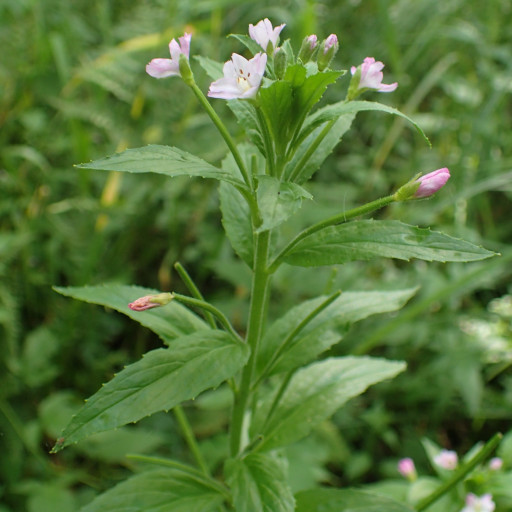
Plant Overview
Often called the "Small-flowered Willowherb," this unassuming plant is a staple of European meadows and damp garden corners. While many gardeners dismiss it as a mere weed, it has a long-standing history in traditional European herbalism, particularly celebrated by famed herbalists like Maria Treben. Its modest appearance hides a hardy survivor that can colonize disturbed soil with impressive speed.
🔍 How to Identify
- 🌸 Petite Petals: It features very small, pale pink to light purple flowers, usually only 6–9 mm wide, with four deeply notched petals that create a distinct "cloven" look.
- 🍃 Fuzzy Foliage: True to its other nickname, the "Hoary Willowherb," the stems and lance-shaped leaves are covered in fine, soft hairs that give the plant a slightly velvety or greyish sheen.
- 📏 Sturdy Stature: It typically grows upright on a single, mostly unbranched stem that can reach up to 80 cm, ending in a long raceme of flowers and seed pods.
🏡 In Your Garden
- 💧 The Moisture Marker: This plant is a natural "hydrology indicator." It thrives in damp, nitrogen-rich soils, so if you see it popping up, it’s a sign that your soil is holding onto quite a bit of moisture.
- 🌬️ Spreading Strategy: It is a prolific self-seeder. Once the flowers fade, they develop into long, thin pods that split open to release hundreds of seeds equipped with silky "parachutes" to catch the wind. To keep it from taking over, it's best to pull it before it goes to seed.
⚠️ Safety & Toxicity
- ✅ Generally Safe: Epilobium parviflorum is non-toxic to humans and is frequently harvested for use in dried teas.
- 🐾 Pet Sensitivity: While not considered poisonous to cats or dogs, the plant contains high levels of tannins and macrocyclic ellagitannins, which might cause mild stomach upset if your pet decides to graze on a large amount of the foliage.
✨ Fun Fact
Each tiny seed is attached to a tuft of white hairs called a "comose." These act exactly like a paraglider, allowing the seeds to stay airborne for long distances, which is why you’ll often find this plant growing in the middle of a city crack or a high rooftop gutter!

Detailed Care Instructions
To successfully grow Epilobium Parviflorum, also known as Small-flowered Willowherb, follow these steps:
- Climate and Soil: Determine if the plant is suitable for your climate. Epilobium Parviflorum is native to Europe and can thrive in temperate regions. The plant prefers moist, well-draining soil with a pH range of 6 to 7.5.
- Planting: Choose a location with partial shade to full sun exposure. Start by preparing the soil and removing any weeds or debris. Dig a hole that is slightly larger and deeper than the plant's root ball.
- Watering: Once planted, water the Epilobium Parviflorum regularly, especially during periods of extended dryness. Ensure the soil remains consistently moist but not waterlogged.
- Fertilization: Epilobium Parviflorum generally doesn't require heavy fertilization. However, you can add organic compost or a balanced, slow-release fertilizer during the spring to promote healthy growth.
- Mulching: Apply a layer of organic mulch around the base of the plant to help retain moisture, prevent weed growth, and maintain a cooler temperature for the roots.
- Pruning: Trim back any dead or overgrown branches in late winter or early spring to encourage new growth. This plant responds well to pruning and can be shaped to your desired form.
- Propagation: Epilobium Parviflorum can be propagated through division, cuttings, or planting seeds. Division involves separating the plant into smaller sections and replanting them individually. Stem cuttings can be taken in spring or early summer and rooted in a moist, well-draining medium. Seeds can be collected from spent flowers and sown either directly into the ground or started indoors.
Remember to always research and follow any specific care instructions for the Epilobium Parviflorum variety you have.

Place in a bright room that is sun drenched almost all day. Or directly in a south-facing window.

To water this plant, it is important to ensure that the soil is evenly moist but not waterlogged. This can be achieved by watering deeply but infrequently, allowing the top inch or so of soil to dry out before watering again. The amount and frequency of watering may vary depending on factors such as climate, soil type, and container size. It is recommended to use a watering can or hose with a gentle spray nozzle to avoid damaging the delicate foliage. Additionally, this plant prefers a slightly acidic soil, so using rainwater or adding a small amount of acidic fertilizer to the water can be beneficial.
To fertilize this plant, first choose a balanced fertilizer with equal parts nitrogen, phosphorus, and potassium. Apply the fertilizer in the spring when new growth appears, and again in mid-summer. Use a granular fertilizer and spread it evenly over the soil around the plant, being careful not to get it on the foliage or the stem. Water the plant thoroughly after fertilizing to help distribute the nutrients. Avoid over-fertilizing, as this can cause damage to the plant.
Epilobium Parviflorum prefers a soil that is well-drained, fertile, and loamy, with a pH between 6.0 and 7.5. The soil should be rich in organic matter and able to hold moisture without becoming waterlogged. Additionally, it is important to avoid heavy, clay soils, as they can lead to poor drainage and root rot. Adding compost or other organic matter to the soil can help improve its structure and fertility. Epilobium Parviflorum prefers full sun to partial shade, and regular watering during the growing season is important to keep the soil moist but not saturated.
To propagate this plant, you will need to collect the seeds from a mature plant or take stem cuttings. To collect seeds, wait until the flower heads have dried out and the seeds have ripened. Shake the plant gently to release the seeds into a container. Alternatively, take stem cuttings in the spring or fall when the plant is actively growing. Select healthy stems and cut them at a 45-degree angle, making sure they are at least 6 inches long. Remove the bottom leaves and dip the cut ends in rooting hormone. Plant the stem cuttings in moist soil in a pot and keep them in a shaded, cool location until they root. Water the cuttings regularly and once they have taken root, they can be transplanted into their permanent location. With proper care, the cuttings or seeds will grow into mature plants.
Common pests of the hoary willowherb include Aphids, larvae. Make a habit of checking your hoary willowherb frequently for pests so that any infestations can be caught and managed early.








