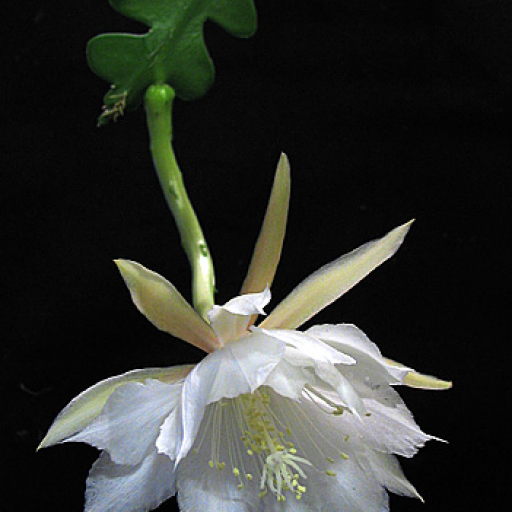
Plant Overview
Known by the whimsical nicknames Fishbone Cactus or Zig-Zag Cactus, this Mexican native is a true showstopper that defies the traditional "prickly" cactus stereotype. Instead of spines and desert dunes, this plant prefers the humid embrace of tropical forests, where its undulating stems dangle elegantly from tree branches. It’s the perfect choice for those who want a "jungle cactus" aesthetic that is both architectural and easy to handle.
🔍 How to Identify
- 🦴 Stem Structure: Features deeply lobed, flat green stems that resemble a fish skeleton or a piece of ric-rac ribbon.
- 🌵 Texture: The stems are smooth, waxy, and succulent-like. Unlike desert cacti, they are largely spineless, though tiny, harmless bristles may appear on new growth.
- 🌸 The Bloom: Produces stunning, large, creamy-white flowers that can reach up to 5 inches across. They are incredibly fragrant but only reveal themselves for one night.
🏡 In Your Garden
- 🌳 Epiphytic Roots: In its natural habitat, this plant grows on trees rather than in the ground. Because of this, it hates "wet feet." It thrives best in a chunky, airy potting mix—think orchid bark and perlite—to ensure the roots can breathe.
- 🌤️ Light Nuance: While it loves light, direct midday sun can scorch its "fins," turning them a sickly yellow. It prefers bright, filtered light, mimicking the dappled sunshine of a tropical forest canopy.
⚠️ Safety & Toxicity
- 🐾 Status: Non-Toxic and Pet-Friendly.
- 👶 Details: The Fishbone Cactus is considered safe for cats, dogs, and children. Its lack of sharp spines makes it a much safer alternative to traditional cacti for households with curious toddlers or playful pets.
✨ Fun Fact
- 🌙 Midnight Magic: Because it is pollinated by nocturnal moths in the wild, its flowers only open after the sun goes down. A single bloom usually lasts only until dawn, making a flowering event a rare, late-night celebration for plant parents!

Detailed Care Instructions
To grow Epiphyllum Anguliger, also known as the Fishbone Cactus or Zig Zag Cactus, follow these steps:
- Choose a suitable location: Epiphyllum Anguliger prefers bright, indirect light. Place it near a window with filtered sunlight or in a spot with bright shade. Avoid direct sunlight as it can scorch the leaves.
- Use well-draining soil: Epiphyllum Anguliger thrives in well-draining soil. Prepare a mixture of cactus soil or a combination of regular potting soil, perlite, and sand to improve drainage.
- Water properly: Water the plant thoroughly when the top inch of the soil is dry. Allow excess water to drain out from the bottom of the pot. Avoid overwatering as it can lead to root rot. During winter, reduce watering and allow the soil to dry out more between waterings.
- Maintain humidity: Epiphyllum Anguliger appreciates higher humidity levels. You can increase humidity by misting the leaves regularly or placing the pot on a tray filled with water and pebbles to create a humid microclimate.
- Fertilize regularly: Feed your Epiphyllum Anguliger every two weeks during the growing season (spring and summer) with a balanced cactus fertilizer or a diluted houseplant fertilizer. Follow the recommended dosage on the product label.
- Prune when necessary: If the plant becomes leggy or unruly, prune it by cutting back the stems just above a leaf segment to encourage branching and a bushier shape. You can propagate the cuttings by placing them in well-draining soil or water until they develop roots.
- Provide proper temperature: Epiphyllum Anguliger prefers temperatures between 60-75°F (15-24°C). Avoid exposing the plant to extreme cold or hot drafts.
- Monitor pests: Keep an eye out for common houseplant pests such as mealybugs and spider mites. If you notice any infestation, treat it promptly with insecticidal soap or neem oil.
By following these care guidelines, you can successfully grow and maintain an Epiphyllum Anguliger plant.

Place in a window with dappled sun or a spot in the middle of a room. Or directly in a window facing west or east.

Epiphyllum Anguliger is a type of plant that requires regular watering to stay healthy and thrive. When watering Epiphyllum Anguliger, it is important to take care not to overwater or under-water the plant.
To water Epiphyllum Anguliger, you should begin by filling a watering can or container with clean, room temperature water. Next, carefully pour the water over the soil and root area of the plant until the soil is visibly moistened.
It is important not to allow the plant to sit in standing water, as this can lead to root rot or other plant diseases. Be sure to allow excess water to drain away from the plant's roots, and avoid watering the foliage as this can encourage fungal growth.
In general, Epiphyllum Anguliger should be watered once or twice a week during the growing season, and less frequently during the dormant winter months. Be sure to monitor the soil moisture level regularly and adjust your watering schedule as needed to keep the plant healthy and happy.
To fertilize this plant, use a balanced fertilizer with an N-P-K ratio of 10-10-10. Dissolve the fertilizer in water according to the manufacturer's instructions and apply every two weeks during the growing season. During the dormant season, reduce the frequency of fertilization to once a month. Always water the plant thoroughly before applying the fertilizer to prevent root burn. Avoid fertilizing when the soil is dry, as this can also damage the roots.
The Epiphyllum Anguliger plant thrives well in well-draining soil that is rich in nutrients. A soil mixture that consists of a combination of peat moss, perlite, and sand is recommended for this plant. Peat moss helps to retain moisture and provide the plant with adequate nutrients, while perlite enhances drainage and prevents soil compaction. Sand also improves drainage and allows air to circulate freely around the plant's roots. Avoid using heavy soils or those that retain water for too long, as this may lead to root rot. It is also recommended to add organic matter, such as compost or leaf mold, to the soil mixture to provide additional nutrients and promote healthy growth.
To propagate this plant, you will need to take stem cuttings from a mature plant. Choose a healthy stem that has at least two leaves. Use a sterile sharp knife or scissors to make a clean cut at a 45-degree angle. The cutting should be about 6 inches long.
Next, allow the cutting to dry for a few hours to prevent infection. Meanwhile, prepare a potting mix that consists of equal parts peat moss, vermiculite, and perlite. Fill a small pot with the potting mix and make a hole in the center.
Insert the stem cutting into the hole and gently press the soil around it. Water the cutting lightly and cover the pot with a plastic bag to create a mini greenhouse. Place the pot in a warm, bright spot, but out of direct sunlight.
Keep the potting mix moist but not too wet, and mist the cutting daily to keep the humidity high. After a few weeks, check for roots by gently tugging on the cutting. If it resists, roots have formed.
Once the roots have developed, remove the plastic bag and gradually expose the plant to more light and air. Transplant the new plant into a larger pot and care for it like you would a mature plant.








