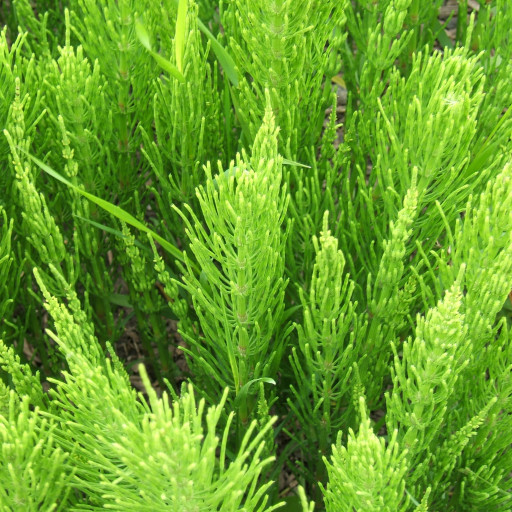
Plant Overview
Often called a "living fossil," the Common Horsetail is a prehistoric survivor that once grew as tall as trees during the Paleozoic era. Known by quirky nicknames like "Bottle Brush" or "Scouring Rush," this plant doesn't produce flowers or seeds, instead reproducing via spores much like ferns. It is a resilient, rugged plant that tells a story of deep botanical history in every jointed stem.
🔍 How to Identify
- 🌿 Dual Stems: In early spring, look for pale brown, succulent "fertile" stems topped with a cone-like spore head. Later, these are replaced by green, "sterile" stems that look like miniature pine trees.
- 🍃 Whorled Branches: The green stems feature circles of thin, needle-like branches radiating from joints, giving it the signature "horse's tail" appearance.
- 📏 Gritty Texture: If you run your fingers along the stem, it feels surprisingly rough and scratchy. This is due to the high concentration of silica crystals embedded in its tissues.
🏡 In Your Garden
- 💧 Moisture Indicator: This plant is a nature-made moisture sensor; it thrives in damp, poorly drained soil and often signals a high water table or clay-heavy earth.
- 🚧 Thug Mentality: While beautiful in a wild or "prehistoric" garden bed, be cautious! It spreads through deep, creeping rhizomes that can dive several feet underground, making it incredibly difficult to remove once established.
- 🛠️ Soil Context: It prefers acidic to neutral soils and is often found in ditches or at the edges of ponds where other plants might struggle with "wet feet."
⚠️ Safety & Toxicity
- 🐴 Livestock Warning: While generally safe for humans to touch, it is toxic to horses and livestock if consumed in large quantities, as it contains an enzyme that depletes Vitamin B1.
- 🐈 Pets & Kids: It is not considered highly toxic to cats or dogs, but its high silica content can cause digestive upset if chewed. It’s best used as an ornamental rather than a snack.
✨ Fun Fact
Before the invention of modern sponges, campers and woodworkers used Horsetail as "natural sandpaper." Its high silica content makes it so abrasive that it can be used to scour grime off metal pots or polish fine wooden furniture!

Detailed Care Instructions
To grow Equisetum Arvense plants, also known as horsetails, follow these steps:
- Select a suitable location: Equisetum Arvense prefers moist soil conditions and partial shade. Choose a spot in your garden or yard that receives some shade during the day.
- Prepare the soil: Horsetails grow well in a variety of soil types but prefer slightly acidic soils. Improve the soil drainage by adding organic matter, such as compost or well-rotted manure.
- Purchase or obtain horsetail rhizomes: Rhizomes are the underground stems of the plant from which new shoots emerge. You can either purchase horsetail rhizomes from a nursery or, if you live in an area where horsetails are already present, you can dig them up from the wild. Be aware that horsetails can become invasive, so keep them contained in a pot or controlled area if desired.
- Plant the rhizomes: Dig a shallow trench or hole in the prepared soil. Place the rhizomes horizontally in the soil, covering them with a thin layer of soil. Ensure the growing tips of the rhizomes are facing upwards.
- Water regularly: Horsetails require consistent moisture, so regularly water the plants to keep the soil consistently moist. However, avoid waterlogging, as excessive moisture can rot the rhizomes.
- Mulch and control weeds: Apply a layer of mulch around the horsetail plants to help retain moisture and suppress weed growth. Mulch can consist of organic materials like wood chips, straw, or compost.
- Monitor growth: Equisetum Arvense is a relatively low-maintenance plant, but it can spread rapidly if not monitored. Keep an eye on its growth and prune or remove any shoots that are unwanted or start spreading beyond the desired area.
- Keep pests in check: Horsetails are relatively resistant to most pests and diseases. However, occasional infestations of aphids or scale insects may occur. Monitor your plants regularly and apply appropriate organic insecticides if necessary.
- Optional: Division and propagation - After a few years, you may notice dense clumps forming. You can divide these clumps by carefully digging up the rhizomes and separating them into smaller sections. Replant these divisions in desired areas or share them with fellow gardeners.
By following these steps, you can successfully grow Equisetum Arvense plants in your garden or yard.

Place in a bright room that is sun drenched almost all day. Or directly in a south-facing window.

Equisetum Arvense plants require regular watering, but overwatering should be avoided. It is important to water them deeply but infrequently, allowing the soil to dry out slightly between waterings. It is recommended to provide them with a consistently damp soil environment. They can tolerate brief drought periods but will not thrive if left dry for long periods of time. It is also important to use water that is not too hard or soft, as extreme levels of minerals in the water can harm the plant. These plants can be grown in well-draining soil with good water retention, such as sandy or loamy soils. Additionally, they can be grown in containers with drainage holes to ensure adequate water drainage.
To fertilize this plant, use a balanced fertilizer with equal amounts of nitrogen, phosphorus, and potassium. Apply the fertilizer once in the spring and once in the fall. Mix the fertilizer with water according to the instructions on the package and pour it around the base of the plant. Avoid getting the fertilizer on the foliage or stems of the plant, as this can burn the plant. Water the plant thoroughly after fertilizing to help the nutrients penetrate the soil.
When selecting soil for the Equisetum Arvense plant, it is important to choose a well-draining soil that is rich in nutrients. The pH of the soil should range from slightly acidic to slightly alkaline, around 6.0 to 7.5. A soil mix containing peat moss, sand, loamy soil, and perlite or vermiculite is ideal for this plant.
Equisetum Arvense prefers to grow in moist soils, so it is recommended to keep the soil consistently moist but not waterlogged. Alternatively, the plant can be grown in standing water, such as in a pond or water garden.
It is important to note that Equisetum Arvense can spread aggressively if not grown in a contained area, so it is recommended to use a barrier to limit its growth. This can be achieved by planting it in a large container with a sturdy bottom or by using a physical barrier such as a plastic or metal sheet sunk into the soil around the plant.
When planting Equisetum Arvense, be sure to bury the roots deep enough to keep the plant stable and ensure good contact with the soil. After planting, it is important to water the plant thoroughly and regularly until it becomes established.
To propagate this plant, you need to take a mature stem and divide it into several sections. Each section should have a few nodes on it. Next, you should plant each section in good quality soil and water it regularly. This plant prefers moist soil, so you should make sure to keep the soil moist, but not waterlogged. You can also dip the sections in rooting hormone before planting to increase their chances of rooting successfully. With proper care, the sections should root and start growing in a few weeks.








