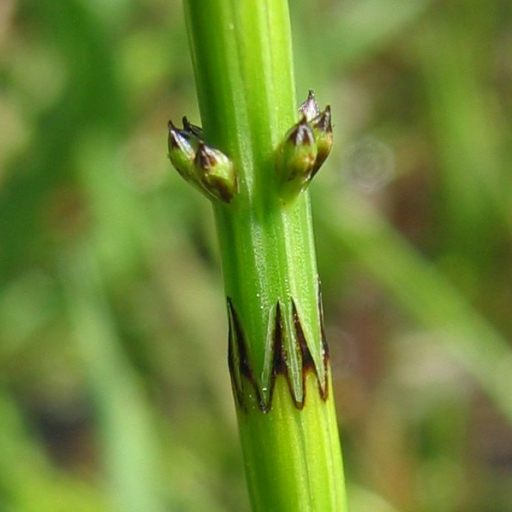
Plant Overview
Known as the "Marsh Horsetail," this plant is a living relic from the Carboniferous period, a time when its ancestors grew as tall as skyscrapers. While it might look like a miniature, prehistoric pine tree, it is actually a seedless vascular plant that reproduces via spores rather than flowers. It is most at home in soggy, damp environments where other plants might struggle with "wet feet."
🔍 How to Identify
- 🌿 Jointed Stems: The main stem is bright green, deeply furrowed, and divided into distinct segments that can be easily pulled apart (though this isn't recommended if you want the plant to thrive).
- 🖤 Black-Toothed Sheaths: At each joint, you’ll find a small "sheath" with 6 to 12 tiny, black-tipped teeth. These are actually the plant's highly reduced leaves.
- 🌲 Whorled Branches: Simple, slender branches grow in circles (whorls) from the joints. In the Marsh Horsetail, the first segment of these branches is always shorter than the stem sheath, which helps distinguish it from its cousin, the Common Field Horsetail.
🏡 In Your Garden & Landscape
- 💧 The Bog Lover: This plant is an obligate wetland species. If you find it in your yard, it’s a biological indicator that your soil is consistently saturated or has a very high water table. It thrives in mud, fens, and the edges of ponds.
- 🏃 Aggressive Spreader: Like most horsetails, it spreads via deep, creeping rhizomes. It is famously difficult to remove once established because even a tiny fragment of a root left in the soil can regenerate into a full plant. It is best enjoyed in wild spaces rather than curated flower beds.
⚠️ Safety & Toxicity
- 🚫 Toxic to Livestock: This species is significantly more toxic than other horsetails. It contains thiaminase, an enzyme that breaks down Vitamin B1 (thiamine).
- 🐴 Equisetosis: It is particularly dangerous to horses and cattle if mixed into hay. Ingestion can lead to "equisetosis," causing lack of coordination, staggering, and in severe cases, death. It is generally not considered a threat to humans unless consumed in large quantities, but it should be kept away from curious pets.
✨ Fun Fact
Horsetails are often called "Scouring Rushes." Their stems are packed with silica—the same mineral found in quartz—which makes them so abrasive that early pioneers and campers used bundles of the plant to scrub their metal pots and pans until they shone!

Detailed Care Instructions
To grow Equisetum palustre, also known as marsh horsetail or swamp horsetail, you can follow these steps:
- Obtain the plants or spores: You can either purchase young Equisetum palustre plants from a nursery or collect spores from mature plants. Spores are usually available in late summer or early fall.
- Choose a suitable location: Equisetum palustre prefers to grow in wet or marshy areas. Find a spot in your garden or yard that receives partial shade to full sun and has consistently moist soil. Avoid areas with standing water as it may cause root rot.
- Prepare the soil: Equisetum palustre is adaptable to a wide range of soil types, including clay, sand, and loam. However, it thrives best in rich, organic, and slightly acidic soil. Work in some compost or well-rotted manure to improve soil fertility and drainage.
- Planting spores or small plants: If starting from spores, sprinkle them over the prepared soil and gently press them into the ground. Keep the soil moist but not waterlogged. If using young plants, dig a small hole, place the plants in the hole, and cover their roots with soil.
- Watering: Equisetum palustre requires consistently moist soil, so water regularly to keep the soil damp. Avoid letting the soil dry out completely, but make sure it doesn't become waterlogged. Frequent watering may be necessary during dry periods.
- Mulching: Apply a layer of organic mulch, such as straw or wood chips, around the base of the plants. This helps retain moisture and suppress weed growth.
- Maintenance: Equisetum palustre is relatively low-maintenance. However, you may need to control its spread, as it can become invasive. Planting it in containers or using barriers can help contain its growth. Regularly remove any dead or yellowing fronds to encourage new growth.
- Propagation: If desired, you can propagate Equisetum palustre by dividing existing clumps in early spring or late fall. Carefully dig out a clump and separate it into smaller sections, each with some root mass. Replant the divided sections in suitable locations.
Remember that Equisetum palustre may require specific conditions to thrive, so it's essential to research and understand its specific requirements for your particular climate and growing conditions.

Place in a bright room that is sun drenched almost all day. Or directly in a south-facing window.

Equisetum Palustre is a type of plant that requires a consistent supply of water to thrive. When watering this plant, it's important to make sure that you are giving it the appropriate amount of water, as too much or too little water can harm the plant.
To water Equisetum Palustre, you should begin by determining the moisture level in the soil. Check the soil at a depth of about 2 inches to see if it feels dry to the touch. If it does, it's time to water the plant.
When watering, make sure to use a gentle stream of water to avoid disturbing the soil or damaging the plant. Water slowly and evenly around the base of the plant to ensure that the water reaches the roots.
You should continue watering until the soil feels moist about 2 inches down. However, it's important not to overwater the plant, as this can lead to root rot and other issues.
In general, Equisetum Palustre should be watered about once a week, but this can vary depending on factors such as temperature, humidity, and soil type. Be sure to monitor the moisture level in the soil and adjust your watering schedule accordingly.
To properly fertilize this plant, first evaluate the type of soil it is growing in and determine the appropriate type of fertilizer. A balanced liquid fertilizer with equal concentrations of nitrogen, phosphorus, and potassium is recommended. Apply the fertilizer sparingly once a month during the growing season, which is typically from spring to early fall. Over-fertilization can harm the plant, so be cautious not to apply too much.
The Equisetum Palustre plant prefers soil that is moist and well-draining. The soil should be rich in organic matter and have a slightly acidic pH level. A mixture of peat moss, sand, and loam soil is ideal for this plant. It is important to avoid using soil that is compacted or heavy, as this can lead to poor drainage and root rot. The plant also prefers to grow in areas that are partially shaded, as too much direct sunlight can scorch the delicate leaves. When planting Equisetum Palustre, be sure to use a container that is large enough to accommodate the plant's deep root system and provide ample drainage holes to prevent waterlogging.
To propagate this plant, take rhizome cuttings from mature plants during the dormant season. Cut the rhizomes into sections with at least one bud each and plant them horizontally in moist soil. Water regularly and keep the cuttings in a warm, bright location. Within a few weeks, new shoots should appear from the buds, indicating successful propagation. It is important to note that this plant can be invasive and should be planted in contained areas with caution.








