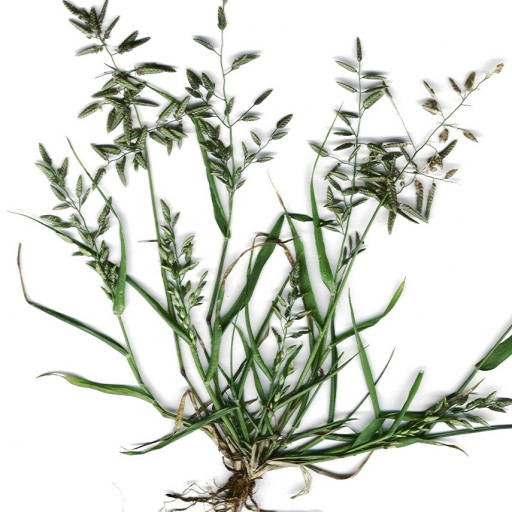
Plant Overview
Commonly known as Stinkgrass or Candy Grass, this annual tufted grass is a globetrotter that has made itself at home in gardens and roadsides worldwide. While its name might sound unappealing, its delicate, lead-colored seed heads have a shimmering, architectural beauty. It earned its primary nickname from the tiny glands on its leaves that emit a distinct, musty odor—a natural chemical defense against hungry herbivores.
🔍 How to Identify
- 🌾 The Spikelets: The flower heads are dense, flattened, and grey-green (lead-colored), often looking like tiny, multi-layered shingles or intricately braided hair.
- 👃 Scent Glands: If you look closely at the leaf edges or stems, you’ll see tiny, crater-like glands. When crushed or even after a light rain, these release a pungent, "stinky" aroma.
- 📏 Growth Habit: It grows in low, spreading tufts, usually reaching about 12 to 20 inches in height. The stems often bend sharply at the "knees" (nodes) where they touch the ground.
🏡 In Your Garden
- ☀️ Sun Seeker: This grass thrives in the hottest, driest spots of your yard where other plants might fail. It loves disturbed soil, such as the cracks in a sidewalk or the parched edges of a garden bed.
- 🌱 The Opportunist: Because it produces thousands of seeds, it can quickly become a "weed" in manicured lawns. It doesn't compete well with tall plants, but it will happily fill any bare, sunny patch of earth you leave unattended.
⚠️ Safety & Toxicity
- 🐎 Livestock Warning: While generally harmless to humans and common household pets like cats and dogs, Stinkgrass is known to be toxic to horses if eaten in large quantities, potentially causing intestinal irritation or respiratory issues.
- 🚫 Low Irritation: It is not known to cause skin rashes, though the sticky glands can pick up dust and debris, making the plant feel "gritty" to the touch.
✨ Fun Fact
- 🍬 Sweet or Sour? Despite its foul-smelling reputation, one of its common names is "Candy Grass." This doesn't refer to its taste or smell, but rather the visual resemblance of its tiered, flattened seed heads to old-fashioned ribbon candy!

Detailed Care Instructions
To successfully grow Eragrostis Cilianensis (or Perennial Lovegrass), you can follow these steps:
- Climate and soil requirements: E. Cilianensis prefers warm climates and can tolerate a wide range of soil types. However, it thrives best in well-drained sandy or loamy soil.
- Choose a suitable location: Select a sunny area in your garden that receives at least 6-8 hours of direct sunlight each day.
- Prepare the soil: Before planting, prepare the soil by removing any weeds or grasses. Loosen the soil with a garden fork or tiller to improve drainage.
- Planting: E. Cilianensis can be propagated from seeds. Scatter the seeds over the prepared soil and gently press them into the ground. Avoid burying the seeds too deep, as they require light to germinate. Water the area thoroughly after planting.
- Watering: Water regularly, especially during the initial stages of growth. Keep the soil moist but not waterlogged. Once established, E. Cilianensis is relatively drought-tolerant.
- Fertilization: Apply a balanced organic fertilizer, such as a slow-release granular fertilizer, during the growing season to provide necessary nutrients. Follow the recommended application rate specified on the fertilizer package.
- Maintenance: Regularly remove weeds or grasses around the E. Cilianensis plants to minimize competition for nutrients and water. Keep the surrounding area weed-free.
- Pruning: Although E. Cilianensis does not require extensive pruning, you may trim back any damaged or dead foliage to enhance its appearance.
- Pests and diseases: E. Cilianensis is generally resistant to common pests and diseases. However, keep an eye out for any signs of infestation or disease and promptly take necessary actions if required.
- Division (optional): Over time, E. Cilianensis may spread and form clumps. If the plant becomes overcrowded, you can divide the clumps and replant them in other areas of your garden.
Remember to consult local gardening resources for specific guidance on growing Eragrostis Cilianensis in your area, as climatic conditions and soil types can vary.

Place in a bright room that is sun drenched almost all day. Or directly in a south-facing window.

To properly water the plant, you should thoroughly moisten the soil around the roots. This can be done by slowly pouring water at the base of the plant until you see the water begin to pool on the surface. Allow the water to soak in and then repeat the process until the soil is evenly moist. However, it's important not to overwater the plant, as this can lead to root rot. Be sure to check the soil regularly and only water when the top inch of soil feels dry to the touch. Additionally, make sure the plant has adequate drainage to prevent water from collecting around the roots.
To fertilize this plant, apply a balanced, slow-release fertilizer in the early spring or late fall. Incorporate the fertilizer into the soil around the base of the plant and water thoroughly. Avoid over-fertilization, as it can lead to excessive growth and weaken the plant overall.
The ideal soil for this plant should have a light texture with good drainage. It thrives in well-draining soils, such as sandy or loamy with a pH of around 6.8. The soil should be rich in organic matter and nutrients, and should be regularly watered to maintain proper moisture levels. It is recommended that the soil is not compacted, as this can inhibit root growth. The plant prefers soil that is slightly acidic but can tolerate slightly alkaline soil tolerably. It is best to use a soil with a mix of sand and loam for optimum growth.
To propagate this plant, you can begin by collecting seeds from mature plants. The seeds should be sown in well-draining soil and kept in a warm, sunny location. Water the soil regularly but avoid over-watering to prevent the development of root rot.
Once the seedlings have grown a few inches tall, they can be transplanted to their permanent location. Eragrostis Cilianensis prefers full sun and well-draining soil, so be sure to choose a location that meets these requirements.
Another method of propagation is through division. To do this, dig up an established plant and separate it into smaller sections, making sure each section has some roots attached. Transplant the divisions to the desired location, being careful not to damage the roots.
Overall, propagating Eragrostis Cilianensis requires patience and attention to detail, but with the right care, you can successfully propagate this plant and enjoy its beauty for years to come.








