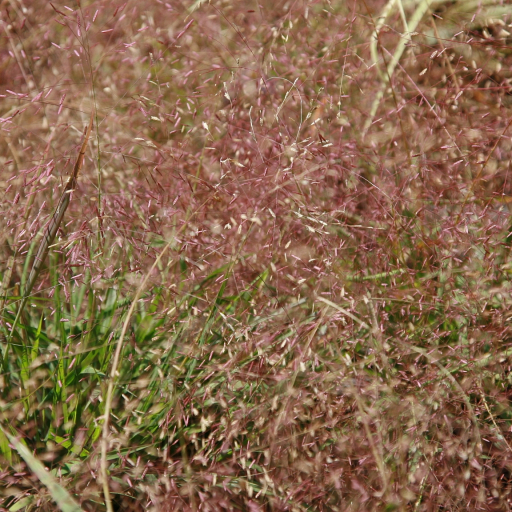
Plant Overview
Often called "Purple Lovegrass," this North American native is a showstopper in late summer when it produces a dreamy, ethereal haze of tiny purple flowers. It is a favorite for gardeners looking to add soft texture and movement to their landscape, often appearing like a low-lying violet cloud settled across the garden floor. Its nickname, "Tumblegrass," hints at its clever way of traveling across the plains.
🔍 How to Identify
- 🌸 Floral Haze: It produces vast, airy panicles (flower clusters) that range from vibrant reddish-purple to soft lavender, creating a "smoke" effect.
- 🍃 Leaf Texture: Features narrow, flat, light-green leaves that form a dense, low-growing basal clump before the flower stalks emerge.
- ☁️ Growth Habit: This is a warm-season bunchgrass that stays relatively short, typically forming mounds that reach about 18 to 24 inches in height.
🏡 In Your Garden
- ☀️ Sun & Sand: This grass thrives in "poor" conditions where other plants struggle. It specifically loves sandy or gravelly soil and intense full sun; too much fertilizer or rich soil can actually cause the plant to lose its tidy shape.
- 💧 Drought Hero: Because it possesses a deep root system, it is incredibly drought-tolerant once established. It’s an ideal choice for xeriscaping, erosion control on dry slopes, or filling in gaps along sunny walkways.
⚠️ Safety & Toxicity
- 🐾 Pet Friendly: Purple Lovegrass is generally considered non-toxic to dogs, cats, and horses, making it a "worry-free" addition to family backyards.
- 🛡️ Non-Irritant: Unlike some ornamental grasses with razor-sharp edges, Eragrostis spectabilis is relatively soft, though the dried seed heads can feel slightly scratchy in late autumn.
✨ Fun Fact
- 🌬️ The Purple Tumbleweed: Once the seeds are fully ripe in the fall, the entire airy flower head often breaks off at the base. It then rolls across the landscape with the wind, acting just like a tumbleweed to disperse its seeds far and wide!

Detailed Care Instructions
To grow Eragrostis spectabilis, also known as Purple Love Grass, follow these steps:
- Purchase seeds or seedlings from a reputable supplier.
- Choose a sunny location with well-draining soil. Eragrostis spectabilis prefers full sun but can tolerate partial shade.
- Prepare the soil by loosening it with a garden fork or tiller. Remove any rocks, weeds, or debris.
- Sow the seeds thinly on the soil surface, or transplant seedlings at the same depth as they were in their pots. Aim for a spacing of 12-18 inches between plants.
- Water the seeds or seedlings gently but thoroughly to ensure the soil is evenly moist. Avoid overwatering, as this can lead to rot.
- Keep the soil consistently moist until the seedlings establish, which usually takes several weeks. Water deeply and infrequently to encourage deep root growth.
- Once established, Purple Love Grass is relatively drought-tolerant and only requires occasional watering during dry spells.
- Mulch around the plants to help conserve moisture and suppress weed growth.
- Fertilize sparingly with a balanced slow-release fertilizer in early spring.
- Monitor the plants for any signs of pests or diseases, such as grasshoppers or rust. Treat promptly if necessary.
- Eragrostis spectabilis typically blooms in late summer or early fall, producing delicate, purplish-pink inflorescences.
- After flowering, you can leave the dried seed heads in place to provide visual interest and food for birds, or you can trim them back to maintain a neater appearance.
By following these guidelines and providing the appropriate care, you can successfully grow Eragrostis spectabilis in your garden.

Place in a bright room that is sun drenched almost all day. Or directly in a south-facing window.

Eragrostis Spectabilis plant should be watered regularly, but it is important not to overwater it as it may cause root rot. It is recommended to water the plant deeply about once a week, allowing the soil to dry out slightly before the next watering. When watering, it is important to make sure that the water reaches the roots of the plant and does not just wet the surface of the soil. It is also important to avoid watering the foliage as this can promote the growth of fungal diseases. If the plant is growing in a container, make sure it has drainage holes to allow excess water to escape. In addition, during the dormant season, the plant may require less frequent watering.
To fertilize Eragrostis Spectabilis plant, apply a balanced fertilizer with equal amounts of nitrogen, phosphorus and potassium. Use a slow-release fertilizer during the growing season, following the manufacturer's instructions. Avoid using fertilizer in excess, as it can burn the roots of the plant. Water the plant thoroughly after applying fertilizer.
When growing this plant, it is recommended to use a well-draining soil that is sandy or loamy in texture. The soil pH should be slightly acidic to neutral, with a range of 6.0 to 7.5. The plant prefers soil that is rich in organic matter, so adding compost or well-rotted manure to the soil can help improve its fertility. Additionally, it is important to water the plant regularly and ensure that it is not sitting in waterlogged soil, as this can lead to root rot. Overall, a soil that is well-draining, slightly acidic to neutral, rich in organic matter, and watered appropriately will provide the ideal growing conditions for this plant.
To propagate this plant, select a stem with healthy leaves and roots, and cut it off carefully using a sharp, sterilized tool. Remove the lower leaves of the stem, and dip the cut end into a rooting hormone powder.
Prepare a pot with moist soil that is well-draining, and create a small hole in the center of the soil. Insert the stem into the soil, making sure that the rooting hormone powder is in contact with the soil. Firm the soil around the stem to provide support.
Water the plant thoroughly, and cover it with a clear plastic bag or a plastic dome to create a humid environment. Place the pot in a warm and bright location, but avoid direct sunlight.
After a few weeks, check for signs of new growth. Once the plant has formed roots and new leaves, remove the plastic bag or dome and water the plant regularly. As the plant grows, it can be transplanted to a larger pot or to the ground.








