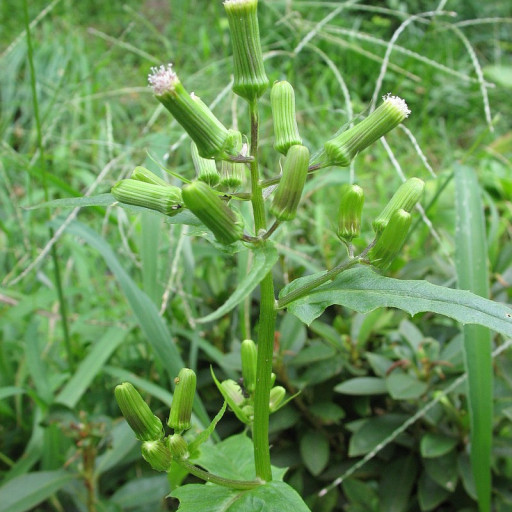
Plant Overview
Often called the "first responder" of the botanical world, American Burnweed is a tall, native annual that thrives where other plants fear to tread. Known for its remarkable ability to colonize scorched earth and construction sites, it is the ultimate pioneer species. While some gardeners dismiss it as a lanky weed, it plays a vital role in healing disturbed landscapes and feeding native pollinators.
🔍 How to Identify
- 🌿 The Foliage: Its leaves are long, lance-shaped, and deeply serrated (toothed) along the edges. They grow in an alternate pattern up a thick, succulent green stem that can reach heights of up to 8 feet.
- 🌼 The "Closed" Flowers: Perhaps its most unique feature is the flower head. It produces cylindrical green pods that look like they are about to bloom but never quite "open" into traditional petals.
- 🌬️ The Fluff: Once the seeds ripen, the flower heads burst into a mass of silky, white bristles (pappus). These "clocks" allow the seeds to catch the wind and travel for miles.
🏡 In Your Garden Context
- 🌱 The Opportunist: If you have recently tilled your soil, cleared a brush pile, or had a bonfire, expect Burnweed to appear. It loves disturbed, nitrogen-rich soil and full sun.
- 🐜 Ecological Hero: While it may look a bit "weedy," it is a magnet for small sweat bees and wasps. Its presence in your garden indicates a high-functioning ecosystem trying to repair itself.
- ✂️ Management: Because it produces thousands of wind-blown seeds, gardeners often choose to pull it before the white "fluff" appears to prevent it from taking over the entire yard next season.
⚠️ Safety & Toxicity
- 🟢 Status: Generally considered non-toxic to humans and pets.
- 👃 The Odor Factor: While not poisonous, the plant has a very distinct, pungent, and somewhat unpleasant scent when the leaves are crushed. This smell usually acts as a natural deterrent for curious dogs or cats.
- 🧴 Skin Sensitivity: While not a common irritant like Poison Ivy, the sap can be sticky; sensitive individuals should wear gloves when pulling large amounts.
✨ Fun Fact
The name "Burnweed" isn't just a metaphor—it is literally one of the first plants to germinate in the ash after a forest fire. In the 19th century, it was also nicknamed "Pilewort" because early settlers used oil extracted from the plant in folk medicine.

Detailed Care Instructions
| Lighting | Part Sun |
To grow Erechtites Hieraciifolius, also known as fireweed, you can follow these steps:
- Obtain seeds or cuttings: Look for a reputable nursery or online store that sells Erechtites Hieraciifolius seeds or cuttings. You can also try collecting seeds from mature fireweed plants, if available.
- Choose the right location: Fireweed grows best in full sun to partial shade. It is a hardy plant that can tolerate various soil conditions, but prefers moist, well-draining soil.
- Prepare the soil: Before planting, prepare the soil by removing any weeds or debris. Loosen the soil to improve drainage and amend it with organic matter if necessary.
- Planting from seeds: If you are starting from seeds, sow them directly into the prepared soil according to the recommended depth and spacing mentioned on the seed packet. Lightly cover the seeds with soil and water gently.
- Planting from cuttings: If you have obtained cuttings, take a 4- to 6-inch stem cutting from a healthy plant. Remove any lower leaves from the cutting, leaving only a few at the top. Dip the cut end in rooting hormone, and then plant it into a pot filled with moist potting soil. Keep the cutting warm and humid until roots develop.
- Watering and care: Keep the soil consistently moist, but not waterlogged, especially during the initial stages of growth. Once established, fireweed can tolerate some dry periods. Water deeply when the top inch of soil feels dry. Avoid overwatering, as this can cause root rot.
- Fertilization: Apply a balanced, slow-release fertilizer according to the package instructions in early spring, when new growth begins. This will provide essential nutrients for healthy growth.
- Pruning: Fireweed can reach up to 6 feet in height, so if you prefer a more compact plant, pruning can be done in early spring. Remove any weak or dead stems to promote healthier growth and maintain the desired size.
- Watch for pests and diseases: Fireweed is generally resistant to pests and diseases, but occasional problems may arise, such as aphids or powdery mildew. Monitor the plants regularly and take appropriate measures if any issues are noticed, such as using organic insecticidal soap for aphids or a fungicide for mildew.
- Harvesting seeds: If you desire to collect seeds for future planting, allow the flowers to dry on the plant and collect the seed pods when they turn brown and start to split. Store the seeds in a cool, dry place for future propagation.
By following these steps, you can cultivate and grow Erechtites Hieraciifolius successfully.

Place in a window with dappled sun or a spot in the middle of a room. Or directly in a window facing west or east.

To water this particular plant, you will need to provide enough water to keep the soil consistently moist. It is important not to overwater the plant, as this can lead to root rot and other issues. Check the soil regularly to ensure that it is moist but not waterlogged, and adjust your watering schedule as needed. You may also want to consider providing occasional misting or humidity to help keep the plant healthy and thriving. As with all plants, it is crucial to pay attention to the specific needs of this species and adjust your care accordingly.
- Choose a balanced fertilizer with equal amounts of nitrogen, phosphorus, and potassium.
- Measure the recommended amount of fertilizer for your plant's size and age.
- Apply the fertilizer to the soil around the base of the plant, avoiding contact with the foliage.
- Water your plant thoroughly after fertilizing to help the nutrients reach the roots.
- Repeat fertilization every 4-6 weeks during the growing season.
The ideal soil for Erechtites Hieraciifolius plant should be loose, well-draining and rich in nutrients. The soil should be slightly acidic with a pH level between 5.5 and 6.5. It is best to use a soil mix that contains a combination of organic matter, sand and loam, which will allow for proper aeration and moisture retention. The plant prefers a moist soil, but it should not be waterlogged. It is important to avoid using heavy clay soils that can cause drainage problems and lead to root rot. Additionally, the soil should be fertilized regularly to ensure that the plant is receiving sufficient nutrients. A slow-release nitrogen fertilizer is a good choice, as it will provide a steady supply of nutrients over time. It is also important to ensure that the plant is in a location where it receives adequate sunlight for healthy growth.
To propagate this plant, you can take stem cuttings in the spring or summer. Choose a healthy stem and cut a 4-6 inch section below a leaf node. Remove all the leaves from the lower half of the cutting. Dip the cut end of the stem in rooting hormone and plant it in a pot of moist soil. Place the pot in a bright, indirect light and keep the soil moist. Covering the pot with a clear plastic bag can help keep the humidity high and increase the chances of successful rooting. After a few weeks, you should see new growth emerging from the stem cutting, indicating that roots have formed. At this point, you can remove the plastic bag and gradually acclimate the new plant to lower humidity levels.
Common pests of the american burnweed include Aphids. Make a habit of checking your american burnweed frequently for pests so that any infestations can be caught and managed early.








