Plant Overview
Known as the Daly’s Emu Bush or the Gidgee Fuchsia, this resilient beauty is a true survivor of the Australian outback. Hailing from the arid regions of Queensland and the Northern Territory, it is part of a fascinating genus named "Eremophila," which literally translates to "desert-loving." It is a favorite among native plant enthusiasts for its shimmering silver foliage and delicate, bell-shaped blossoms.
🔍 How to Identify
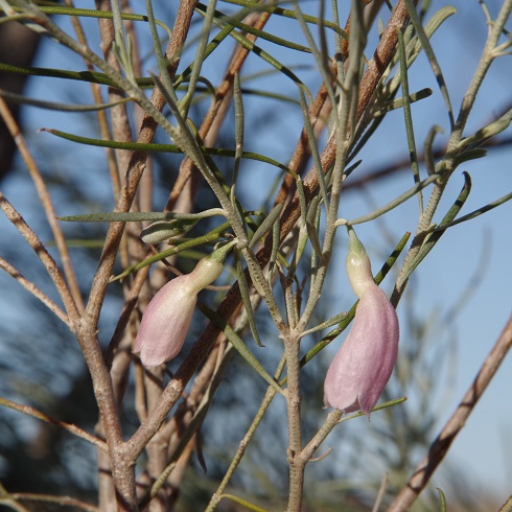
- 🌿 The Foliage: The leaves are long, narrow, and covered in a fine layer of silvery-grey hairs. This "fuzz" isn't just for looks; it acts as a biological sunscreen and helps the plant retain moisture in blistering heat.
- 🌸 The Flowers: It produces tubular, cream to pale lilac flowers that often feature intricate purple spotting inside the throat. The blossoms look like tiny, elegant trumpets hanging from the branches.
- 🌳 Growth Habit: Unlike some low-crawling desert plants, Eremophila dalyana grows as an upright, woody shrub or small tree, often reaching heights of 2 to 4 meters in the wild.
🏡 In Your Garden
- ☀️ Sun Seeker: This plant is a sun-worshipper. If it doesn't get a full day of direct light, its silver leaves can lose their luster and the plant may become "leggy" as it stretches to find the rays.
- 💧 Drainage is Vital: Because it evolved in dry, rocky soils, it is extremely sensitive to "wet feet." It is best planted in raised beds or sandy soil; if the roots sit in stagnant water, they can succumb to rot very quickly.
- 🐦 Pollinator Magnet: In its native habitat, its nectar-rich flowers are a primary food source for honeyeaters and other long-beaked birds, making it a fantastic choice for a wildlife-friendly garden.
⚠️ Safety & Toxicity
- ✅ Generally Safe: Eremophila dalyana is not known to be toxic to humans or common household pets like dogs and cats.
- 🧤 Skin Sensitivity: While not poisonous, the fine hairs on the leaves can occasionally cause mild skin irritation for people with very sensitive skin. It is always a good idea to wear gloves when performing heavy pruning.
✨ Fun Fact
The name "Emu Bush" comes from a long-held belief that emus eat the fruit of these plants, and that the seeds actually germinate better after passing through the emu's digestive system! While this is true for some species in the genus, many others rely on wind or insects for their survival.

Detailed Care Instructions








