Plant Overview
Known as the "Aerides-like Eria," this Southeast Asian native is a showstopper for orchid enthusiasts who appreciate architectural foliage and dense, fuzzy floral spikes. Found naturally in the humid forests of Malaysia, the Philippines, and Borneo, it is an epiphyte that clings to mossy tree branches. While it lacks the giant, flashy blooms of some hybrid orchids, its charm lies in its structural elegance and unique "bottlebrush" flowering habit.
🔍 How to Identify
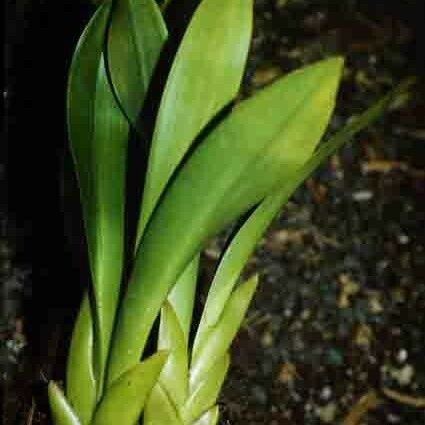
- 🌿 Leaf Texture: The plant produces broad, thick, and leathery (coriaceous) leaves that grow from the top of sturdy pseudobulbs, giving it a lush, tropical appearance even when not in bloom.
- 🌾 Floral Spikes: It sends out upright or slightly arching inflorescences packed with hundreds of tiny, cream-to-yellowish flowers that resemble a fuzzy ear of grain.
- ☁️ Velvety Coating: A hallmark of the Eria family, the stems and the backs of the flowers are often covered in fine, soft hairs, giving the spikes a shimmering, silver-white glow.
🏡 In Your Garden
- 💨 Airflow is King: Because this plant lives in the forest canopy, it requires exceptional air circulation. It is much happier in a slatted orchid basket or mounted on a piece of cork than sitting in a traditional potting mix.
- 💧 The "Wet-Dry" Cycle: It thrives with frequent misting and high humidity, but its roots must dry out quickly. If the medium stays soggy, the pseudobulbs—which act as the plant's water reservoir—can rot rapidly.
⚠️ Safety & Toxicity
- ✅ Status: Non-toxic and safe.
- 🐾 Details: Like the vast majority of orchids, Eria aeridostachya is considered non-toxic to cats, dogs, and humans. However, its fibrous leaves are difficult to digest, so keep it out of reach of curious nibblers to avoid minor stomach upset.
✨ Fun Fact
The name Aeridostachya is derived from the Greek word "stachys," which means "ear of grain." This perfectly describes the way its tiny flowers are arranged in a tight, vertical spike that mimics a golden stalk of wheat!

Detailed Care Instructions