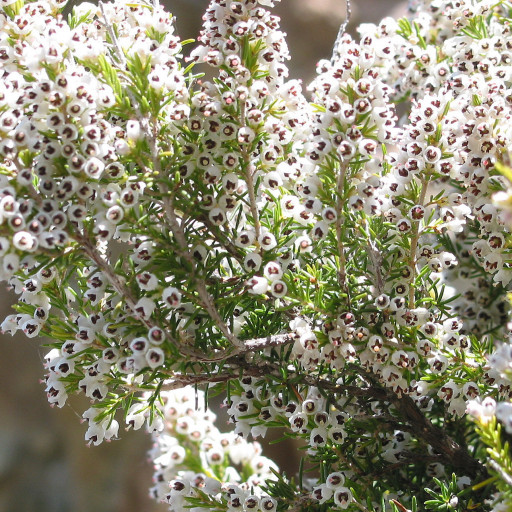
Plant Overview
Commonly known as the Tree Heath, this Mediterranean giant defies the typical image of low-growing heather. Reaching heights that rival small trees, it transforms landscapes into honey-scented clouds of white during early spring. Historically, its incredibly dense wood has been prized by craftsmen for centuries, earning it a reputation for being as tough as it is beautiful.
🔍 How to Identify
- 🌿 The Foliage: Features needle-like, vibrant green leaves that grow in tight "whorls" (circles) around the stems. The texture is fine and feathery, remaining green throughout the winter.
- 🔔 The Blooms: Tiny, papery, bell-shaped flowers that appear in massive, pyramid-like clusters. They are usually pure white, though they can sometimes show a faint blush of pink.
- 🪵 The Structure: Unlike common heather, this species develops a distinct, woody trunk with dark, fibrous bark that peels in thin strips as the plant ages.
🏡 In Your Garden
- ⛰️ The Soil Secret: Like most members of the Heath family, this plant is "calcifuge," meaning it hates lime. It requires acidic soil to survive; in alkaline gardens, it is best grown in large pots using ericaceous (acid-loving) compost.
- ☀️ Sun and Shelter: While it loves basking in full sun to produce the best blooms, it is sensitive to "winter burn." Plant it in a spot protected from harsh, drying winds that can sap moisture from its thin needles.
- 💧 Established Resilience: While it needs regular water while young, a mature Tree Heath is surprisingly drought-tolerant. Its deep root system allows it to survive in rocky, dry Mediterranean-style landscapes.
⚠️ Safety & Toxicity
- 🐾 Pet Safety: Erica arborea is generally considered non-toxic to dogs, cats, and horses. It is a safe, "friendly" choice for a backyard where pets roam.
- 👶 Human Interaction: The plant is not poisonous if accidentally touched or ingested in small amounts. However, the woody stems and dry needles can be a minor skin irritant or a choking hazard for very small children.
✨ Fun Fact
- 💨 The Pipe Maker's Dream: The "Briar wood" used to make world-class tobacco pipes actually comes from the root burls of the Erica arborea. The wood is incredibly heat-resistant and doesn't add any unwanted flavor to the smoke, making it the gold standard for pipe carvers since the 1800s.

Detailed Care Instructions
| Humidity | Normal |
| Lighting | Full Sun |
| Difficulty | Medium |
| Hibernation | Cold Period |
| Hardiness Zones | 9 - 10 |
To grow Erica Arborea (also known as the tree heath or giant heather), follow these steps:
- Climate and location: Erica Arborea thrives in Mediterranean or coastal climates, so ensure you have the appropriate climate conditions for it. It prefers mild temperatures, full sun exposure, and well-draining, acidic soil.
- Soil preparation: Prepare the soil before planting Erica Arborea. Ensure it is well-draining by adding organic matter like compost or peat moss. It should have a pH level around 5-6, which is slightly acidic.
- Planting: Purchase Erica Arborea seedlings from a reputable nursery or garden center. Dig a hole that is slightly wider and deeper than the nursery container. Gently remove the seedling from its container and place it in the hole, making sure the top of the root ball is level with the soil surface. Fill the hole with soil and pat it gently around the plant to remove any air pockets.
- Watering: After planting, water the Erica Arborea thoroughly to help establish its roots. Keep the soil moist but not waterlogged. Ensure the plant receives regular watering during dry periods.
- Mulching: Apply a layer of organic mulch around the base of the plant to help retain moisture and control weeds. Avoid placing the mulch directly against the stem to prevent rotting.
- Pruning: Prune Erica Arborea regularly to maintain its shape and encourage bushiness. Remove any dead or damaged branches, and trim back the plant after flowering to promote new growth.
- Fertilization: Erica Arborea generally does not require much fertilizer. However, a slow-release, acidic fertilizer can be applied in spring if needed. Follow the instructions on the fertilizer packaging for proper application and dosage.
- Protection: If you live in a colder area, protect Erica Arborea from frost by covering it or moving it to a sheltered location during the winter months. Provide a layer of straw or mulch around the base to insulate the root system.
- Pest and disease control: Erica Arborea is generally resistant to pests and diseases. However, keep an eye out for aphids, mites, or fungal diseases. Regularly inspect the plant, and treat any issues promptly with appropriate organic or chemical methods.
Remember to research and consider any local climatic considerations or specific regional advice when growing Erica Arborea.

Place in a bright room that is sun drenched almost all day. Or directly in a south-facing window.

Erica Arborea is a type of plant that requires regular watering to stay healthy. To water this plant, you should first check the soil to make sure it is dry before watering. You can do this by sticking your finger into the soil up to your first knuckle. If the soil is dry, it is time to water.
When watering Erica Arborea, you should use a watering can or a hose with a gentle spray nozzle. You should water the plant slowly and evenly, making sure to soak the soil all the way to the roots. Avoid getting water on the foliage of the plant, as this can lead to fungal diseases.
You should water Erica Arborea more frequently during the summer months when the weather is hot and dry. In the winter, you may need to reduce the amount of water you give the plant, as it will not grow as quickly during this time.
Overall, the key to watering Erica Arborea is to be consistent and ensure that the plant does not become too dry or too wet. With proper watering and care, this beautiful plant can thrive and bring life to your garden or home.
To fertilize this plant, apply a slow-release, acid-forming fertilizer that is specifically designed for ericaceous plants in the late winter to early spring. Apply the fertilizer evenly around the base of the plant, being careful not to let it come into contact with the leaves or stems. Water the plant thoroughly after fertilizing to help the nutrients soak into the soil. Avoid fertilizing the plant in the fall or winter, as this can stimulate new growth that may not have time to harden off before cooler temperatures arrive.
Erica Arborea prefers a well-draining, slightly acidic soil with a pH level between 4.5 and 6.5. The soil should contain a mix of organic matter, such as peat moss, and inorganic materials like sand or perlite to allow for good drainage. The plant requires soil that is rich in nutrients, so incorporating a slow-release fertilizer into the soil before planting is recommended. It is important to avoid using heavy or clay soils, as these can lead to root rot and suffocation. The plant also prefers moist soil, so regular watering is essential to keep the soil from drying out completely.
Erica Arborea plant can be propagated through various techniques like layering, cuttings, and seed sowing. In layering, a healthy stem is bent down and buried in soil, so that a new root system can form. Cuttings can be taken from a healthy plant and rooted in soil or water. To sow seeds, you need to collect healthy seed pods, dry them, and then sow them in soil. The soil needs to be kept moist, and the seedlings must be kept in a warm spot until they germinate and are ready to be transplanted. All propagating methods require healthy plant material and proper growing conditions to yield successful results.








