Plant Overview
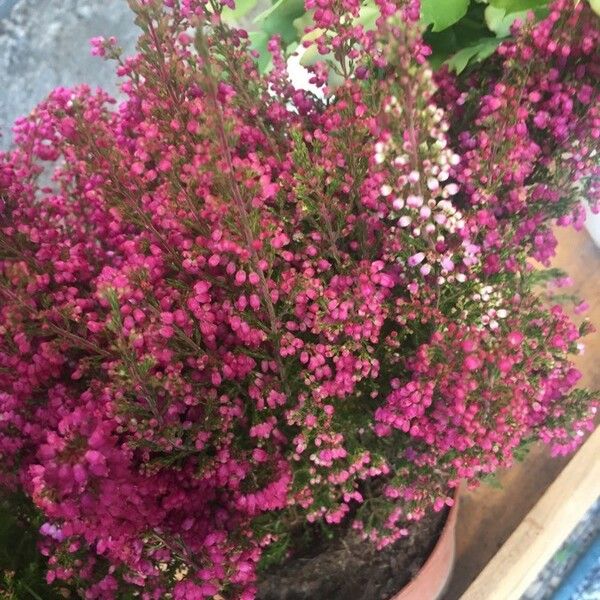
Commonly known as the Cape Heath or Winter Heather, Erica gracilis is a vibrant jewel originating from the fynbos regions of South Africa. Often called the "Christmas Heather" in Europe, it is prized for its ability to produce a massive explosion of tiny, bell-shaped flowers just as the rest of the garden begins to fade. While it looks like a delicate wildflower, it is a sturdy little shrub that adds a much-needed pop of magenta, pink, or white to the gray days of autumn and winter.
🔍 How to Identify
- 🌿 Needle-like Foliage: The leaves are tiny, dark green, and resemble soft pine needles, growing in tight whorls along the woody stems.
- 🔔 Bell-shaped Blooms: The plant is defined by its masses of small, globose (urn-shaped) flowers that are so dense they often hide the foliage entirely.
- Compact Habit:** It typically grows in a neat, upright, and bushy mound, rarely exceeding 12–18 inches in height, making it perfect for tabletop displays or window boxes.
🏡 In Your Garden
- 💧 The Thirst Factor: Unlike many succulents from the same region, Cape Heath hates to dry out completely. If the soil becomes bone-dry, the needle-like leaves will drop rapidly, and the plant may not recover.
- 🧪 Acidic Preferences: This is a "calcifuge" or lime-hating plant. It requires acidic soil (ericaceous compost) to thrive. If your tap water is very "hard" or alkaline, it’s best to water it with collected rainwater to prevent the leaves from yellowing.
- 🌬️ Cool and Breezy: It thrives in cool, airy conditions. While it loves bright light, placing it near a hot radiator indoors will cause it to crisp up; it prefers a chilly porch or a sheltered spot outdoors.
⚠️ Safety & Toxicity
- ✅ Safe for All: Erica gracilis is generally considered non-toxic to humans, cats, and dogs.
- 🧤 Skin Sensitivity: While not poisonous, the fine, woody stems can be slightly scratchy, so those with very sensitive skin might experience mild irritation if handling large quantities without gloves.
✨ Fun Fact
The genus name Erica is derived from the Greek word ereike, which means "to break." Historically, this referred to the plant's brittle stems, but in ancient folklore, it was also believed that infusions made from the plant could "break" or dissolve kidney stones.

Detailed Care Instructions
| Humidity | High |
| Lighting | Full Sun |
| Difficulty | Medium |
| Hibernation | Cold Period |
| Temperature | 17°C - 25°C |
| Hardiness Zones | 8 - 10 |
Growing Erica gracilis, commonly known as Heather, is not difficult and can be done by following these steps:
- Choose the right location: Erica gracilis prefers full sun or partial shade. Select a location in your garden that receives at least 4-6 hours of sunlight per day.
- Prepare the soil: Heather plants prefer well-draining soil that is slightly acidic, with a pH level between 4.5 and 6.0. If your soil is heavy clay or compacted, amend it with organic matter like compost to improve drainage.
- Planting: Dig a hole slightly larger than the root ball of your Erica gracilis plant. Place the plant in the hole, making sure the crown (where the stems meet the roots) is level with the ground. Backfill the hole with soil, gently firming it around the plant's roots.
- Watering: Heather plants have shallow roots, so water them regularly to keep the soil moist, especially during the first year of growth. However, ensure you avoid overwatering as it can lead to root rot.
- Mulching: Apply a layer of organic mulch, like wood chips or pine needles, around the base of the plant. This helps retain soil moisture, suppresses weed growth, and provides some insulation during temperature fluctuations.
- Pruning: Prune Erica gracilis after flowering, typically in late spring or early summer. Trim back faded blooms and leggy growth to encourage bushier and more compact growth.
- Fertilizing: Heather plants don't usually require much fertilization. However, you can apply a slow-release acidic fertilizer in early spring or use an ericaceous plant fertilizer as directed on the packaging.
- Winter protection: Erica gracilis is hardy and can tolerate frost but may require protection in very cold climates. You can cover the plant with a frost cloth or burlap during harsh winters to shield it from cold winds and frost.
By providing the right conditions, regular care, and attention, your Erica gracilis plant should thrive and grow beautifully.

Place in a window with dappled sun or a spot in the middle of a room. Or directly in a window facing west or east.

To water this plant, you should make sure the soil is slightly moist but not waterlogged. Use a watering can or drip irrigation system to apply water slowly and evenly to the soil around the base of the plant. Avoid getting water on the leaves as this can lead to fungal diseases. It is important to monitor the moisture level of the soil regularly and adjust your watering schedule accordingly. This plant is sensitive to water quality, so it is recommended to use filtered or rainwater instead of tap water.
To fertilize this plant, use a slow-release, acidic fertilizer in early spring or late winter. Do not apply fertilizer during the summer months. Water the plant thoroughly before applying the fertilizer and then spread it evenly around the base of the plant. Be careful not to get any fertilizer on the foliage as this can cause burns. Water the plant again after fertilizing to help it absorb the nutrients.
The soil should be acidic and well-draining. It should have a pH range of 4.5 to 5.5. A mix of peat moss, perlite, and sand or vermiculite is recommended to aid in drainage and prevent waterlogging. The plant prefers a soil that is low in fertility, so avoid using soils with added fertilizers or compost.
Erica Gracilis is a plant that can be propagated using different methods. One of the easiest way is by taking cuttings of the plant. To do this, you will need a sharp and clean pair of scissors or secateurs. Choose a healthy stem from the plant with a length of around 10 cm and a new growth section at the end. Cut the stem just below a leaf node and remove the lower leaves of the cutting.
Then, dip the end of the cutting in a rooting hormone powder, which can be purchased from a garden center. This will help stimulate new root growth. Plant the cutting in a pot filled with well-draining soil mix. Water the soil well and cover the pot with a transparent plastic bag to create a moist and warm environment.
Place the pot in a spot with bright but indirect sunlight and maintain the soil moisture by watering it occasionally or misting the leaves with water. After a few weeks, check if new roots have grown by gently pulling the cutting. If there is resistance, it means roots have formed and it can be transferred to larger pots or the garden.
Another method of propagating Erica Gracilis is through seeds. Collect the seeds from mature plants and sow them in a pot with well-draining soil. Cover the seeds with a thin layer of soil and keep them moist. Place the pot in a spot with bright and indirect sunlight.
The seeds will usually germinate within two to four weeks. Once they have grown big enough, they can be transplanted to larger pots or the garden bed. It is important to keep the soil moist and provide regular fertilization for healthy growth.








