Plant Overview
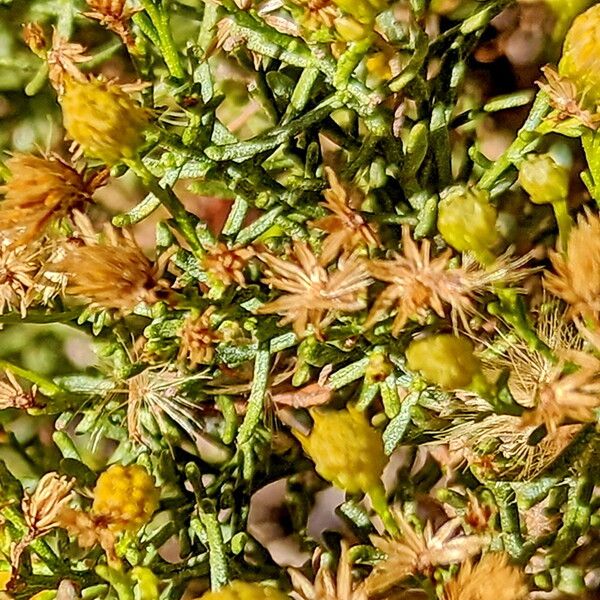
Known famously as the Turpentine Bush, Ericameria laricifolia is a resilient, sun-loving evergreen that brings a burst of "desert gold" to the landscape just as summer begins to fade. Originating from the rocky slopes of the Southwestern United States and Mexico, it is cherished by desert gardeners for its ability to thrive in harsh, arid conditions where other plants might wither. Its common name comes from the pungent, resinous scent released by its foliage, a fragrance that evokes the wild, untamed spirit of the high desert.
🔍 How to Identify
- 🌿 Larch-like Leaves: The foliage consists of tiny, narrow, needle-like leaves that densely coat the stems, mimicking the appearance of a Larch tree (which gives it the name laricifolia).
- 🌼 Golden Crowns: In late summer and autumn, the shrub is almost entirely obscured by hundreds of small, bright yellow, daisy-like flower heads that grow in rounded clusters.
- Compact Form:** It typically grows into a neat, low-mounding dome shape, rarely exceeding three feet in height, making it look like a manicured garden shrub even in the wild.
🏡 In Your Garden
- ☀️ Drought Champion: This plant is a master of water conservation. Because it evolved in rocky, well-draining soils, it hates "wet feet"—if your garden soil is heavy clay, you’ll need to amend it with sand or gravel to prevent root rot.
- 🦋 Pollinator Party: While many garden plants go dormant in the late heat of September, the Turpentine Bush is just starting its show. It serves as a vital late-season "gas station" for migrating butterflies and native bees looking for nectar.
⚠️ Safety & Toxicity
- 🟢 General Safety: Ericameria laricifolia is generally considered non-toxic to humans and pets, though it is not a culinary herb and should not be ingested.
- 🤧 Sensory Warning: The resinous oils that give the plant its signature scent can cause mild skin irritation or contact dermatitis in sensitive individuals. Additionally, its heavy late-season pollen may be a trigger for those with fall hay fever.
✨ Fun Fact
Native Americans traditionally used the resinous branches of the Turpentine Bush as a medicinal wash for skin sores or even as a natural deodorant due to its powerful, piney aroma!

Detailed Care Instructions

Place in a bright room that is sun drenched almost all day. Or directly in a south-facing window.

The presence of a dry surface layer of soil does not indicate that the plant requires water. Instead, stick your finger 1-2" (3-5 cm) deep in the soil to feel dampness or moisture content. If the soil seems dry, it's time to water your greens. If the soil is still moist, however, it is better not to water your plant and instead wait a day or two. Overwatering or waterlogging raises the risk of root rot. So if the soil takes longer than a week to dry, check the light conditions because it's likely that the plant isn't getting enough light. It's fine if the upper layer of soil is dry between waterings, but the deeper soil layer should always have some moisture.







