Plant Overview
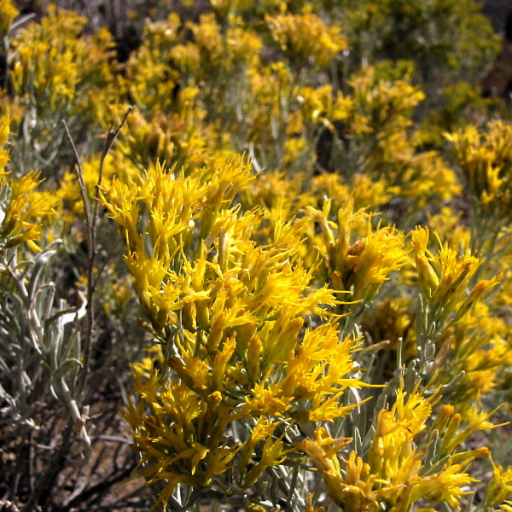
Often called Rubber Rabbitbrush or Chamisa, this resilient shrub is a shimmering icon of the American West. While its scientific name nauseosa hints at a pungent aroma when the leaves are crushed, many hikers find its musky, sweet scent to be the quintessential fragrance of the high desert. It is most beloved for its "second act," bursting into a spectacular cloud of gold in late summer when most other wildflowers have already withered.
🔍 How to Identify
- 🌿 The Foliage: Narrow, thread-like leaves covered in a dense, felt-like white down. This "hair" gives the entire plant a distinct silver-gray or blue-green shimmer that reflects harsh sunlight.
- 🌼 The Flowers: Massive, umbrella-like clusters of tiny, bright yellow tubular florets. Unlike daisies, these flowers lack outer petals, giving them a fuzzy, broccoli-like texture from a distance.
- 🪵 The Form: A woody, multi-stemmed shrub with a rounded, billowing shape. It can grow anywhere from a compact two feet to a towering seven feet tall depending on the subspecies.
🏡 In Your Garden
- 🏜️ Tough Love: This plant is a champion of "bad" soil. It thrives in alkaline, sandy, or salt-heavy earth where other plants would fail; in fact, soil that is too rich or over-fertilized will often cause the plant to become floppy and short-lived.
- 🐝 Pollinator Buffet: It serves as a vital late-season food source. When most nectar sources are gone, Rabbitbrush provides a final feast for migrating Monarch butterflies and native bees preparing for winter.
⚠️ Safety & Toxicity
- 🐾 Pet & Child Safety: It is generally considered non-toxic to humans, dogs, and cats. However, the high oil content and pungent smell may cause mild nausea or an upset stomach if large amounts are chewed on.
- 🧤 Contact Warning: Some individuals may experience "Rabbitbrush Dermatitis," a mild skin rash or hay-fever-like symptoms triggered by the plant’s heavy pollen and the fine, felt-like hairs on its stems.
✨ Fun Fact
During World War II, American scientists extensively studied Rubber Rabbitbrush as a potential domestic source of rubber! The woody stems contain a high-quality natural latex that could be used to manufacture tires if traditional tropical sources were ever cut off.

Detailed Care Instructions
Here are some steps to grow Ericameria Nauseosa plant:
- Acquisition: Obtain seeds or seedlings of Ericameria Nauseosa. These can be acquired from nurseries or online plant stores specializing in native plants.
- Planting: Choose a suitable location for planting. Ericameria Nauseosa prefers well-draining soil in full sunlight. Prepare the soil by removing any weeds or other debris and loosening it to allow for better root growth.
- Sowing seeds: If you have seeds, sow them directly into the prepared soil. Follow the instructions on the seed packet for the appropriate depth and spacing. Gently cover the seeds with soil and water lightly.
- Transplanting seedlings: If you have seedlings, transplant them into the prepared soil. Dig a hole slightly larger than the root ball of the seedling and carefully place the plant in the hole. Fill the hole with soil, firming it gently around the base of the plant. Water thoroughly after transplanting.
- Watering: Keep the soil moist but not waterlogged, especially during the initial establishment period. Once the plant is established, it is more drought-tolerant and requires less frequent watering.
- Mulching: Apply a layer of mulch around the base of the plants to help retain moisture, suppress weed growth, and insulate the soil. Use organic mulch such as wood chips or straw, and spread it about 2-3 inches thick.
- Maintenance: Remove any weeds or unwanted vegetation from the vicinity of the plants. Prune or trim Ericameria Nauseosa if necessary to maintain its shape or remove dead or damaged branches. Fertilizer is generally not required for Ericameria Nauseosa, as it is a native plant that is adapted to the local environment.
- Propagation: If you want to propagate more Ericameria Nauseosa plants, you can collect seeds from the mature plants or take stem cuttings and root them in a suitable rooting medium.
Remember to research and follow any specific guidelines or recommendations for Ericameria Nauseosa based on your location and climate.

Place in a bright room that is sun drenched almost all day. Or directly in a south-facing window.

To water this plant, one should first check the soil moisture level by inserting a finger about 1-2 inches into the soil. If the soil feels dry, it is time to water. One should avoid overwatering and allow the soil to dry out between waterings. The plant should be watered at the base with a gentle stream of water until it starts to flow out the bottom of the pot or until the surrounding soil is evenly moist. It is important to avoid getting water on the foliage, as this can lead to fungal diseases. This plant prefers well-draining soil, so it is important to ensure that the pot has adequate drainage holes to prevent waterlogging. The frequency of watering will depend on environmental conditions, such as temperature and humidity, as well as the size of the plant and pot.
To fertilize the Ericameria Nauseosa plant, follow these instructions:
- Choose a balanced, slow-release fertilizer with equal amounts of nitrogen (N), phosphorus (P), and potassium (K).
- Apply the fertilizer in early spring, just before new growth appears. Avoid fertilizing during the plant's dormant period.
- Sprinkle the fertilizer evenly over the soil surface around the base of the plant. Avoid direct contact with the foliage.
- In general, follow the recommended fertilizer dosage on the package. However, for Ericameria Nauseosa, it is advisable to use a slightly lower dosage compared to other plants, as it is adapted to nutrient-poor soils.
- Water the plant thoroughly after applying fertilizer to help it absorb the nutrients.
- Repeat the fertilization process annually in early spring for best results.
Remember to always follow the manufacturer's instructions and adjust the fertilization routine based on specific plant needs and soil conditions.
Ericameria Nauseosa plant prefers soil that is well-draining and sandy. It can also tolerate soils that have a higher clay content, but the soil should still have good drainage. The pH of the soil should be between 5.5 to 7.5. Additionally, this plant prefers soil that is low in organic matter and nutrients. It is best to avoid using heavy soils or soils that retain moisture as this can lead to root rot. Adding a layer of gravel or sand to the planting site can help with drainage. Overall, the best soil for this plant is a well-draining sandy soil with low nutrient content.
Ericameria Nauseosa, also known by its common names.....
To propagate Ericameria Nauseosa, you can follow these steps:
- Obtaining Seeds: Collect ripe seed heads from mature plants during late summer or early autumn. Look for seed heads that have turned brown and are dry to the touch. Gently shake the seed heads or rub them between your fingers to release the small, light-colored seeds.
- Seed Preparation: Remove any debris or plant material from the seeds by winnowing or blowing on them gently. This process separates the seeds from the chaff, ensuring that only viable seeds are used for propagation.
- Stratification: Ericameria Nauseosa seeds require a period of cold stratification to break their dormancy. Place the seeds in a sealed plastic bag with moist sand or vermiculite. Store the bag in the refrigerator or another cold location for approximately 30 to 60 days, mimicking winter conditions.
- Soil Preparation: While the seeds are stratifying, prepare a well-draining propagation mix. Use a combination of peat moss, perlite, and sand to create an ideal medium. Sterilize the mix by heating it in an oven at 180°F (82°C) for 30 minutes to kill any potential pathogens.
- Potting: After the stratification period, sow the Ericameria Nauseosa seeds on the surface of the prepared propagation mix in pots or seed trays. Gently press the seeds into the soil, but avoid burying them too deeply.
- Watering: Moisten the propagation mix using a fine mist sprayer or by bottom watering. Avoid saturating the soil to prevent rotting. Maintain a consistently moist environment until germination occurs.
- Germination: Place the pots or trays in a warm and bright location, such as a greenhouse or a sunny windowsill. Ericameria Nauseosa seeds usually germinate within two to four weeks, although some may take longer. During this time, ensure that the propagation mix remains evenly moist.
- Transplanting: Once the seedlings have developed a few sets of true leaves, they can be transplanted into individual pots. Carefully lift each seedling using a small tool, and plant it into a well-draining potting mix. Provide adequate sunlight, water, and occasional fertilization to support their growth.
- Hardening Off: To acclimate the young plants to outdoor conditions, gradually expose them to increasing amounts of sunlight and wind over the course of a week or two. This process, known as hardening off, helps the plants adjust and develop stronger stems and foliage.
- Planting Out: When all danger of frost has passed, transplant the Ericameria Nauseosa seedlings into their permanent garden location. Choose a spot with full sunlight, well-draining soil, and sufficient space for their mature size. Water the plants regularly until established, and provide ongoing care as needed.
By following these steps, you can propagate Ericameria Nauseosa from seeds and enjoy the growth and beauty of this plant species.








