Plant Overview
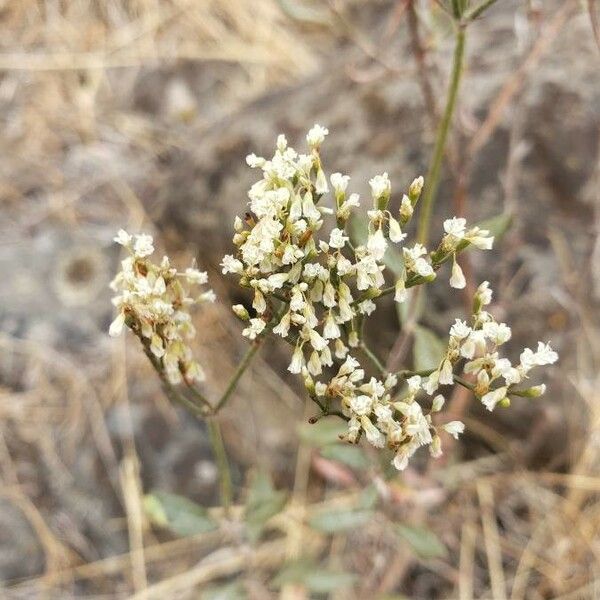
Often called the Annual Buckwheat or Tall Buckwheat, this hardy survivor is a staple of the American Great Plains and the Southwest. With its silver-frosted stems and cloud-like clusters of tiny blossoms, it looks like a wandering ghost of the prairie. It is a vital pioneer species, often being the first to reclaim sandy or disturbed lands where other plants struggle to take root.
🔍 How to Identify
- ☁️ Ghostly Stems: The entire plant is covered in fine, white, woolly hairs (tomentose), giving it a distinct silvery or grayish appearance that stands out against green grasses.
- 🌿 Slender Silhouette: It typically grows as a single, tall, upright stem that can reach up to three feet, branching out only at the very top into a flat-topped spray.
- 🌸 Cymose Clusters: The flowers are tiny, lacking true petals, and appear in dense, snowy-white or light pink clusters. These blooms often turn a rustic copper color as they dry out.
🏡 In Your Garden
- 🏜️ The Sand Lover: This plant is a "psammophyte," meaning it thrives in sandy soils. It possesses a deep taproot designed to seek out moisture in arid terrain, which means it hates being transplanted once it has started to grow.
- 🦋 A Pollinator Party: While it might look like a common weed to some, it is a high-value nectar source. It is a magnet for native bees and is a critical host plant for several species of small butterflies, including various "Blues" and "Hairstreaks."
⚠️ Safety & Toxicity
- ✅ Non-Toxic: Eriogonum annuum is generally considered safe and is not known to be toxic to humans, dogs, cats, or livestock.
- 🧤 Skin Sensitivity: While not chemically irritating, the dense, woolly hairs can occasionally cause mild mechanical itching on very sensitive skin if handled extensively.
✨ Fun Fact
Despite its name, Annual Buckwheat is not related to wheat at all! It belongs to the Polygonaceae family, making it a distant cousin to Rhubarb and Sorrel. The "buckwheat" name actually comes from a Dutch word meaning "beech-wheat," because the seeds of some species look like tiny beech nuts.

Detailed Care Instructions
To successfully grow Eriogonum Annuum, also known as Wild Buckwheat, follow these steps:
- Climate and Soil Requirements: Wild Buckwheat thrives in dry, well-drained soil and prefers full sun exposure. It is native to western North America and is adapted to a variety of climates, including desert regions.
- Seed Collection and Preparation: Collect and purchase Eriogonum Annuum seeds. The plant produces seed heads that contain small, triangular seeds. Collect the dried seed heads and crush them to release the seeds. Remove any debris and store the seeds in a cool, dry place until ready to plant.
- Planting: In spring, prepare the soil by removing weeds and loosening it to a depth of about 6-8 inches. Scatter the seeds over the prepared area and gently press them into the soil. Wild Buckwheat seeds require light for germination, so avoid burying them too deep.
- Watering: Regular watering is essential during the germination period, which typically takes around 2-3 weeks. Ensure the soil remains moist but not waterlogged. Once the plants establish, reduce watering frequency as the plant is drought-tolerant.
- Maintenance: Wild Buckwheat requires minimal maintenance once established. However, removing any weeds that compete for resources is crucial in the early stages. If your area experiences heavy rainfall, the plant can benefit from fast-draining soil or raised beds to prevent root rot.
- Propagation: Eriogonum Annuum can also be propagated through cuttings or divisions. Take stem cuttings in spring or summer, preferably from non-flowering shoots. Dip the cut end in rooting hormone and plant in well-draining soil mix. Divisions can be done by carefully separating root clumps and replanting them.
- Pruning: After blooming, you can deadhead the flowers if you wish to prevent self-seeding. Otherwise, leave the spent flowers for their ornamental value and to provide wildlife habitat.
- Wildlife Attraction: Eriogonum Annuum is commonly used in native plant landscaping to attract pollinators like bees and butterflies. The plant's flowers provide nectar and the foliage serves as cover for small animals.
By following these steps, you should be able to successfully grow Eriogonum Annuum and enjoy its beautiful blooms.
To water this plant, first make sure the soil around it is dry to the touch. Then, use a watering can or hose to gently and evenly water the soil around the base of the plant, being careful not to pour too much water directly on the leaves or flowers. Water deeply, allowing the water to soak down into the roots, but avoid leaving the plant sitting in standing water. Watering frequency will depend on the climate and soil conditions, but generally this plant prefers infrequent, deep watering rather than frequent shallow watering.
To fertilize this plant, mix a slow-release, balanced fertilizer into the soil in early spring. Apply the fertilizer at half strength and water well. Repeat the application every four to six weeks during the growing season. Avoid over-fertilizing as it can damage the plant.
For Eriogonum Annuum, it is recommended to use a well-draining soil with a pH level between 5.5 and 7.5. The soil should be composed of a mix of sand, gravel, and loam to provide proper drainage and aeration. It is also important to ensure that the soil is not too compacted, as this can lead to root rot. The plant prefers moderate soil moisture levels, so it is important to water it regularly but not excessively. In addition, the soil should be rich in organic matter to provide nutrients to the plant.
To propagate this plant, start by collecting seeds from mature plants in the fall. The seeds should be allowed to dry for a few days before being planted in well-draining soil in the desired location. Cover the seeds with a thin layer of soil and water gently. It may take a few weeks for the seeds to germinate.
Another way to propagate this plant is by taking stem cuttings in the spring or summer. Select a healthy stem and use a sharp, clean knife to cut a 4-6 inch section from the plant. Remove any leaves from the bottom of the stem and dip the cut end in rooting hormone powder. Place the cutting in a container filled with well-draining soil and water. Keep the soil moist and protect the cutting from direct sunlight until it has developed roots and new growth. Once the cutting has established itself, it can be transplanted to the desired location.








