Plant Overview
Commonly known as the Santa Cruz Island Buckwheat, this rugged evergreen beauty hails exclusively from the windswept Channel Islands off the coast of California. It is a favorite among "wildlife gardeners" because it acts as a high-rise apartment and buffet for local pollinators. With its silvery foliage and umbrella-like flower clusters, it brings a touch of wild, coastal elegance to any landscape.
🔍 How to Identify
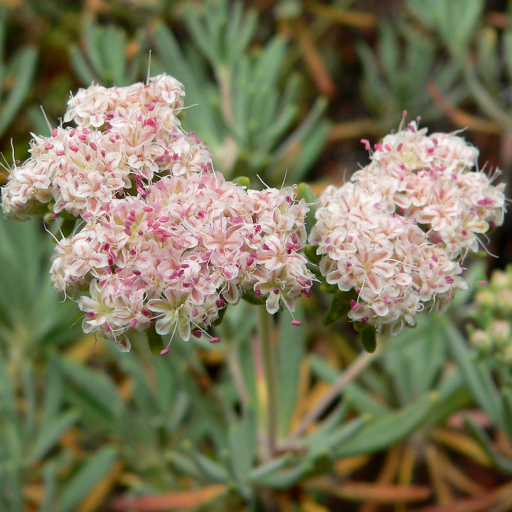
- 🍃 Foliage: Look for narrow, leathery leaves that are a soft grayish-green on top and woolly white underneath. They often cluster at the ends of the branches.
- 🌸 Flower Clusters: It produces large, flat-topped "pom-poms" of tiny flowers that start as a creamy white or pale pink and transition to a deep rusty bronze as they age.
- 🪵 Growth Habit: This is a "shrubby" buckwheat with a thick, woody base and peeling bark, forming a rounded mound that can reach up to five feet tall and wide.
🏡 In Your Garden
- ☀️ The "Island" Attitude: Because it originated on rocky island slopes, this plant demands excellent drainage. It thrives on neglect and is highly susceptible to "sudden death" if overwatered or planted in heavy, soggy clay.
- 🦋 Pollinator Magnet: If you plant this, expect a party. It is one of the most important nectar sources for rare butterflies, honeybees, and beneficial wasps, making it a cornerstone for a biodiverse backyard.
⚠️ Safety & Toxicity
- ✅ Safe for All: Eriogonum arborescens is generally considered non-toxic to humans, dogs, cats, and horses.
- 🧤 Garden Care: While not poisonous, the dried flower stalks and woody stems can become quite brittle and sharp; wearing gloves during seasonal pruning is recommended to avoid minor scratches.
✨ Fun Fact
The flowers of the Santa Cruz Island Buckwheat are "everlasting." Even after they die, they hold their structure and change to a beautiful chocolate-orange color, providing visual interest and seeds for birds throughout the winter months.

Detailed Care Instructions
To grow Eriogonum arborescens, also known as California Buckwheat, follow these steps:
- Climate and location: This plant is native to California and thrives in Mediterranean climates. Ensure that your location provides full sun exposure and well-drained soil.
- Soil preparation: Choose a sandy or loamy soil that is well-draining. Before planting, amend the soil with organic matter like compost or aged manure to improve its fertility and drainage.
- Planting time: The ideal time to plant Eriogonum arborescens is in spring or fall when the weather is mild. Avoid planting during periods of extreme heat or cold.
- Planting process: Dig a hole that is twice the width of the plant's root ball and deep enough to accommodate it. Gently remove the plant from its container and place it in the hole. Backfill the hole with soil, firming it gently around the roots. Leave a slight depression around the base of the plant to catch water.
- Watering: Initially, water generously to help the plant establish itself. After that, water deeply but infrequently, allowing the soil to dry out slightly between watering sessions. Eriogonum arborescens is drought-tolerant once established.
- Mulching: Apply a layer of organic mulch, like wood chips or straw, around the plant base to conserve moisture and suppress weeds. Leave a small gap between the plant stem and the mulch to prevent rotting.
- Pruning: Light trimming can be done after flowering to maintain a neat appearance. However, avoid heavy pruning as Eriogonum arborescens tends to have a naturally attractive shape.
- Fertilizing: Fertilization is generally unnecessary for this plant, especially if the soil has been amended before planting. However, if you notice slow growth or nutrient deficiencies, you can apply a balanced, slow-release fertilizer according to the package instructions.
- Pests and diseases: Eriogonum arborescens is generally resistant to most pests and diseases. However, keep an eye out for aphids or powdery mildew and treat these issues promptly if they occur.
By following these steps, you should be able to successfully grow Eriogonum arborescens and enjoy its lovely flowers.

Place in a bright room that is sun drenched almost all day. Or directly in a south-facing window.

To water this plant, it is important to first consider the soil moisture levels. It prefers well-draining soil and should not be allowed to sit in standing water. Water deeply but infrequently, allowing the soil to dry out slightly between waterings. Be careful not to overwater as this can lead to root rot. It is best to water early in the morning to allow the leaves and soil to dry before nighttime, which can reduce the risk of disease.
To fertilize this plant, apply a balanced fertilizer with equal parts nitrogen, phosphorus, and potassium. Apply the fertilizer in the spring, just after new growth appears. Follow the recommended dosage on the label and distribute the fertilizer evenly around the plant. Water thoroughly after application. Avoid fertilizing in late summer or fall, as this can stimulate new growth that may not have time to harden off before winter.
When planting Eriogonum Arborescens, it is important to use soil that is well-draining and has good airflow. The plant prefers a soil pH between 6.0 and 8.0. The soil should be loose and not compacted to allow the roots to spread easily. A mix of sandy and loamy soil is ideal, as it retains moisture but also provides good drainage. Adding organic matter, such as compost or leaf litter, can improve soil quality and support healthier plant growth. It is also important to avoid soil that is too rich in nutrients, as this can lead to excessive vegetative growth at the expense of flower production.
Eriogonum arborescens plant can be propagated through seed or cuttings. To propagate through cuttings, select a healthy stem, then make a cutting of about 4-6 inches long. Remove the leaves from the lower 2 inches of the cutting. Dip the cut end into rooting hormone, then plant it into a well-draining soil mix. Keep the soil moist and provide bright, indirect sunlight.
To propagate through seed, collect the seeds in late summer or early fall when they are ripe. Plant the seeds in a well-draining soil mix, then cover with a thin layer of soil. Keep the soil moist and provide bright, indirect sunlight. The seeds will germinate within a few weeks. Transplant the seedlings into individual pots once they have developed a few leaves, then continue to care for them until they are ready to be planted outside in their permanent location.








