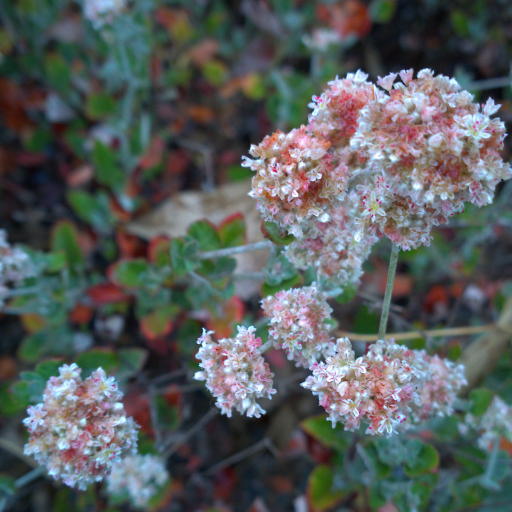
Plant Overview
Meet the Ashy Leaf Buckwheat, a rugged coastal celebrity native to the bluffs and canyons of Southern California. Often seen clinging to the windy cliffs of Malibu or the Channel Islands, this plant is a master of survival in salty, dry environments. With its shimmering, "ashy" silver foliage and delicate pom-pom flowers, it transforms harsh landscapes into soft, silvery tapestries.
🔍 How to Identify
- ☁️ The Foliage: The leaves are small, oval-shaped, and covered in fine, felt-like hairs that give the plant its signature "dusty" or ashy-gray appearance.
- 🌸 The Blooms: It produces tight, rounded clusters of tiny flowers that range from creamy white to soft pink, appearing like miniature clouds floating above the leaves.
- 🌿 Growth Habit: This is a low-growing, mounding woody shrub that typically stays under 4 feet tall but spreads wide to hug the ground.
🏡 In Your Garden
- 🦋 The Pollinator Hub: If you want a garden full of life, this is your MVP. It is a critical nectar source for native bees and a variety of rare butterflies, providing a literal feast during the dry summer months.
- 🌊 Salt & Wind Tolerance: Unlike many garden plants that wither near the ocean, this buckwheat thrives in salt spray and intense coastal winds, making it the perfect choice for seaside landscapes.
- ☀️ Low-Maintenance Love: Once established, it requires almost zero supplemental water. Its deep roots are designed to find moisture in rocky, sandy soils where other plants would fail.
⚠️ Safety & Toxicity
- ✅ Safe for All: The Ashy Leaf Buckwheat is considered non-toxic to humans, cats, and dogs.
- 🛡️ Fire Resistance: While no plant is "fireproof," Buckwheats are often used in "defensible space" landscaping because they stay green and lush longer than many other native chaparral species if given a tiny bit of summer water.
✨ Fun Fact
The Ashy Leaf Buckwheat is a "superfood" for the endangered El Segundo Blue butterfly. By planting this specific buckwheat, gardeners in Southern California are actively helping to create "corridors" that save rare butterfly species from extinction!

Detailed Care Instructions
To grow Eriogonum cinereum (Wild buckwheat) plants, you can follow these steps:
- Choose a suitable location: Eriogonum cinereum prefers full sun to partial shade. Select a spot in your garden or yard that receives at least 6-8 hours of direct sunlight per day.
- Prepare the soil: Wild buckwheat prefers well-draining soil. Loosen the soil in the planting area by tilling it or using a garden fork. Additionally, you can amend the soil with organic matter like compost to improve its fertility and drainage.
- Planting: Dig a hole that is slightly larger than the root ball of the Eriogonum cinereum plant. Gently place the plant in the hole and backfill with soil, firming it gently around the roots. Make sure the crown of the plant is level with the soil surface.
- Watering: Give the newly planted Eriogonum cinereum plant a deep watering after planting. Afterward, water the plant regularly but allow the soil to dry out partially between waterings. Overwatering can cause root rot, so be mindful not to excessively water the plant.
- Mulching: Apply a layer of organic mulch around the base of the plant to help retain soil moisture and suppress weed growth. Avoid placing the mulch directly against the stem of the plant, as it may cause rot.
- Pruning: Eriogonum cinereum generally does not require extensive pruning. However, you can remove any dead or damaged stems or trim back the plant after it has finished flowering to maintain its shape.
- Fertilizing: Wild buckwheat plants typically do not need much fertilization. If your soil is poor, you can apply a slow-release, balanced fertilizer in early spring.
- Pests and diseases: Eriogonum cinereum is generally resistant to pests and diseases. However, it is always a good idea to monitor the plant regularly and address any issues promptly.
- Propagation: You can propagate Eriogonum cinereum through seeds. Collect mature seeds from the plant's flowers and sow them in well-draining soil in the desired location. Alternatively, you can start the seeds indoors and transplant the seedlings outdoors when they are strong enough.
Remember to check with your local nursery or gardening center for specific advice tailored to your region's climate and conditions.

Place in a bright room that is sun drenched almost all day. Or directly in a south-facing window.

1. Determine the soil type and drainage: Before watering Eriogonum Cinereum plant, check the soil type and the drainage. This plant prefers well-drained soils and can't tolerate waterlogging. If the soil is heavy and drains poorly, it's recommended to amend it with organic matter to improve the drainage.
2. Watering frequency: Eriogonum Cinereum plant doesn't require frequent watering, as it's drought-tolerant and can survive in arid conditions. Watering it once a week during the active growing season or when the soil appears dry is recommended. Avoid overwatering, as it can cause root rot and damage the plant.
3. Watering method: Since Eriogonum Cinereum plant is a ground cover, it's better to water it at the soil level instead of overhead watering. Overhead watering can promote fungal growth and disease, and it can also dislodge the flowers and stems. Use a soaker hose or drip irrigation to water the plant slowly and deeply, allowing the water to penetrate the soil.
4. Water quality: Eriogonum Cinereum plant prefers neutral to slightly acidic soils. Water that is too alkaline or too salty can cause nutrient deficiencies and growth problems. If your water source is high in alkalinity or salt, consider using rainwater, distilled water, or reverse osmosis filtered water to water the plant.
5. Watering timing: It's recommended to water Eriogonum Cinereum plant in the early morning or late evening, to avoid water evaporation and to allow the plants to absorb the water before the heat of the day. Watering during the heat of the day can dry out the soil too quickly and cause damage to the plant.
6. Mulching: Mulching around the Eriogonum Cinereum plant can help to retain soil moisture and prevent weed growth. Apply 2-3 inches of organic mulch, such as wood chips, straw, or compost, around the plant, avoiding direct contact with the stems or foliage. Mulch should be replenished every year to maintain its effectiveness.
To fertilize this plant, use a balanced, slow-release fertilizer in early spring, following the recommended application rates on the package. Avoid over-fertilizing, as it can lead to excessive growth and reduced drought tolerance. Water the plant thoroughly after fertilizing to help distribute the nutrients evenly in the soil. Additionally, you can add a layer of organic mulch around the plant to help retain moisture and nutrients.
Eriogonum cinereum requires a well-draining soil with a pH between 5.5 and 7.5. The soil should be sandy or loamy, with good organic matter content and good fertility. The plant prefers a soil that is moderately moist but not waterlogged, as it is susceptible to root rot in overly wet conditions. The soil should also be free of any heavy metals or contaminants, as this plant is sensitive to pollution.
To propagate this plant, you can take stem cuttings or divide the roots. For stem cuttings, choose a healthy, non-flowering stem and cut it to about 3 inches in length. Remove any leaves from the bottom half of the stem and dip the cut end in rooting hormone. Plant the cutting in a well-draining potting mix and keep it moist until it roots.
To divide the roots, carefully dig up the entire plant and separate the clumps into smaller sections. Make sure that each new section has roots attached and replant them in well-draining soil. Keep the soil moist until new growth appears.








