Plant Overview
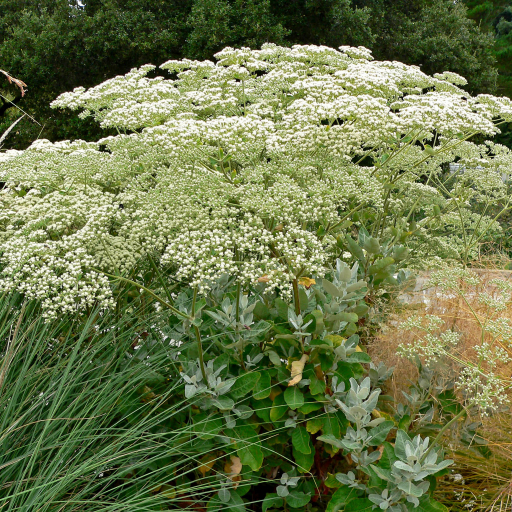
Known affectionately as Saint Catherine's Lace, this "island giant" is a spectacular evergreen shrub native to the rugged Channel Islands of California. It is famous for its massive, intricate flower heads that resemble delicate Victorian lace draped over silvery, woolly foliage. In a garden setting, it acts as a dramatic architectural centerpiece that bridges the gap between wild coastal beauty and refined landscape design.
🔍 How to Identify
- 🍃 Silvery Foliage: The leaves are oval-shaped, leathery, and coated in a dense layer of fine white hairs, giving the entire plant a shimmering, frosted appearance.
- ☁️ Lacy Blooms: It produces enormous, flat-topped clusters of tiny cream or pale pink flowers that can reach up to 12 inches across, floating high above the main body of the plant.
- 🍂 Color Transition: Unlike many plants that fade to gray, the flowers of Saint Catherine’s Lace turn a rich, rusty cinnamon-brown as they age, providing visual interest well into the winter.
🏡 In Your Garden
- 🦋 Pollinator Paradise: This plant is one of the most effective "pollinator magnets" in the plant kingdom; its broad, flat flowers provide a perfect landing pad for butterflies, honeybees, and beneficial wasps.
- 🏜️ Drought Specialist: Because it evolved on rocky island cliffs, it is incredibly water-wise. It thrives in poor, well-draining soil and actually prefers "benign neglect"—too much water or rich fertilizer can cause it to grow too fast and collapse.
- ⚓ Deep Roots: It develops a deep taproot to find water, meaning it hates being transplanted. Once you find a sunny spot for it, it is best to leave it there permanently.
⚠️ Safety & Toxicity
- ✅ Non-Toxic: Eriogonum giganteum is generally considered safe and non-toxic to humans, dogs, cats, and horses.
- 🧤 Pruning Tip: While the plant isn't poisonous, the old, dried flower stalks can become very woody and brittle. It is a good idea to wear gloves when pruning in late winter to avoid skin scrapes from the stiff branches.
✨ Fun Fact
Saint Catherine’s Lace is a "persistent" beauty; the dried flower heads are so sturdy and attractive that they are often harvested for use in dried floral arrangements and "everlasting" wreaths, where they can hold their shape for years.

Detailed Care Instructions
To grow Eriogonum Giganteum (also known as St. Catherine's Lace or Giant Buckwheat), follow these steps:
- Obtain seeds or young plants: You can purchase Eriogonum Giganteum seeds or young plants from a reputable nursery or online supplier. If you're collecting seeds from wild plants, make sure to obtain permission and only take a small amount.
- Choose a suitable location: Eriogonum Giganteum thrives in full sun and requires well-draining soil. It is indigenous to coastal California, so it is ideal for Mediterranean or dry garden landscapes.
- Prepare the soil: Ensure the soil is well-draining and has added organic matter such as compost or well-rotted manure. Avoid heavy or compacted soils that retain moisture.
- Planting: If planting seeds, sow them in the spring or fall, as this plant requires a cold stratification period to germinate. Cover the seeds with a thin layer of soil and keep them evenly moist. Transplant young seedlings or purchased plants into the prepared soil, making sure to space them at least 3-4 feet apart.
- Watering: Eriogonum Giganteum is drought-tolerant once established but requires regular watering during its initial growth period. Water deeply about once a week, ensuring the soil dries out between waterings. Avoid overwatering, as this plant is susceptible to root rot.
- Mulching: Apply a layer of mulch around the base of the plants to help conserve moisture and suppress weed growth. Use organic mulch like wood chips or straw, keeping it a few inches away from the stems to prevent moisture buildup.
- Pruning: Prune Eriogonum Giganteum after flowering in late summer or early fall. Trim back any dead or damaged stems to promote a neat appearance and encourage growth for the following season.
- Fertilizing: Eriogonum Giganteum does not typically require fertilization. However, if the plant appears weak or lacks vigor, you can apply a balanced fertilizer in early spring or late fall.
- Pests and diseases: Eriogonum Giganteum is generally resistant to pests and diseases, but occasional aphids, spider mites, or powdery mildew may occur. Monitor the plants regularly and take appropriate measures if you notice any issues.
Remember that Eriogonum Giganteum is a slow-growing plant that can take several years to reach its full size, which can be up to six feet tall and wide. Patience and proper care will help your plant thrive and produce its attractive white or pinkish flower clusters.

Place in a bright room that is sun drenched almost all day. Or directly in a south-facing window.

This plant should be watered deeply, once every two weeks during the growing season. It is important to avoid getting water on the leaves or flowers, as this can lead to disease. Instead, aim to water the soil around the base of the plant, ensuring that the water penetrates deep into the soil. Allow the soil to dry out between waterings, as this plant does not tolerate standing water or overly wet soil. During periods of drought or high temperatures, it may be necessary to water more frequently. It is also important to maintain proper drainage to prevent root rot.
To fertilize this plant, use a well-balanced fertilizer with equal amounts of nitrogen, phosphorus, and potassium. Apply the fertilizer in early spring before new growth starts or in late fall after the plant has finished flowering. Use a slow-release fertilizer and follow the manufacturer's instructions for application rates. Avoid over-fertilizing as it can cause excess foliage growth and reduce the quality of the flowering display. Be sure to water the plant after fertilizing to help distribute the nutrients to the roots.
The ideal soil for this particular plant should be well-draining and sandy in texture. It should have a pH level around 6.0 to 7.5. It is important to ensure that the soil is not too compacted or dense, as this can lead to waterlogging and affect root development. Organic matter can be added to the soil as it helps to improve the soil structure and fertility. However, too much organic matter can lead to water retention, so it is important to use it in moderation. When planting, the soil should be moist, but not waterlogged. Once the plant is established, it is drought-tolerant and prefers to have drier soil rather than too much moisture.
- Obtain Cuttings: Choose mature and healthy branches of at least 4-6 inches in length. It is best to take cuttings in the morning when the plant is hydrated.
- Remove Leaves: Strip all the leaves from the lower two-thirds of the cutting. This will ensure the plant devotes energy to growing new roots instead of supporting leaves.
- Apply Rooting Hormone: Dip the cut end of the stem in rooting hormone powder or liquid. This will help encourage the growth of new roots.
- Prepare Potting Mix: Combine coarse sand, perlite, and soil in a 1:1:1 ratio. Mix the ingredients thoroughly.
- Plant the Cuttings: Plant the cuttings in the prepared potting mix, burying the lower two-thirds of the stem.
- Water the Cuttings: Water the cuttings thoroughly until the water drains through the bottom of the pot. Maintain moist soil around the cuttings, but avoid overwatering.
- Provide Humidity: Place a clear plastic bag over the pot and cuttings to provide humidity. This will help prevent the cuttings from wilting.
- Provide Adequate Light: Place the pot in a location with bright but indirect sunlight. Avoid placing the pot in direct sunlight.
- Monitor Growth: Check the cuttings periodically for new growth and root development. After 6-8 weeks, gently tug on the cutting to see if it has rooted.
- Transplant: Once the cuttings have rooted, transplant them into individual pots or outside into the garden.








