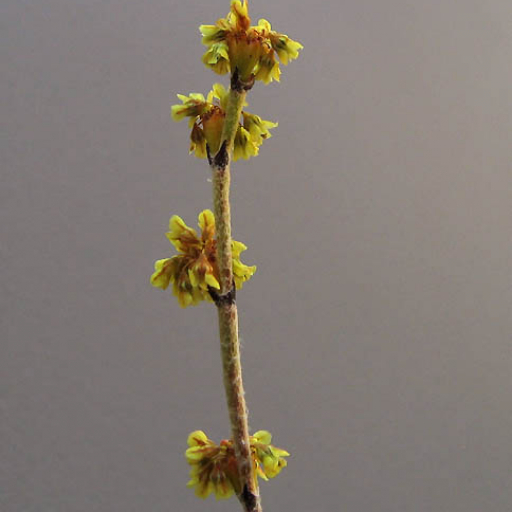
Plant Overview
Known as the Slender Wild Buckwheat, this delicate native of the American West looks like a fine mist of lace floating just above the soil. While it may appear fragile with its wire-thin stems, it is a rugged survivor of sun-baked hillsides and sandy washes. In the heat of late summer, when most other plants have turned brown, this buckwheat provides a critical splash of color and a vital nectar source for a bustling world of tiny insects.
🔍 How to Identify
- 🌿 The Stems: Its most distinctive feature is the incredibly thin, "wiry" branching structure. The stems are green to reddish-brown and create a complex, see-through skeleton.
- 🌸 The Blooms: Tiny, bell-shaped flowers appear in small clusters along the upper branches. They range from pure white to a soft, blushing pink, often appearing as "dots" from a distance.
- 🍃 The Leaves: Most of the foliage is concentrated at the very base of the plant. These leaves are small, oblong, and often have a woolly or fuzzy texture on the underside to help conserve moisture.
🏡 In Your Garden
- ☀️ Drought Champion: This plant is the definition of "low maintenance." It has evolved to thrive in poor, sandy, or rocky soils with almost no summer water. In fact, over-watering is the fastest way to hurt it.
- 🦋 The Pollinator Cafe: If you want to see rare butterflies, this is the plant to grow. It is a legendary host for various "Blue" butterflies and Hairstreaks, making it a cornerstone for any California native or pollinator-friendly garden.
⚠️ Safety & Toxicity
- ✅ Safe for All: Eriogonum gracile is considered non-toxic to humans, dogs, and cats.
- 🧤 Textural Note: While not poisonous, the dried stems can become quite brittle and "poky" at the end of the season, which might cause minor skin irritation if you are weeding through a large patch without gloves.
✨ Fun Fact
Native American tribes, including the Kawaiisu, historically used various parts of the wild buckwheat family for medicinal teas, and some species were even ground into a fine flour for cooking during lean times.

Detailed Care Instructions
To grow Eriogonum gracile, also known as graceful buckwheat, you can follow these steps:
- Climate and soil requirements: Eriogonum gracile is native to dry, rocky areas and thrives in well-draining soil. It grows best in full sun and is well-suited for xeriscaping, as it is drought-tolerant.
- Seed selection: Purchase Eriogonum gracile seeds from a reputable supplier or collect them from mature plants. Ensure that the seeds are fresh and viable.
- Germination: Start the seeds indoors before the last frost date or directly sow them in the garden after the danger of frost has passed. To enhance germination, stratify the seeds by placing them in damp sand or vermiculite in a sealed plastic bag and refrigerate for 30-60 days. Then, sow the seeds on the soil surface, pressing them gently, and cover them with a thin layer of soil.
- Planting: Choose a location in your garden that receives full sun and has well-draining soil. Dig a hole or prepare a bed with loose soil and transplant the seedlings or sow the seeds at a depth of ¼ inch. Space the plants about 12-18 inches apart to allow for adequate air circulation.
- Watering: Water the seedlings regularly until they become established. After that, Eriogonum gracile is drought-tolerant and doesn't require much watering. Water sparingly to avoid overwatering and promote deeper root growth.
- Mulching: Apply a layer of organic mulch around the plants to conserve moisture, suppress weed growth, and maintain a more stable soil temperature. Avoid covering the base of the plants directly to prevent rotting.
- Maintenance: Eriogonum gracile is a low-maintenance plant. Remove any weeds that may compete with the plant for nutrients and water. Avoid over-fertilization, as this can promote excess foliage growth instead of blooming.
- Pruning: Eriogonum gracile typically doesn't require pruning. However, you can trim back any dead or damaged stems in early spring to promote new growth.
- Pests and diseases: Eriogonum gracile is relatively resistant to pests and diseases. However, it may be susceptible to root rot in poorly draining soil. Ensure the soil is well-draining and avoid overwatering to prevent this issue.
- Propagation: Eriogonum gracile can also be propagated from stem cuttings or by division. Take stem cuttings in early spring or late summer and plant them in well-draining soil. Division is best done in spring or fall by carefully separating the roots.
Following these steps should help you successfully grow Eriogonum gracile in your garden. Remember to provide the plant with the appropriate growing conditions and minimal care.

To water this plant, it is important to provide it with consistent moisture without overwatering. It prefers well-draining soil that allows excess water to drain quickly. You should water the plant deeply once a week during the growing season, making sure that the entire root zone is thoroughly soaked. The frequency of watering can be reduced during the dormant season. It is important to avoid getting water on the leaves or flowers, which can cause issues such as mold or mildew. Additionally, watering in the morning or early in the day is recommended to allow the leaves to dry before the cooler evening temperatures set in.
To fertilize this plant, it is recommended to use a slow-release, balanced fertilizer with equal amounts of nitrogen, phosphorus, and potassium. Apply the fertilizer at a rate of one tablespoon per square foot of soil around the base of the plant, avoiding direct contact with the stems and leaves. Fertilize once in early spring and again in mid-summer. Water the plant thoroughly after fertilizing.
Eriogonum Gracile plant requires a well-draining and nutrient-rich soil that should be sandy or loamy in texture. The pH level of the soil should be neutral to slightly acidic. The plant should be grown in full sun or partial shade with minimum water requirements, and the soil should be kept slightly moist but not waterlogged. A layer of mulch can be added around the plant to retain soil moisture. Additionally, adding organic matter to the soil can improve drainage and provide essential nutrients to the plant.
Eriogonum Gracile plant can be propagated through several methods, including seed propagation and vegetative propagation. Seed propagation involves collecting and sowing the seeds in a suitable growing medium. The seeds should be collected when they start to brown and then dried for a few days before sowing. The germination of the seeds can be increased by soaking them in water for 24 hours before sowing. The growing medium should be well-drained and kept moist until the seedlings emerge.
Vegetative propagation involves taking stem cuttings from the plant. The cuttings should be taken from the softwood growth in the spring or the semi-hardwood growth in the summer. The cuttings should be around 4-6 inches long and should have at least two nodes. Remove all the leaves except the top ones and dip the cuttings in a rooting hormone powder. Plant the cutting in well-draining soil and water well. Cover the cutting with a clear plastic bag or a humidity dome to increase the humidity around the cutting. The cutting should root in about 4-6 weeks.
Another way to propagate Eriogonum Gracile plant is by division. This method involves dividing the plant into multiple parts and planting them separately. This method is best done in the fall or early spring when the plant is dormant. Carefully dig up the plant and divide it into sections, making sure that each section has sufficient roots and foliage. Plant each section in a well-drained growing medium and water well.








