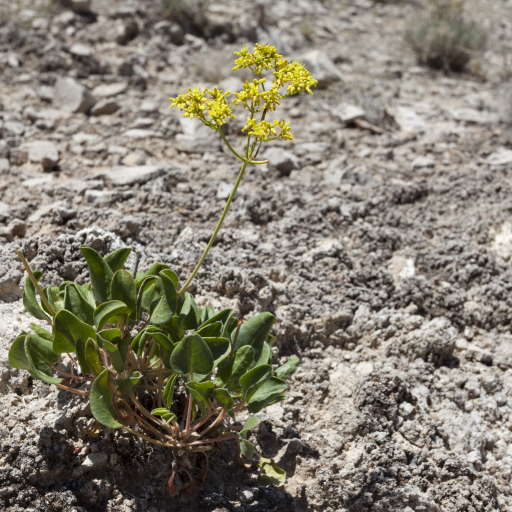
Plant Overview
Known as the Gypsum Wild Buckwheat, this rare desert survivor is a true specialist of the American Southwest. Found almost exclusively in a few specific locations in New Mexico, it is a "gypsophile"—a plant that has evolved to thrive on harsh, white gypsum soils where most other vegetation would wither. It is a resilient little pioneer that adds a splash of bright yellow to the stark, salty flats it calls home.
🔍 How to Identify
- 🌿 Growth Habit: It forms a low, woody-based mat or mound, rarely growing taller than 8-12 inches, allowing it to hug the ground and escape harsh desert winds.
- 🍃 Foliage: The leaves are narrow, linear, and a dusty grayish-green. They are mostly clustered at the base of the plant to conserve moisture.
- 🌼 Flowers: Tiny, bright lemon-yellow flowers bloom in airy, branched clusters (umbels) atop slender, leafless stalks that rise above the foliage.
🏡 In Your Garden & Habitat
- 🏜️ The Ultimate Specialist: This plant is rarely found in traditional home gardens because it requires very specific "gypsic" soil conditions. It is an extremophile that has adapted to high levels of calcium sulfate, which would be toxic to many other species.
- 🛡️ Conservation Hero: Because its natural range is so small, it is considered a threatened or sensitive species. If you encounter it in the wild, admire it from a distance! It plays a vital role in stabilizing fragile desert crusts and providing nectar for local pollinators.
- ☀️ Drought Mastery: Its deep root system and waxy leaf coating are designed for one thing: survival in intense heat with almost zero supplemental water.
⚠️ Safety & Toxicity
- ✅ Safe for Touch: The Gypsum Wild Buckwheat is not known to be toxic to humans or common pets through skin contact.
- 🐾 Ingestion: While most Eriogonum species are generally non-toxic, this plant is a rare protected species. For the safety of the plant and your pets, it should never be consumed. Ingesting large amounts of any wild buckwheat can occasionally cause stomach upset in sensitive animals due to oxalate content.
✨ Fun Fact
The Gypsum Wild Buckwheat is a "geological indicator." Botanists and geologists often use the presence of this specific plant to map out hidden gypsum deposits beneath the desert surface—wherever the buckwheat grows, the gypsum is sure to be found!

Detailed Care Instructions








