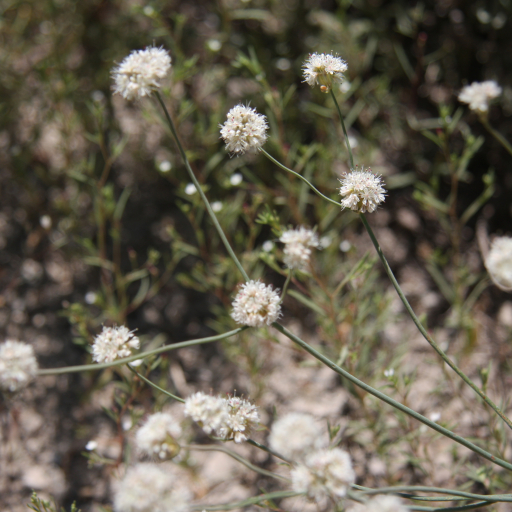
Plant Overview
Often called the Naked Buckwheat, this resilient native of Western North America is a minimalist’s dream. It earns its name from its tall, skeletal stems that rise boldly from a low cluster of leaves, appearing almost bare as they reach for the sun. In the wild, it is a critical lifeline for local biodiversity, acting as a sturdy anchor in dry, rocky landscapes where other plants might wither.
🔍 How to Identify
- 🌿 The Basal Rosette: Most of the greenery stays low to the ground in a dense circle of oval, crinkly leaves that are bright green on top and woolly-white underneath.
- 🦯 "Naked" Stems: The flower stalks are smooth, hollow, and often have a waxy, bluish coating (glaucous), branching out like a minimalist sculpture without any leaves to hide them.
- 🌸 Pom-pom Blooms: Small, delicate clusters of tiny white, yellow, or soft pink flowers sit at the tips of the stems, looking like miniature clouds or floral cotton balls.
🏡 In Your Garden
- 🏜️ The "Tough Love" Rule: This plant thrives in poor, sandy, or rocky soil. It hates "wet feet," so ensure your garden has excellent drainage; otherwise, the roots may rot in heavy clay.
- 🦋 Pollinator Paradise: If you want a butterfly sanctuary, this is a must-have. It is a primary host plant for various "Blue" and "Copper" butterflies, providing both nectar for adults and a home for caterpillars.
⚠️ Safety & Toxicity
- ✅ Non-Toxic: Naked Buckwheat is generally considered safe and non-toxic for humans, dogs, and cats.
- 🌾 Skin Sensitivity: While not poisonous, the dried stems can become quite brittle and sharp late in the season, which might cause minor scratches if you're weeding nearby without gloves.
✨ Fun Fact
Native American children used to use the hollow, sturdy stalks of the Naked Buckwheat as "peashooters" or toy whistles! In some regions, the young, tender stems were also eaten raw as a refreshing, slightly sour snack.

Detailed Care Instructions
To grow Eriogonum nudum, commonly known as naked buckwheat, follow these steps:
- Location: Choose a suitable location for planting. Eriogonum nudum prefers full sun exposure, but it can tolerate light shade. Ensure that the soil is well-drained.
- Soil preparation: Prepare the soil before planting. Eriogonum nudum thrives in sandy or loamy soil with good drainage. If the soil is heavy clay, consider amending it with organic matter like compost or sand to improve drainage.
- Planting seeds: Eriogonum nudum can be grown from seeds. Sow the seeds directly into the prepared soil in the desired location during the early spring or late autumn. Lightly cover the seeds with a thin layer of soil and water gently.
- Watering: Keep the soil consistently moist but not waterlogged until the seeds germinate, which usually takes a few weeks. After germination, gradually reduce watering frequency to establish a drought-tolerant plant.
- Maintenance: Eriogonum nudum has low maintenance requirements. Avoid overwatering, as it prefers dry to moderately moist soil. Once established, the plant can withstand dry periods. However, it is beneficial to provide water during prolonged droughts.
- Pruning: Prune the plant lightly after the flowering period to encourage new growth and maintain a compact shape.
- Mulching: Apply a layer of organic mulch, such as wood chips or straw, around the base of the plant to conserve moisture and suppress weed growth.
- Fertilization: Eriogonum nudum generally does not require fertilizer. However, you can apply a balanced, slow-release fertilizer in spring if the plant appears to be struggling or if the soil lacks nutrients.
- Propagation: Eriogonum nudum can also be propagated through division. In the early spring, divide mature plants and replant the divisions into prepared soil.
- Pests and diseases: Eriogonum nudum is generally resistant to pests and diseases. However, occasional issues like powdery mildew or aphids may occur. Monitor the plant regularly and address these issues if necessary.
By following these guidelines, you can successfully grow Eriogonum nudum and enjoy its beautiful flowers and habitat benefits for pollinators.

Place in a bright room that is sun drenched almost all day. Or directly in a south-facing window.

Eriogonum Nudum is a plant species that belongs to the Polygonaceae family. This perennial plant is native to the western regions of North America, primarily found in California. As a low maintenance plant, it requires moderate watering to thrive.
When it comes to watering Eriogonum Nudum, one should consider its specific needs. The general rule of thumb is to provide regular watering during the plant's active growing season, which typically spans from spring to early fall. However, it is important to note that the watering frequency and amount will vary depending on factors such as climate, soil type, and maturity of the plant.
Here is a step-by-step guide on how to water Eriogonum Nudum effectively:
1. Determine the watering frequency: While the plant is establishing its root system, one should water it more frequently, around two to three times per week. Once the plant is well-established, you can reduce the frequency to once per week, or even less during periods of rainfall.
2. Consider the soil moisture: Before watering, check the moisture levels in the soil. Insert your finger or a moisture meter up to a few inches into the soil around the plant. If the soil feels dry at this depth, it is an indication that the plant requires watering.
3. Provide deep watering: When watering, ensure that the water reaches the plant's root zone. Deep watering promotes healthy root development and better drought tolerance. Water the soil around the plant until it becomes evenly moist, providing enough to let excess water drain away.
4. Avoid overwatering: It is crucial not to overwater the Eriogonum Nudum plant. Over-saturated soil can lead to root rot and other water-related issues. To prevent overwatering, allow the top few inches of soil to dry out between watering sessions.
5. Mulching: Applying a layer of organic mulch around the base of the plant can help retain moisture in the soil, reducing the need for frequent watering. Mulch also helps regulate soil temperature and prevents weed growth.
6. Monitor weather conditions: Keep an eye on weather forecasts, as they may influence your watering schedule. During periods of rainfall, adjust your watering routine accordingly to avoid waterlogging the soil.
By following these guidelines, you can provide proper watering for Eriogonum Nudum, contributing to its overall health and growth. Remember that while the plant requires regular watering, it is equally important to avoid excessive moisture to prevent any potential issues.
Fertilizing instructions for the Eriogonum Nudum plant:
- Choose a balanced, slow-release fertilizer with equal or lower nitrogen, phosphorus, and potassium (N-P-K) ratios, such as 10-10-10 or 20-20-20.
- Apply the fertilizer in early spring before active growth begins or in late fall after the growing season has ended.
- Scatter the fertilizer evenly around the base of the plant, avoiding direct contact with the stems.
- Water the area thoroughly after applying the fertilizer to help it penetrate the soil and reach the plant's roots.
- Avoid over-fertilizing as excessive nutrients can result in poor growth and damage to the plant.
- Monitor the plant's health and growth throughout the season, adjusting the fertilizer application if needed.
- Organic fertilizers, such as compost or well-rotted manure, can also be used to provide nutrients naturally. Apply them according to the manufacturer's instructions, typically in early spring.
- Regularly check the soil's pH level and ensure it falls within the preferred range for the Eriogonum Nudum plant, typically between 6.0 and 7.0. Adjustments can be made using specific soil amendments, following the manufacturer's instructions.
- Remember that different soil types and environmental conditions may affect the fertilizing needs of the plant, so observe any specific care recommendations for your particular Eriogonum Nudum variety.
Eriogonum nudum is a plant that thrives in specific soil conditions to support its growth and development. The type of soil recommended for optimal growth of Eriogonum nudum is well-draining and sandy or sandy loam in texture.
It prefers soil that is relatively low in organic matter content and slightly acidic to neutral in pH, ranging from around 5.5 to 7.0 on the pH scale. This pH range is considered moderately acidic to nearly neutral, which creates an ideal environment for the plant to access essential nutrients.
The ideal soil composition for Eriogonum nudum should be nutrient-rich, providing a balanced amount of macronutrients such as nitrogen, phosphorus, and potassium. These essential nutrients play a vital role in supporting the plant's growth, overall health, and flowering.
Additionally, Eriogonum nudum prefers soil with good drainage, as excessive moisture around its root system can lead to root rot and other issues. Sandy or sandy loam soil types are ideal as they promote excellent drainage, preventing waterlogging and allowing the roots to access oxygen.
Proper soil preparation is essential before planting Eriogonum nudum. This can be achieved by incorporating organic matter, such as compost or well-rotted manure, into the soil to improve its structure, water-holding capacity, and nutrient content. This amendment helps create an optimal growing environment for the plant.
In conclusion, Eriogonum nudum thrives in well-draining sandy or sandy loam soil with slightly acidic to neutral pH. These soil characteristics support proper nutrient availability, drainage, and overall development of the plant.
To propagate Eriogonum Nudum, you can follow the steps below:
- Start by collecting Eriogonum Nudum seeds during late summer or early fall when they are mature. Look for healthy plants with well-formed seeds.
- Prepare a seed tray or pots with a well-draining soil mix. Eriogonum Nudum prefers sandy or loamy soil.
- Sow the seeds directly on the soil surface, and lightly cover them with a thin layer of soil or vermiculite. Press gently to ensure good seed-to-soil contact.
- Water the seeds gently to moisten the soil, avoiding excessive watering that can displace the seeds.
- Place the seed tray or pots in a bright location with indirect sunlight. Maintain a temperature range of around 65-75°F (18-24°C) for optimal germination.
- Keep the soil consistently moist but not waterlogged. Check the moisture level regularly and water when the top layer of soil feels dry.
- Eriogonum Nudum seeds typically germinate within 1-2 weeks, but it may take longer for some seeds to sprout, so be patient.
- Once the seedlings have developed at least two sets of true leaves, thin them out if necessary, leaving the strongest and healthiest ones.
- Continue to provide adequate light, water, and appropriate temperature conditions to ensure the healthy growth of the seedlings. Protect them from extreme weather conditions, such as frost or excessive heat.
- After the seedlings have grown to a suitable size, usually within a few months, they can be transplanted into individual pots or directly into the garden. Ensure the chosen planting location has well-drained soil and receives plenty of sunlight.
- Be careful while transplanting, as Eriogonum Nudum has a taproot system. Dig a hole slightly larger than the root ball, place the seedling in the hole, and gently fill the soil around it.
- Water the newly transplanted seedlings thoroughly, and continue to provide regular irrigation until they establish themselves in their new location.
By following these steps, you can propagate Eriogonum Nudum successfully and cultivate new plants.








