Plant Overview
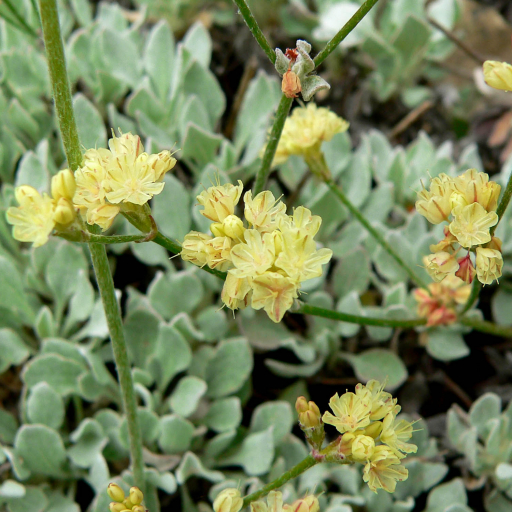
Known affectionately as "Cushion Buckwheat," this resilient Western native is a true survivor of the high desert and rocky mountain peaks. It creates soft, silvery mats that look like velvet spilled over sun-scorched stones, defying some of the harshest climates on Earth. Whether found in a windswept alpine meadow or a dry canyon, its "pom-pom" flowers provide a splash of delicate color against a rugged landscape.
🔍 How to Identify
- 🍃 The Foliage: Small, oval leaves are densely covered in fine, felt-like white hairs. This "wool" gives the plant a distinct silvery-grey appearance and protects it from intense mountain sun.
- 🌸 Flower Clusters: Tiny flowers bloom in tight, spherical "pom-poms" at the end of leafless stems. They can range from creamy white and lemon yellow to deep pink or even striking red.
- ⛰️ Growth Habit: It forms a low, dense "cushion" or mat that clings closely to the ground, a strategic shape designed to stay out of the biting wind and trap heat.
🏡 In Your Garden
- 🏜️ The Ultimate Xeric Plant: This species is a master of water conservation. Its woolly leaves are designed to reflect UV rays and trap moisture, making it a perfect candidate for rock gardens, "hellstrips," or low-water landscapes.
- 🚫 Deep Roots, No Moving: Cushion Buckwheat develops a long, sturdy taproot to find water deep underground. Because of this, it is notoriously difficult to transplant; once it is tucked into its rocky home, it prefers to never be moved again.
- 🐝 Pollinator Buffet: Despite its small size, it is a vital ecological hub, providing essential nectar for rare native bees and high-altitude butterflies.
⚠️ Safety & Toxicity
- ✅ Safe Status: Eriogonum ovalifolium is considered non-toxic to humans, cats, and dogs. It is a "friendly" addition to a nature-conscious garden.
- 🧤 Mild Irritation: While not poisonous, the fine, bristly hairs on the leaves can occasionally cause very mild skin irritation for people with highly sensitive skin if handled frequently.
✨ Fun Fact
Cushion Buckwheat is a "heavy metal" fan! Certain varieties are considered indicator plants because they can thrive in soils rich in silver and other minerals that would be toxic to most other vegetation. Miners historically used the presence of certain buckwheats as a sign of where to dig!

Detailed Care Instructions
| Humidity | Dry |
| Lighting | Full Sun |
| Difficulty | Medium |
| Hibernation | Cold Period |
To grow Eriogonum ovalifolium, also known as Shasta buckwheat, follow these steps:
- Choose a suitable location: Eriogonum ovalifolium prefers full sun and dry, well-draining soil. Check if your climate and soil conditions are suitable for this plant.
- Obtain seeds or nursery-grown plants: You can either collect seeds from existing plants or purchase nursery-grown plants from a garden center. Seeds can be sown directly outdoors or started indoors in seed trays.
- Prepare the soil: If growing from seeds, prepare the soil by removing any weeds or grass and loosening the top layer. This will make it easier for the seeds to germinate and establish root systems. You can also add organic matter like compost to improve soil fertility and drainage.
- Sow the seeds or plant the seedlings: If sowing seeds directly outdoors, scatter them evenly over the prepared soil and lightly press them into the ground without covering them. If using seedlings, dig holes that are slightly larger than the root balls and gently place the plants into the holes.
- Water and mulch: Water the soil thoroughly after planting to ensure the seeds or seedlings are well-moistened. Then, apply a layer of mulch around the plants to conserve soil moisture, suppress weed growth, and regulate soil temperature.
- Maintain the plants: Eriogonum ovalifolium is drought-tolerant, so avoid overwatering. Water only when the soil feels dry. Additionally, remove any weeds that may compete with the plants for nutrients and space.
- Prune if necessary: If the plants become too leggy or unruly, you can prune them back in early spring or after blooming. This will stimulate new growth and maintain a compact shape.
- Protect from harsh weather: If you live in an area with severe winters or strong winds, consider providing some protection to the plants. Mulching can help insulate the root zone, and covering the plants with burlap can shield them from cold winds.
- Enjoy the blooms: Eriogonum ovalifolium produces clusters of small, pinkish-white flowers that attract pollinators like bees and butterflies. Enjoy the beauty of the blooms during the flowering season.
- Propagate if desired: If you want to expand your Eriogonum ovalifolium collection, you can propagate the plants by division or stem cuttings. Division is best done in early spring, while stem cuttings can be taken from healthy plants during the growing season.
Remember to check the specific care instructions for Shasta buckwheat in your region, as climatic conditions may vary.

Place in a bright room that is sun drenched almost all day. Or directly in a south-facing window.

To water this plant, you should first dig down a few inches into the soil to check the moisture level. If the soil feels dry, it is time to give the plant a good watering. Use a watering can or hose to water at the base of the plant, being careful not to get the foliage wet. Water deeply and thoroughly, allowing the soil to soak up the water until it begins to pool on the surface. During hot and dry spells, you may need to water more frequently to keep the plant healthy and hydrated. However, be sure not to overwater, as this can lead to root rot and other issues.
To fertilize this plant, first ensure it has been watered thoroughly. Then, apply a balanced fertilizer with equal parts nitrogen, phosphorus, and potassium. Be sure to follow the manufacturer's instructions for application rates and frequency. Avoid applying fertilizer too close to the base of the plant to prevent burning the roots. Additionally, it is recommended to fertilize once in the spring and again in the fall.
The ideal soil for Eriogonum Ovalifolium plant is a well-draining soil with a pH ranging from acidic to neutral. The soil should be rich in organic matter and have good water-holding capacity to provide sufficient moisture to the plant. The plant prefers a sandy loam soil with good drainage and moderate fertility. It grows best in full sun locations, but can tolerate some shade. The soil should be kept moist, but not waterlogged, as this can lead to root rot. Adding compost or other organic matter to the soil can help improve its structure, water retention, and nutrient content. It is important to avoid using heavy clay soils or soils that are highly compacted, as these conditions can hinder root development and nutrient uptake.
To propagate this plant, you will need to collect seeds from the plant when they are mature. Once you have collected the seeds, you will need to sow them in a potting mix, ensuring that they are planted at a depth of approximately two times their width. Water the seeds regularly, keeping the soil moist but not waterlogged.
After approximately two weeks, you should begin to see signs of germination. At this point, you will need to thin out the seedlings, removing any weak or spindly plants. Once the remaining seedlings are approximately two inches tall, they can be transplanted into individual pots filled with a well-draining potting mix.
Continue to care for the plants by keeping the soil moist and placing them in a location with plenty of bright, indirect sunlight. As the plants grow, they can be gradually acclimated to full sun conditions.
Once the plants are established, they can be planted out into the garden. Ensure that they are planted in soil that is well-draining and rich in nutrients, and provide them with regular watering during dry spells. With proper care, these plants can thrive in a variety of garden settings, providing year-round color and interest.








