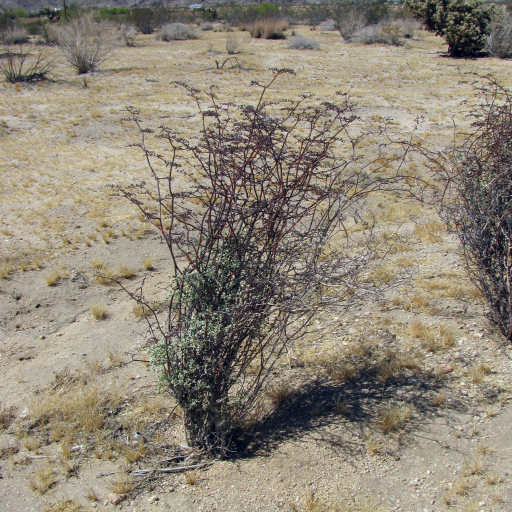
Plant Overview
Known as the Yucca Valley Buckwheat or Plumed Buckwheat, this delicate desert native looks like an intricate piece of silver lace resting against the sun-baked earth. Native to the arid landscapes of the Mojave and Sonoran deserts, it is a master of survival, transforming harsh, sandy washes into misty patches of white and pink during its blooming season.
🔍 How to Identify
- ☁️ Growth Habit: A low, spreading subshrub that creates a "misty" or "skeleton-like" silhouette due to its highly branched, wiry stems.
- 🧶 Woolly Foliage: The small, oval leaves are covered in dense, white hairs. This "fuzz" isn't just for looks; it acts as a biological sunblock and traps moisture against the leaf surface.
- 🌸 Plumed Flowers: Tiny flowers—ranging from papery white to a soft yellowish-pink—cluster at the ends of stems in a way that resembles delicate feathers or plumes, giving the plant its species name plumatella.
🏡 In Your Garden
- 🏜️ Drainage is King: This plant thrives on neglect but dies from "kindness" (overwatering). It requires extremely well-draining, sandy, or gravelly soil to mimic its desert home. Because of its deep taproot, it is nearly impossible to transplant once it has settled in.
- 🦋 Pollinator Magnet: While it may look fragile, it is an ecological powerhouse. It serves as a vital nectar source for native solitary bees and is a specific host plant for several rare desert butterfly species, including various "Blues" (Lycaenidae).
⚠️ Safety & Toxicity
- ✅ Safe Status: Non-toxic and generally safe.
- 🐾 Details: There are no known toxic compounds in the Yucca Valley Buckwheat that pose a threat to curious pets, livestock, or children. However, the dried, woody stems can become brittle and sharp, so watch your step in bare feet!
✨ Fun Fact
The genus name Eriogonum comes from the Greek words erion (wool) and gonu (joint), referring to the fuzzy, "kneed" joints of the stems. In the heat of the desert afternoon, these woolly hairs actually help the plant stay several degrees cooler than the surrounding air!

Detailed Care Instructions
To grow Eriogonum plumatella, also known as apricot mallow or apricot blush buckwheat, follow these steps:
- Choose a suitable location: Select a spot that receives full sunlight for most of the day. The plant requires at least 6-8 hours of direct sun.
- Soil preparation: Eriogonum plumatella thrives in well-draining soil. Amend heavy clay or compacted soil with organic matter or compost to improve drainage.
- Planting: Plant the seedlings or small plants in the prepared soil. Ensure there is enough spacing between each plant, usually around 12-18 inches apart, to allow for proper growth.
- Watering: Provide regular watering but avoid overwatering. Initially, water the plant deeply to help establish its roots. Once established, reduce the frequency of watering and water only when the top inch of soil feels dry.
- Mulching: Apply a layer of organic mulch around the base of the plant to conserve moisture, suppress weed growth, and maintain a cooler root zone.
- Pruning: Eriogonum plumatella doesn't require much pruning, but you may trim back any dead or damaged branches in late winter or early spring before new growth appears.
- Fertilizing: This plant typically doesn't require heavy feeding. If desired, you can apply a balanced, slow-release fertilizer in early spring or top dress with compost to provide nutrients.
- Pests and diseases: Eriogonum plumatella is generally resistant to pests and diseases. However, keep an eye out for common issues like aphids, powdery mildew, or root rot. If any problems arise, treat them accordingly using eco-friendly methods.
- Propagation: Eriogonum plumatella can be propagated from seeds or by division. Collect seeds from mature plants and sow them during the planting season. For division, dig up the established plant and divide it into multiple sections before replanting.
- Winter care: This plant is typically hardy but may benefit from a layer of mulch or straw during extreme cold conditions to protect the roots.
Remember to research and consider the specific requirements of Eriogonum plumatella, which can vary slightly depending on your location and climate.
The best way to water this plant is to provide it with a deep watering once every two weeks. When you do water, make sure the soil is dry down to at least two inches deep before doing so. Avoid overwatering as this plant is drought-tolerant and prefers dry conditions. Watering in the morning is ideal as it allows any excess moisture to evaporate before cooler evening temperatures arrive. Additionally, try to water directly at the base of the plant rather than overhead to prevent disease and to ensure the water goes directly to the roots.
To fertilize this plant, apply a balanced, slow-release fertilizer in the spring before new growth appears. Use a fertilizer with an equal proportion of nitrogen, phosphorus, and potassium. Apply the fertilizer according to the manufacturer's instructions, making sure not to exceed the recommended rates. Avoid fertilizing in the fall or winter, as this can encourage new growth that may be damaged by cold weather. Water thoroughly after fertilizing to help the nutrients penetrate the soil and reach the plant's roots.
Eriogonum Plumatella plant requires soil that is well-draining and has a pH level between 6.0 to 8.0. The soil should be sandy or loamy and rich in organic matter. It should also have excellent water retention properties, but not be too wet or damp. The plant prefers a slightly alkaline soil and does well in arid or semi-arid conditions. It is recommended to amend the soil with compost or other organic matter to improve soil fertility and drainage. Avoid using heavy clay soils or soils that are prone to water logging as these can lead to root rot and other diseases.
Eriogonum Plumatella can be propagated by seed or by division. To propagate by seed, collect the ripe seed pods in late summer or early fall. Remove the seeds from the pods and plant them immediately in soil that is well-draining. Cover the seeds with a thin layer of soil and keep the soil moist. Germination should occur within two to three weeks.
To propagate by division, wait until the plant is mature and has developed a good root system. Gently remove the plant from the soil, taking care not to damage the root system. Using a sharp knife, divide the plant into two or more pieces, making sure each piece has a healthy root system. Plant each division in well-draining soil and keep the soil moist until new growth appears.
It is recommended to propagate Eriogonum Plumatella in the spring or fall when the weather is cool and moist. The plant prefers full sun and well-draining soil, so make sure to choose a suitable location for the new plant.








