Plant Overview
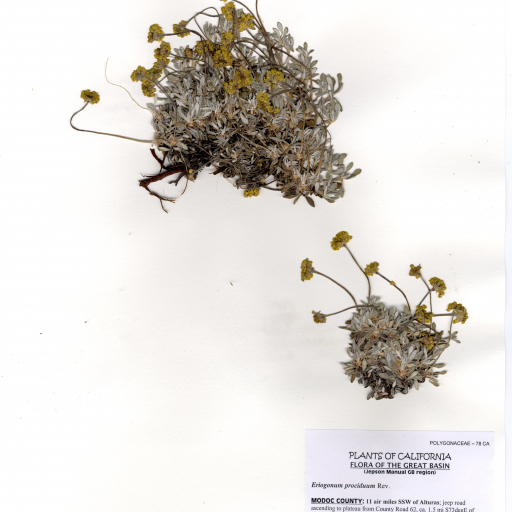
Known affectionately as the Prostrate Buckwheat, this low-profile survivor is a master of the high-desert landscape. Native to the rugged, volcanic regions of the Western United States, it spends its life hugging the earth to escape harsh winds. It is a favorite among rock garden enthusiasts who appreciate its ability to turn a barren, rocky patch into a silver-green tapestry.
🔍 How to Identify
- 🌿 Growth Habit: It forms a dense, woody-based mat that stays very close to the ground (hence "prostrate"), rarely rising more than a few inches high.
- 🍃 The Foliage: Look for small, oval-to-spoon-shaped leaves. They are often covered in tiny, silvery hairs that give the plant a dusty or woolly appearance—a clever trick to reflect intense sunlight.
- 🌼 The Blooms: It produces tight, pom-pom-like clusters of tiny flowers. These usually start as a bright sulfur-yellow but can take on reddish or creamy tints as they age.
🏡 In Your Garden
- 🌋 Soil Preference: This plant is a "specialist." In the wild, it thrives in volcanic ash and rocky "scablands." In a garden setting, it demands exceptional drainage; it will struggle in heavy, wet clay.
- 🐝 Pollinator Magnet: Despite its small size, it is a powerhouse for local biodiversity. It serves as a vital nectar source for native bees and is a host plant for several species of blue butterflies.
- ✂️ Low Maintenance: Because it is adapted to nutrient-poor soils, it requires almost no fertilizer. In fact, "pampering" it with too much water or rich soil can actually shorten its lifespan.
⚠️ Safety & Toxicity
- ✅ Non-Toxic: Eriogonum prociduum is generally considered safe and is not known to be toxic to humans or common household pets.
- 🐾 Wildlife Browsing: While not a primary food source, it is occasionally nibbled by deer or goats in the wild without ill effects, though its woolly texture usually makes it less palatable than other greens.
✨ Fun Fact
The Prostrate Buckwheat is a true "extremophile" of the plant world. It is often found growing in volcanic tuff—a type of rock made of volcanic ash ejected during eruptions. It can survive in cracks where almost no other organic life can take hold!

Detailed Care Instructions







