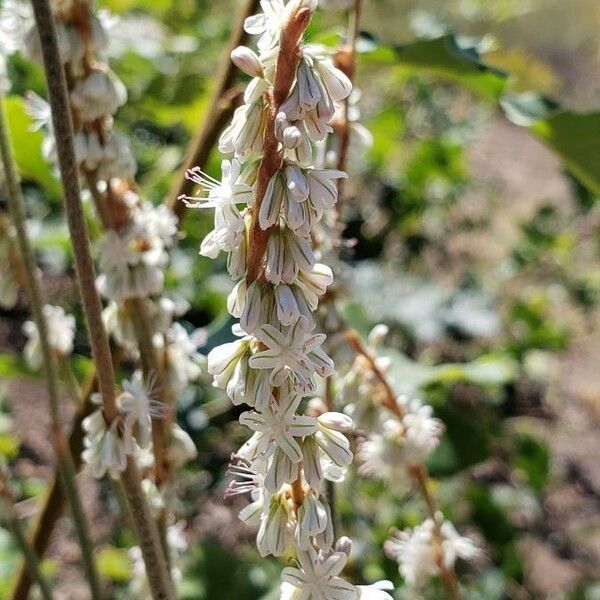
Plant Overview
Known as the Redroot Buckwheat, this hardy perennial is a rugged survivor of the American West, ranging from the dusty plateaus of Arizona to the rocky slopes of Colorado. It is prized by native plant enthusiasts for its architectural flower spikes and its ability to thrive where other plants wither. Its name comes from the striking cinnamon-red color of its woody taproot, which hides beneath the soil like a buried treasure.
🔍 How to Identify
- 🍃 The Basal Rosette: Most of the foliage stays low to the ground in a dense clump. The leaves are oval or heart-shaped, featuring a matte green top and a fuzzy, silver-white "woolly" underside.
- 📏 Wand-like Stems: From the leafy base, tall and leafless stalks shoot upward. These stems are smooth, greenish-grey, and can reach up to three feet in height, giving the plant an airy, minimalist look.
- 🌸 Clustered Blooms: Tiny, bell-shaped flowers appear in small bunches along the top half of the stem. They range from creamy white to soft pink and have a delicate, papery texture as they dry.
🏡 In Your Garden
- 🏜️ Drainage is Vital: This plant is a "dry-feet" specialist. It thrives in gritty, sandy, or rocky soils where water moves quickly. In heavy clay or soggy potting mix, the signature red root is highly prone to rot.
- 🦋 Pollinator Banquet: While it may look understated to humans, it is a high-traffic hub for native bees, wasps, and butterflies. It is a particularly important nectar source in late summer when many other wildflowers have already gone to seed.
⚠️ Safety & Toxicity
- ✅ Generally Safe: Redroot Buckwheat is not known to be toxic to humans, dogs, or cats. It is a common sight in wild grazing lands.
- 🧤 Prickly Aftermath: While not poisonous, the flower stalks become quite brittle and stiff as they dry out in the fall. If you are cleaning up a garden bed, wear gloves to avoid minor pokes from the dried stems.
✨ Fun Fact
The "Redroot" isn't just a clever name—the plant's deep taproot contains a vibrant reddish-orange pigment. Historically, several Indigenous tribes, including the Navajo, utilized these roots to create a rich, natural dye for coloring wool and leather.

Detailed Care Instructions
To grow Eriogonum racemosum, also known as the Sulfur Buckwheat plant, follow these steps:
- Find a suitable location: Eriogonum racemosum prefers full sun and well-draining soil. Choose a spot in your garden that receives at least 6-8 hours of direct sunlight each day.
- Prepare the soil: This plant thrives in sandy, loamy, or gravelly soils. Make sure the soil is well-draining by improving it with organic matter such as compost or well-rotted manure. Amend heavy clay soils with sand or gravel to improve drainage. Ensure the pH of the soil is around neutral (6.5-7.5).
- Planting: Dig a hole that is slightly wider and deeper than the root ball of the eriogonum plant. Place the plant in the hole, making sure that the top of the root ball is level with or slightly above the soil surface. Fill the hole with soil and gently firm it around the base of the plant, but avoid compacting the soil too much.
- Watering: Water the plant thoroughly after planting to settle the soil and help the roots establish. Eriogonum racemosum is drought-tolerant but will benefit from regular watering during the first growing season to promote healthy root growth. Once established, water sparingly, allowing the soil to dry out slightly between waterings.
- Mulching: Apply a layer of organic mulch around the base of the plant to help conserve moisture, suppress weed growth, and protect the roots from extreme temperatures. Avoid piling mulch up against the stem of the plant, as it can promote rot.
- Pruning: Eriogonum racemosum generally does not require significant pruning. However, you can remove any dead or damaged stems in early spring to promote new growth and maintain a tidy appearance.
- Fertilizing: Eriogonum racemosum typically does not require regular fertilization. However, if your soil is nutrient-poor, you can apply a slow-release, balanced fertilizer in early spring, following the manufacturer's instructions.
- Maintenance: Eriogonum racemosum is a relatively low-maintenance plant. Regularly monitor for pests, such as aphids or spider mites, and treat as necessary. Remove any weeds that compete for resources with the plant.
By following these steps, you can successfully grow Eriogonum racemosum in your garden and enjoy its beautiful blooms and foliage.

To water this particular plant, you should first ensure that the soil is well-draining and not waterlogged. Overwatering can cause root rot and damage to the plant. When watering, use a watering can or hose with a gentle stream to avoid disturbing the soil and the plant's roots. Water the soil around the base of the plant rather than the leaves or flowers. Wait until the top inch of soil is dry before watering again, as this plant prefers slightly dry conditions. During periods of drought or high heat, increase watering frequency. Avoid watering excessively during the winter months when the plant is dormant.
To fertilize this plant, apply a balanced fertilizer in the spring before new growth begins. Be sure to follow the package instructions for application rates. It is also recommended to amend the soil with organic matter such as compost or well-rotted manure prior to application. Avoid over-fertilizing as it can lead to excessive growth and reduced flowering. Additionally, regular watering and proper sunlight are essential for the plant's overall health and vitality.
Eriogonum Racemosum is a plant species that is native to North America. When it comes to selecting the soil for this plant, it is important to keep in mind that it thrives in well-draining soils that have a slightly acidic pH. It is often recommended to use a mixture of sandy loam, clay, and organic matter when planting Eriogonum Racemosum, as this combination can provide the plant with the nutrients and moisture it needs to grow healthy and strong. Additionally, it is important to make sure that the soil is not compacted, as this can limit the plant's ability to receive nutrients and water. Overall, ensuring that the soil is well-draining, slightly acidic, and nutrient-rich can help promote optimal growth and health for Eriogonum Racemosum.
Eriogonum Racemosum can be propagated by using stem cuttings or by using seeds. In order to propagate through stem cuttings, prepare a pot with well-draining soil. Take a cutting of a healthy stem from the parent plant, making sure the cutting is around 4-6 inches long with a few leaves. Remove any leaves from the bottom of the stem and dip the cut end into rooting hormone. Plant the cutting in the prepared pot and keep the soil moist until new growth appears. Propagation through seeds can be done by collecting mature seeds from the parent plant and sowing them in a pot with well-draining soil. Cover the seeds lightly with soil and keep the soil moist until germination occurs. The seeds will typically germinate within 1-2 weeks.








