Plant Overview
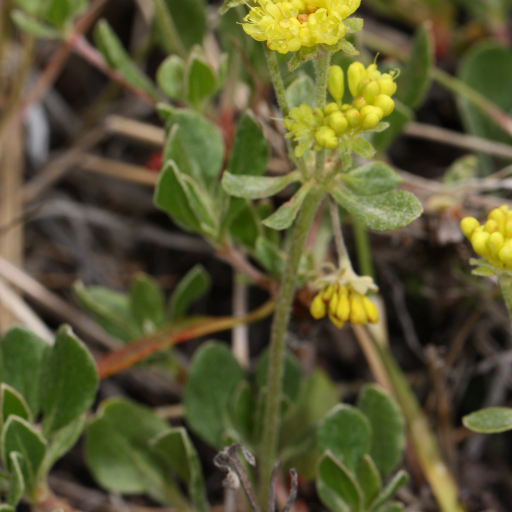
Often called the Sulphur-flower Buckwheat, this resilient beauty is a staple of the high deserts and mountain slopes of the American West. It looks like a carpet of tiny, glowing suns spilled across the rocky earth, providing a vital bridge for pollinators in harsh environments. In the wild, it is known for its incredible variability, changing its look based on the altitude where it grows.
🔍 How to Identify
- 🌿 The Foliage: Small, leathery, spoon-shaped leaves that form dense, low-growing mats close to the ground.
- ☁️ The Undersides: If you flip a leaf over, you’ll find a soft, white-woolly texture—a clever adaptation used to trap moisture and reflect intense mountain sunlight.
- 🌼 The Bloom Clusters: Tiny star-like flowers are gathered into pom-pom-like "umbels" that sit atop leafless stems. They typically start as a vivid sulphur-yellow and transition to a deep rusty orange or red as they age.
🏡 In Your Garden
- 🏜️ Drainage is Key: This plant thrives on "tough love" and demands gritty, well-draining soil. It is a champion of xeriscaping but will quickly suffer from root rot if tucked into heavy, wet clay.
- 🦋 The Butterfly Magnet: It is a high-value nectar source for native bees and rare butterflies, such as the Blue Copper and various Hairstreaks, making it an essential pick for a conservation-minded rock garden.
⚠️ Safety & Toxicity
- ✅ Safe Status: Sulphur-flower Buckwheat is generally considered non-toxic to humans, cats, and dogs. It is a "worry-free" plant for backyard landscapes.
- 🧤 Touch Sensitivity: While not poisonous, the fine hairs on the leaves can occasionally cause very mild skin irritation for people with extreme sensitivities during heavy pruning or handling.
✨ Fun Fact
The flowers of the Sulphur-flower Buckwheat are like "everlastings." Even after they die and turn a deep rusty red, they hold their shape on the stem for months, providing beautiful structural interest and color in the garden throughout the winter.

Detailed Care Instructions
To grow Eriogonum umbellatum, also known as Sulfur Buckwheat, follow these steps:
- Choose the right location: Eriogonum umbellatum thrives in full sun to partial shade. It prefers well-draining sandy or loamy soil types.
- Prepare the soil: Before planting, ensure the soil is loose, rich in organic matter, and well-draining. Amend heavy clay soils with compost or sand to improve drainage.
- Obtain seeds or plants: You can purchase Eriogonum umbellatum seeds or seedlings from nurseries, online sources, or collect seeds from mature plants in your area.
- Sow seeds or transplant seedlings: If starting from seeds, sow them in the prepared soil during the spring. Prepare a seed bed by loosening the soil and gently pressing the seeds into the surface, ensuring they are lightly covered. Keep the soil consistently moist until the seeds germinate. If transplanting seedlings, dig a small hole and gently place the seedling, making sure to not disturb the roots. Space the plants about 12-18 inches apart.
- Watering: After planting, water the plant regularly to establish a healthy root system. Eriogonum umbellatum is a drought-tolerant plant, but during the initial stages, it benefits from regular watering until it becomes established.
- Mulching: Apply a layer of organic mulch around the plant to conserve moisture, suppress weed growth, and maintain a cooler soil temperature during the summer months.
- Pruning: Eriogonum umbellatum requires minimal pruning. However, if the plant becomes too leggy or overgrown, you can trim it back in late fall or early spring to maintain a compact form.
- Fertilization: Generally, Eriogonum umbellatum does not require regular fertilization. However, if the soil is nutrient-poor, you can apply a slow-release balanced fertilizer during the growing season according to package instructions.
- Pests and diseases: Eriogonum umbellatum is relatively resistant to pests and diseases. However, it can occasionally be susceptible to aphids or powdery mildew. Regularly inspect the plant for any signs of infestation or disease and take appropriate action if necessary.
- Enjoy the blooms: Eriogonum umbellatum produces beautiful clusters of yellow flowers from spring to early summer. Enjoy the blossoms and their attraction to pollinators like bees and butterflies.
Remember to check your local gardening guidelines as some variations in planting and care might exist depending on your region.

Place in a bright room that is sun drenched almost all day. Or directly in a south-facing window.

To water this plant, ensure that the soil is moderately moist but not waterlogged. It is important to avoid overwatering, as this plant is tolerant of dry conditions. Water deeply once a week during the growing season and reduce watering frequency in the winter when growth slows. It is best to water in the morning to reduce evaporation and allow the foliage to dry before nightfall to prevent disease. Use your judgement and adjust watering frequency depending on environmental conditions and the moisture level of the soil.
To properly fertilize this plant, use a balanced fertilizer with equal amounts of nitrogen, phosphorus, and potassium. Apply the fertilizer in early spring before new growth appears, and again in midsummer. Follow the instructions on the fertilizer packaging for the correct amount to use. Avoid over-fertilizing, as this can lead to excessive growth and weak stems. Water the plant well after fertilizing to help the nutrients soak into the soil.
The soil for Eriogonum Umbellatum should be well-draining, sandy or gravelly, and not too rich in nutrients. It thrives in rocky, dry and infertile soils. It is important to avoid heavy soils with high clay content, as this can lead to waterlogging and root rot. Adding organic matter or compost to the soil is not necessary and may actually harm the plant, as it prefers nutrient-poor soils. A pH level of around 6.0-8.0 is ideal for this plant.
To propagate this plant, you can collect its mature seeds from the flowers as they dry out. Make sure to remove the seeds from the dried flowers and store them in a cool, dry place until the following growing season. Before planting, stratify the seeds by placing them in the refrigerator for about six weeks to break their dormancy.
Alternatively, you can propagate this plant through stem cuttings. In late winter or early spring, take cuttings from the plant's stems that are about 4 to 6 inches long. Remove the lower leaves and dip the cut end in rooting hormone before placing it in a pot filled with well-draining soil. Keep the soil moist and place the pot in a warm, bright location until roots form, then transplant the cutting to its permanent location in the garden.








