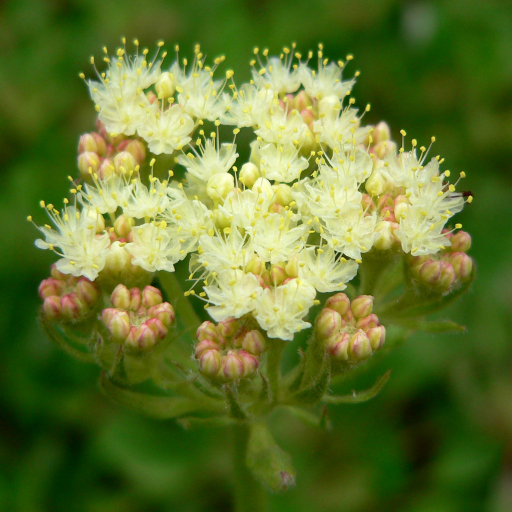
Plant Overview
Commonly known as the Bear Valley Buckwheat, this rugged perennial is a true mountain dweller native to the high-elevation rocky slopes of the Western United States. Its scientific name, ursinum, translates to "bear-like," a nod to the thick, woolly texture of its foliage that mimics a grizzly’s coat. It is a master of survival, forming dense, beautiful mats that anchor shifting scree and provide a burst of color to harsh, alpine environments.
🔍 How to Identify
- 🐻 The Foliage: Look for small, oval-shaped leaves that are bright green on top but covered in a thick, silvery-white "felt" or wool on the underside.
- 🌼 The Blooms: It produces spherical clusters of tiny flowers on stalks that rise above the leaves; these blooms usually start as a creamy sulfur-yellow and gracefully age into deep oranges or rusty reds.
- 🌱 Growth Habit: This is a "mat-forming" plant, meaning it grows low to the ground and spreads horizontally, rarely reaching more than a few inches in height despite its wide footprint.
🏡 In Your Garden
- 🏔️ High-Altitude Heritage: Because it originates from rocky, thin soils, it absolutely requires "sharp drainage." If its roots sit in soggy soil for even a day, it is prone to crown rot; it is best suited for rock gardens or crevices.
- 🦋 Pollinator Paradise: It acts as a vital landing pad for mountain butterflies and native bees. In particular, it is a critical host plant for various species of "Blue" butterflies, providing both nectar and a place to lay eggs.
- ☀️ Sun Lover: This plant has evolved to thrive under intense UV rays and high winds. It prefers a spot with maximum sun exposure and very little competition from taller, thirstier plants.
⚠️ Safety & Toxicity
- ✅ Status: Generally considered non-toxic.
- 🐾 Details: There are no known records of Eriogonum ursinum being poisonous to humans, dogs, or cats. In fact, in the wild, it is occasionally browsed by deer and bighorn sheep, though the "woolly" texture makes it less palatable than other greens.
✨ Fun Fact
The Bear Valley Buckwheat is a "color-shifter." As the flowers dry out toward the end of summer, they don't simply wilt; they turn a vibrant, rusty bronze that stays on the plant for months, providing visual interest even when the growing season has ended!

Detailed Care Instructions

Some plants require more regular watering than others, which should be done every few days. It's critical to maintain the soil moist all of the time. The water requirements of the same plant placed in pots with varying sizes will differ. Because the water in the smaller pot evaporates faster than the water in the larger pot, it will require more watering. Regardless of pot size, the surface should constantly be maintained moist.








