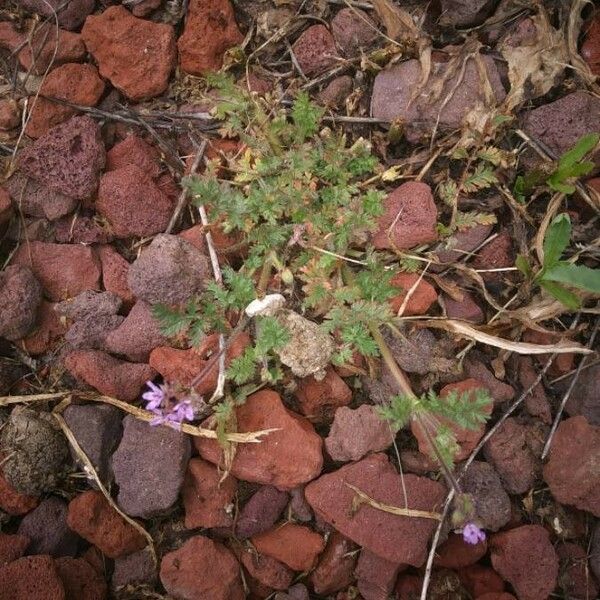
Plant Overview
Meet Lebel’s Stork’s-bill, a resilient coastal traveler often found dancing along the edges of sandy dunes and maritime grasslands. Named after the French botanist Jacques-Eugène Lebel, this petite member of the Geranium family is a master of survival in salty, wind-swept environments. While it may look like a delicate wildflower, its "bill-like" seed pods reveal a plant built for clever propagation.
🔍 How to Identify
- 🌸 Petite Blooms: It features small, five-petaled flowers that range from pale pink to white, often appearing in clusters of two to five on a single stalk.
- 🌿 Fern-like Foliage: The leaves are pinnate and deeply divided, giving them a soft, feathery appearance that forms a low-growing rosette to hug the warm ground.
- 🏗️ The Stork’s Bill: The most distinctive feature is the long, pointed seed capsule that emerges after flowering, closely resembling the beak of a stork or heron.
🏡 In Your Garden
- 🏖️ Coastal Specialist: This plant thrives in poor, sandy, or gravelly soils. It is exceptionally tolerant of salt spray, making it a perfect choice for seaside rock gardens or "wild" coastal landscapes.
- ☀️ Sun Seeker: It demands full sun to reach its full potential. Because it has a deep taproot to find water in porous sand, it is very drought-tolerant but dislikes being moved once established.
⚠️ Safety & Toxicity
- ✅ Low Risk: Lebel’s Stork’s-bill is generally considered non-toxic to humans, cats, and dogs.
- 🌱 Mild Irritant: While safe, the tiny glandular hairs on the stems can trap dust or pollen, which might cause very mild skin irritation for those with hyper-sensitive skin or allergies.
✨ Fun Fact
The "bills" aren't just for show—they are biological drills! When the seeds are ripe, the beak dries and twists into a tight spiral. When it touches damp soil, the coil unwinds, creating a mechanical force that literally screws the seed into the ground to ensure successful germination.

Detailed Care Instructions
To grow Erodium lebelii, also known as Lebel's cranesbill, you can follow these steps:
- Obtain seeds or young plants: You can either collect seeds from existing plants or purchase them from a reputable seed supplier. Alternatively, you can acquire young plants from a nursery or garden center.
- Choose the right planting location: Erodium lebelii prefers full sun but can tolerate partial shade. Select a well-draining area in your garden that receives at least 6 hours of direct sunlight per day.
- Prepare the soil: Erodium lebelii thrives in well-draining soil with a pH of 6.0 to 7.5. If your soil is heavy or clay-like, you can amend it with organic matter or sand to improve drainage.
- Planting seeds or young plants:
- Seeds: Sow the seeds in late summer or early autumn in cooler regions. In mild climates, you can sow them in early spring. Rake the soil lightly and sprinkle the seeds over the prepared area. Lightly press them into the soil, but do not bury them too deep. Water gently after planting.
- Young plants: Dig a hole slightly larger than the root ball of the plant. Place the plant in the hole, backfill with soil, and gently firm it around the plant. Water thoroughly after planting.
- Watering: Erodium lebelii prefers moderate watering. Water the plants deeply once or twice a week, allowing the soil to dry between watering. Avoid overwatering, as excessive moisture can lead to root rot.
- Mulching: Applying a layer of organic mulch around the plants can help retain moisture and suppress weed growth.
- Fertilization: Erodium lebelii generally doesn't require heavy fertilization. If your soil is poor, you can apply a balanced, slow-release fertilizer during the growing season. Follow the manufacturer's instructions for proper application.
- Pruning: Deadheading spent flowers can encourage continuous blooming and prevent self-seeding. Additionally, you can cut the plants back by a third after the blooming period to promote compact growth and a second bloom later in the season.
- Pest and disease control: Erodium lebelii is generally resistant to pests and diseases. However, keep an eye out for common garden pests such as aphids or slugs. Treat them with appropriate organic or chemical controls, if necessary.
- Winter care: Erodium lebelii is typically hardy and can tolerate frost and cold temperatures. However, in severe winter regions, you can protect the plants by applying a layer of mulch or covering them with burlap during freezing temperatures.
With proper care and maintenance, your Erodium lebelii plants should grow and thrive, providing attractive flowers and foliage throughout the growing season.

Place in a bright room that is sun drenched almost all day. Or directly in a south-facing window.

There are some key principles to keep in mind when watering Erodium Lebelii plants. Firstly, it is important to ensure that the soil is moist, but not waterlogged. This means that you should avoid overwatering the plant, as this can lead to problems with root rot and other issues.
To water Erodium Lebelii, you should start by checking the soil moisture levels. You can do this by sticking your finger into the soil, or by using a moisture meter. If the soil feels dry to the touch, it is time to water the plant.
When watering Erodium Lebelii, it is important to water deeply and evenly. This means that you should provide enough water to reach the roots of the plant, but without creating run-off. To do this, you can either use a watering can or a hose with a gentle spray attachment.
It is also important to water Erodium Lebelii at the right time of day. Ideally, you should water the plant early in the morning or late in the evening, when the temperatures are cooler and the sun is less intense. This helps to prevent the water from evaporating too quickly and ensures that the plant has time to absorb the moisture.
Finally, it is important to adjust your watering schedule according to the plant's growth and the weather conditions. Generally speaking, Erodium Lebelii plants require more water during hot and dry weather, and less water during cooler or wetter conditions. By observing the plant and adapting your watering practices accordingly, you can help to ensure that it thrives and stays healthy.
- Start by selecting a balanced fertilizer with equal amounts of nitrogen, phosphorus, and potassium.
- Apply the fertilizer to the soil around the base of the plant, taking care not to get any fertilizer on the leaves.
- Water the soil immediately after fertilizing to help the nutrients penetrate the root system.
- Repeat the fertilization process every 4-6 weeks during the growing season.
- Monitor the plant for any signs of over-fertilization, such as yellowing leaves or stunted growth, and adjust the fertilization schedule accordingly.
Erodium lebelii prefers a well-draining soil that is sandy or gravelly and has a neutral to alkaline pH. It can tolerate some drought but should be watered when the soil is dry to the touch. It grows well in full sun to partial shade and can tolerate moderate levels of salt in the soil. A soil mix with added perlite or coarse sand can help ensure adequate drainage for this plant.
To propagate this plant, you need to first collect the seeds from the matured plant. Choose a healthy plant that has flowered and allow the flowers to dry and seed heads to develop. Once the seed heads have matured and turned brown, carefully cut them off the plant and store in a dry and cool place.
To start propagation, sow the seeds in a seedling tray filled with well-draining soil. Cover the seeds with a thin layer of soil and water lightly. Keep the tray in indirect sunlight or light shade and moisten the soil regularly. Germination usually takes about 2-4 weeks.
Once the seedlings have grown their first set of true leaves, you can transplant them into individual pots. Use a well-draining potting mixture and ensure the pots have drainage holes at the bottom. Keep the pots in a shaded area and water regularly to keep the soil moist.
Continuously monitor and care for the plants, ensuring they are kept in optimal growing conditions. As the plant grows, you can also propagate it by taking stem cuttings and rooting them in water or soil. Choose a healthy stem that is at least 8 cm long, trim off the leaves at the bottom and insert the stem into moist soil or water. Once roots have formed and the plant is established, it can be transplanted into its own pot.








