Plant Overview
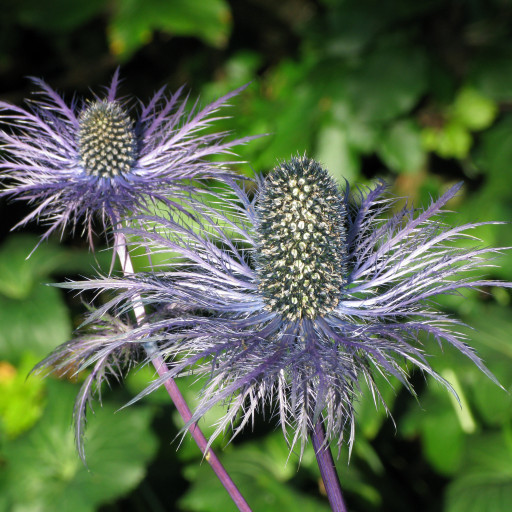
Known as the "Queen of the Alps," this breathtaking perennial looks as though it has been dipped in metallic blue paint. Often nicknamed the "Alpine Sea Holly," it is famous for its architectural elegance and its ability to hold its striking color even after the flower has dried. In its native European mountain ranges, it is a protected treasure that adds a touch of crystalline beauty to rocky slopes.
🔍 How to Identify
- 🔵 The "Queen’s Crown": The central flower is a dense, egg-shaped cone, but the real showstopper is the ring of feathery, lace-like bracts that surround it like a shimmering blue ruff.
- 🎨 Metallic Luster: As the plant matures, the upper stems and flower heads transition from a soft green to a vivid, electric violet-blue with a distinct silvery sheen.
- 🍃 Contrasting Foliage: The base of the plant features soft, heart-shaped green leaves, while the leaves higher up the stem are jagged, stiff, and more "thistle-like" in texture.
🏡 In Your Garden
- 📍 Pick a Forever Home: This plant develops a very deep taproot. This makes it exceptionally drought-tolerant once established, but it also means it hates being moved. Choose its spot carefully, as transplanting often results in "sulking" or plant death.
- 🏜️ Drainage is Non-Negotiable: Coming from rocky alpine environments, it cannot tolerate "wet feet," especially during the winter. It thrives in gritty, poor-to-moderate soil where water drains away quickly from the crown.
- 🐝 A Pollinator Party: While it looks prickly and uninviting to us, bees and butterflies find the nectar-rich cones irresistible. It is an essential addition to any high-altitude or "cool-climate" pollinator garden.
⚠️ Safety & Toxicity
- 🛡️ Physical Hazard: The plant is generally considered non-toxic to humans and pets. However, the bracts and upper leaves are sharp and prickly.
- 🧤 Handle with Care: Always wear thick gardening gloves when pruning or deadheading to avoid skin irritation or small punctures from the spiny foliage.
✨ Fun Fact
- 🏔️ A Protected Beauty: Because it is so popular in floral arrangements, Eryngium alpinum was almost picked into extinction in the wild. It is now a strictly protected species in several European countries, and wild foraging is heavily fined!

Detailed Care Instructions
To grow Eryngium Alpinum, also known as alpine sea holly, follow these steps:
- Choose a suitable location: Eryngium Alpinum prefers full sun but can tolerate partial shade. Ensure the soil is well-draining and nutrient-rich.
- Soil preparation: Amend the soil by adding organic matter such as compost or well-rotted manure. This will improve drainage and provide essential nutrients.
- Planting: Eryngium Alpinum can be started from seeds or transplants. If starting from seeds, sow them directly into the prepared soil in spring or early summer after the danger of frost has passed. If using transplants, plant them at the same depth as they were in their original pot, ensuring the root ball is covered with soil.
- Watering: Keep the soil consistently moist but not waterlogged, especially during the plant's establishment period. Once established, Eryngium Alpinum is relatively drought-tolerant and prefers drier conditions.
- Mulching: Apply a layer of organic mulch around the base of the plant to help retain moisture, suppress weeds, and insulate the roots during extreme temperatures.
- Fertilizing: Eryngium Alpinum generally doesn't require heavy fertilization. However, you can apply a balanced slow-release fertilizer in spring to promote healthy growth.
- Pruning: To encourage compact growth and prevent self-seeding, deadhead the flowers after they have finished blooming. Cut back any excess growth in late winter or early spring before new growth emerges.
- Pest and disease control: Eryngium Alpinum is generally resistant to pests and diseases. However, it can occasionally be affected by aphids, slugs, or leaf spot. Monitor the plant regularly and treat any issues promptly with organic pest control methods if necessary.
By following these steps, you should be able to grow a healthy and attractive Eryngium Alpinum plant in your garden.

Place in a bright room that is sun drenched almost all day. Or directly in a south-facing window.

1. Location: First, identify the location where the plant is placed. Eryngium Alpinum is indigenous to alpine regions and prefers full sun to partial shade. The plant requires a well-draining substrate, so make sure the soil has good drainage capabilities.
2. Observe the Soil: Observe the soil and check if it's dry to the touch. If it's moist, then don't water it. However, if the soil is dry, then it's time to water the plant.
3. Watering: While watering the plant, make sure to water the soil and not the leaves. Furthermore, avoid overwatering the plant as it can lead to root rot. Water the plant using a watering can or hose until the soil becomes slightly moist.
4. Frequency: The frequency of watering will depend on various factors such as the temperature, humidity, and rainfall. However, as a general guideline, it's best to water the plant once a week during the growing season. During the winter months, reduce the frequency of watering to once every 2-3 weeks.
5. Mulching: After watering, add a layer of mulch around the plant. This will help to retain moisture in the soil and prevent weed growth.
6. Monitor: Finally, monitor the plant regularly, and if you notice any signs of wilt or any other problems, adjust the watering accordingly.
To fertilize this plant, use a balanced fertilizer in early spring as new growth begins. Apply the fertilizer according to the instructions on the package. Avoid fertilizing in late summer or fall as this can stimulate new growth that may not have time to harden off before winter. Ensure that the soil is well-draining and not too rich in nutrients as this can cause the plant to become leggy and flop over.
Eryngium Alpinum plant generally prefers well-draining soil that is rich in organic matter and slightly acidic to neutral pH. The soil should be loose and sandy, with good drainage to prevent waterlogging and the accumulation of excess moisture. It is often recommended to mix in some perlite or coarse sand with regular potting soil to improve drainage. Additionally, adding some compost or aged manure to the soil can help provide essential nutrients to the plant for healthy growth. Eryngium Alpinum plant can tolerate some drought, but it is important to water the plant deeply and infrequently rather than shallowly and frequently. Finally, adding a layer of mulch around the base of the plant can help retain moisture and suppress weed growth.
To propagate this plant, first gather healthy specimens with strong root systems. These can be divided and separated into smaller sections, making sure each section has roots attached. These can then be transplanted into well-draining soil, making sure to water regularly until established. Another method is to collect and sow seeds in the early spring or autumn, making sure to keep the soil moist and the temperature consistent. Once grown, the seedlings can be transplanted into their permanent location. Both methods require patience and care, but can result in healthy, vigorous new plants.








