Plant Overview
Often called the Many-flowered Sea Holly, Eryngium floribundum is a striking architectural marvel that looks like it belongs in a futuristic landscape. Native to the grasslands of South America, this plant is beloved by designers for its "steely" appearance and its ability to maintain a sharp, structural silhouette even in the dead of winter. It is the perfect choice for those who want a garden that looks both wild and sophisticated.
🔍 How to Identify
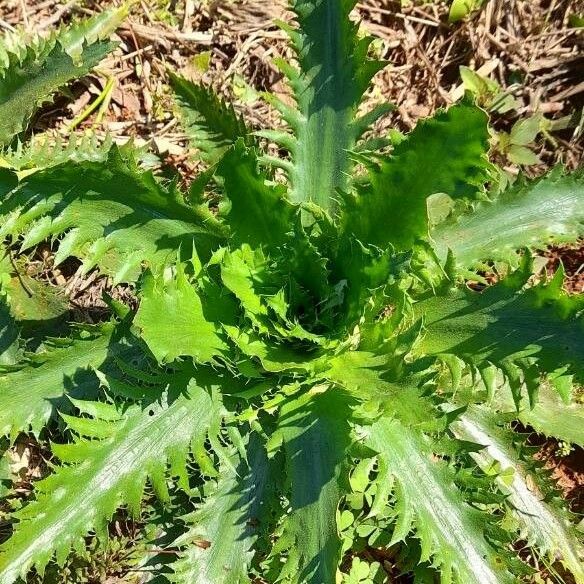
- 🌿 The Rosette: It begins as a dense cluster of sword-shaped, leathery leaves with distinctively serrated, prickly edges.
- 💠 The Bloom: It produces tall, branching stems topped with numerous small, cylindrical flower heads that resemble miniature, silver-blue pineapples.
- 🎨 The Sheen: The entire plant often carries a metallic, waxy coating that shimmer under the sun, giving it a ghost-like or "frosted" appearance.
🏡 In Your Garden
- ⚓ The Deep Anchor: This plant develops a long, sturdy taproot designed to seek out water deep underground. Because of this, it is exceptionally drought-tolerant once established, but it absolutely loathes being moved—pick its "forever home" carefully!
- ☀️ Light & Color: To get that iconic steel-blue tint, it needs a position in full, unadulterated sun. In shadier spots, the plant may remain a duller green and the stems might become floppy.
- 🦋 Pollinator Banquet: Despite its prickly exterior, it is a high-value nectar source. You will often find it covered in a diverse array of bees, hoverflies, and butterflies.
⚠️ Safety & Toxicity
- ⚔️ Physical Warning: The primary "danger" of this plant is its mechanical defense. The leaves and bracts are genuinely sharp and can easily puncture skin or gardening gloves.
- 🐾 Pet & Child Safety: While not considered highly toxic if ingested, the sharp spines make it a physical hazard. It is best planted toward the back of a border where curious pets or toddlers won't accidentally stumble into it.
✨ Fun Fact
- 🏛️ Ancient Connections: While Eryngium floribundum is a New World species, its genus has deep roots in history; Plutarch once claimed that if a goat took a piece of Sea Holly in its mouth, the entire herd would stop in their tracks to stare at it!

Detailed Care Instructions
Eryngium Floribundum is a plant that requires moderate watering. To water it properly, make sure the soil is dry to the touch before watering. It is important not to overwater the plant, as this can lead to root rot and other problems. When you water, water it deeply, making sure to saturate the soil. Make sure the soil drains well and doesn't become waterlogged. Avoid getting water on the plant's leaves, as this can lead to fungal infections. Water the plant in the morning or evening when it's cooler outside to prevent evaporation. In hotter climates, the plant may require more frequent watering.
Eryngium Floribundum plant prefers a well-draining soil that is slightly acidic to neutral. It is recommended to use a soil mixture that includes a combination of perlite, peat moss, and sand to enhance drainage. The soil should also be rich in organic matter to provide essential nutrients to the plant. Avoid using heavy clay soils as they tend to retain moisture and can cause root rot. Additionally, ensure that the soil is not too compacted, as this can lead to poor drainage and stunt the growth of the plant.








