Plant Overview
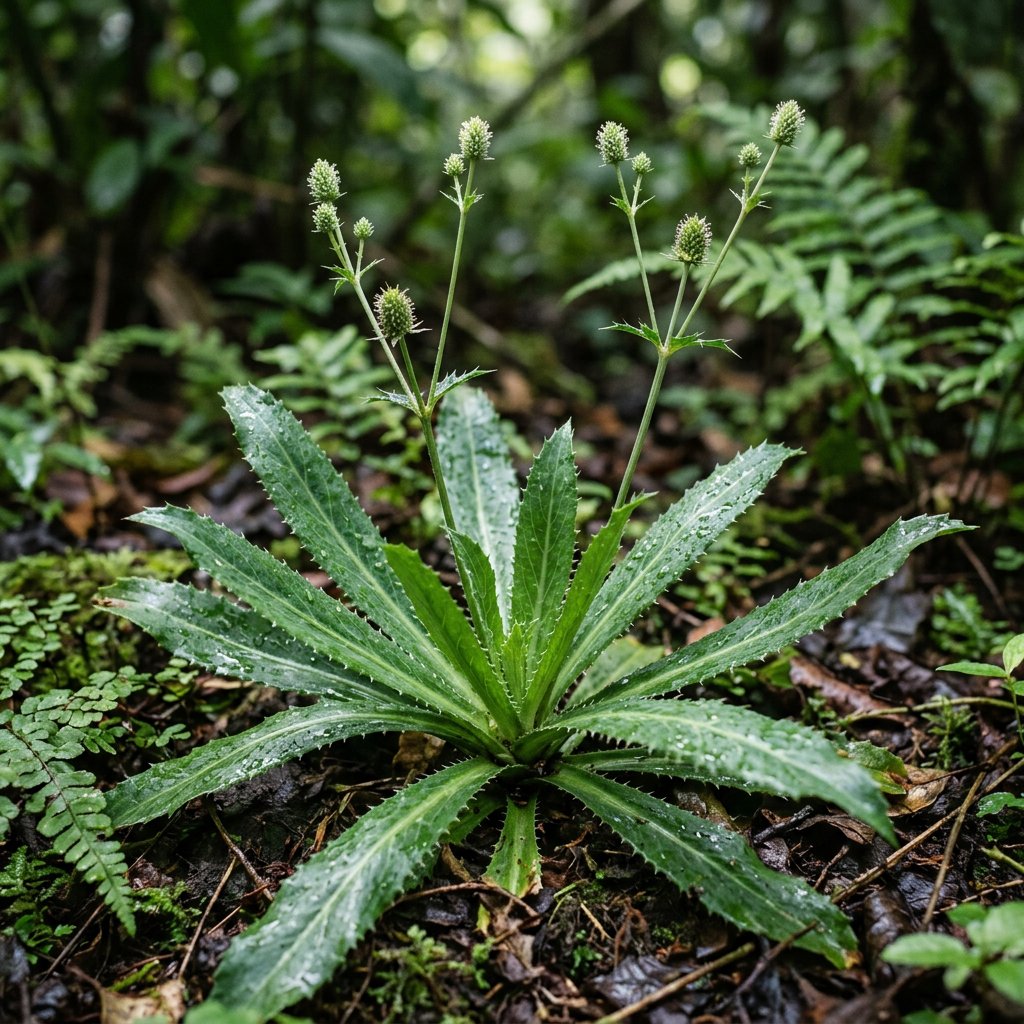
Often called "Culantro" or "Sawtooth Coriander," Eryngium foetidum is the bold, heat-loving cousin of the common cilantro. While cilantro is delicate and prone to wilting, culantro is a rugged survivor of the tropics, known for its intense, earthy aroma that can fill an entire kitchen. It is the secret soul of Caribbean sofrito and a staple in Southeast Asian soups, prized for maintaining its flavor even when cooked at high heat.
🔍 How to Identify
- 🌿 The Leaves: Unlike the lacy leaves of cilantro, culantro features long, narrow, spatulate leaves that grow in a low rosette.
- 🪚 Sawtooth Edges: The margins of the leaves are lined with small, sharp serrations, giving it its popular "sawtooth" nickname.
- 🍦 The Bloom: When it matures, it sends up a central, branching stalk topped with spiky, cone-like green flower heads (bracts).
🏡 In Your Garden
- ☁️ The Shadow Dweller: While many herbs crave the baking sun, culantro is often called "Shadow Beni" because it thrives in partial shade. Growing it in the shade keeps the leaves tender and prevents the plant from flowering too early.
- 💧 Moisture Consistency: It prefers "jungle-like" conditions—warm, humid, and consistently moist soil. If the soil dries out completely, the plant may go into survival mode and produce tough, bitter leaves.
- ✂️ Harvest Strategy: Always pick the oldest, outermost leaves first. This encourages the center of the rosette to continue producing fresh, flavorful growth.
⚠️ Safety & Toxicity
- 🍽️ Edibility Assessment: Perfectly safe and highly encouraged for culinary use. It is significantly more potent than cilantro, so use about half as much in your recipes.
- 🐾 Pet Safety: It is generally considered non-toxic to cats and dogs, though its high essential oil content means it should only be consumed in small, "garnished" amounts by curious pets.
- 🧤 Skin Sensitivity: The serrated edges of the leaves can be quite sharp. Sensitive gardeners may want to wear gloves when harvesting large patches to avoid "paper cut" sensations.
✨ Fun Fact
The species name foetidum literally translates to "stinking" or "foul-smelling." While that sounds unappealing, it refers to the plant's intense concentration of leaf aldehydes—the same compounds that give cilantro its scent, just cranked up to maximum volume!

Detailed Care Instructions
| Humidity | Normal |
| Lighting | Part Sun |
| Difficulty | Medium |
| Hibernation | Cold Period |
| Temperature | 15°C - 30°C |
| Hardiness Zones | Min 10B |
To grow Eryngium foetidum, also known as culantro or Mexican coriander, follow these steps:
- Start with seeds or seedlings: You can purchase Eryngium foetidum seeds online or at a local gardening store. Alternatively, you can purchase seedlings from a nursery.
- Choose the right location: Eryngium foetidum thrives in warm and tropical climates. It requires full or partial sun and well-draining soil. If you live in a colder region, consider growing it in a pot that can be brought indoors during winter months.
- Prepare the soil: Eryngium foetidum prefers rich and fertile soil. Add compost or organic matter to improve the soil's fertility and drainage.
- Sow the seeds or plant the seedlings: If sowing seeds directly into the ground, plant them about 1/4 inch deep. If using seedlings, transplant them carefully into the prepared soil, leaving enough space for each plant to grow.
- Water adequately: Keep the soil consistently moist but not waterlogged. Water the plants regularly, especially during dry periods. Mulching can help retain moisture and prevent weed growth.
- Provide proper care: As the plant grows, remove any weeds that compete for nutrients and water. Apply a balanced organic fertilizer every four to six weeks during the growing season to promote healthy growth.
- Harvest the leaves: Eryngium foetidum leaves can be harvested as needed. Start harvesting the outer leaves when the plant reaches about 4-6 inches in height. Do not remove more than one-third of the plant at a time to allow for continued growth.
- Pinch or trim: Pinching or trimming the plant can encourage bushier growth. Pinch off the growing tips regularly to encourage more compact and full growth.
- Extend the growing season: If you live in a region with a shorter growing season, consider using row covers or bringing the plant indoors to extend its growth.
Remember to always follow the specific instructions provided with the seeds or seedlings you purchase, as different varieties may have slightly different requirements.

Place in a window with dappled sun or a spot in the middle of a room. Or directly in a window facing west or east.

To water this plant, it is important to keep the soil moist, but not waterlogged. Water it regularly but be careful not to let the soil dry out completely between waterings. Use a well-draining potting mix to ensure proper drainage and avoid root rot. When watering, apply the water directly to the base of the plant, avoiding getting water on the leaves or foliage. Additionally, adjust the watering frequency based on the temperature, humidity, and sunlight levels in the plant's environment.
The Eryngium Foetidum plant requires regular fertilization to support healthy growth and development. Use a balanced fertilizer with equal amounts of nitrogen, phosphorus, and potassium, and apply it once every 2-3 weeks during the growing season. Dilute the fertilizer to half its strength and apply it directly to the soil around the base of the plant. Be sure to follow the instructions provided on the fertilizer label, and avoid over-fertilizing, as this can cause leaf burn and other health problems. With proper fertilization, your Eryngium Foetidum plant will thrive and produce abundant foliage and flavorful herbs.
The ideal soil for the Eryngium Foetidum plant would have good drainage and be slightly acidic. It should also have a good amount of organic matter and be nutrient-rich. Additionally, the soil should be well-aerated and have good water-holding capacity to ensure that the plant is properly hydrated. Overall, the soil should be of high quality with good structure and texture to promote healthy root growth and development.
Eryngium Foetidum is a perennial herbaceous plant that is commonly used in culinary dishes in many parts of the world. To propagate this plant, it is best to take a stem cutting from a mature plant during the growing season. The stem cutting should be about 4-6 inches long and have at least one node.
Before planting, remove the lower leaves from the stem cutting and dip the cut end in rooting hormone powder. Place the stem cutting in a pot with well-draining soil, and water thoroughly. Cover the plant with a clear plastic bag to create a humid environment around the cutting.
Place the pot in a bright, warm location, but out of direct sunlight. It is important to keep the soil moist but not waterlogged, as this can cause the cutting to rot.
After a few weeks, check for new growth by gently tugging on the stem. If resistance is felt, then roots have formed. Carefully remove the plastic bag and continue to care for the plant as it grows.
Once the plant has established itself, it can be transplanted into a larger pot or into the garden. Eryngium Foetidum prefers well-draining soil and partial shade, and should be watered regularly to ensure healthy growth.
Common pests of the culantro include Aphids, thrips. Make a habit of checking your culantro frequently for pests so that any infestations can be caught and managed early.








