Plant Overview
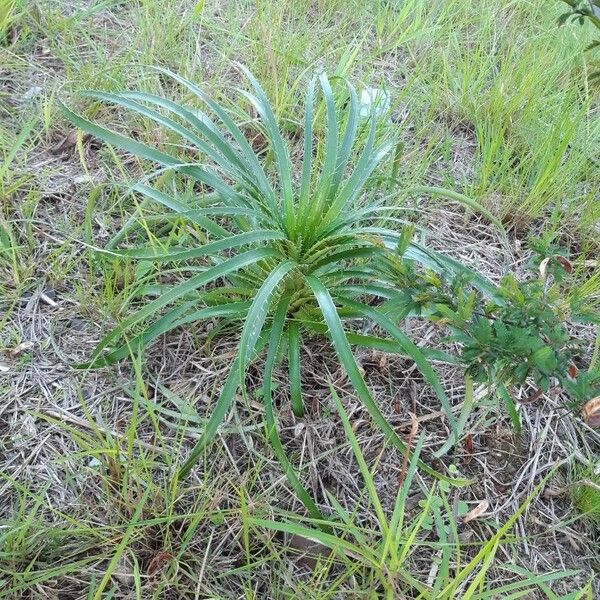
Known as the Caraguatá or the aptly named Horrid Sea Holly, this striking perennial is anything but "horrid" to look at. Its name is a nod to the formidable armor of spines that protect its foliage, a defense mechanism evolved for the rugged South American grasslands. It brings a dramatic, architectural silhouette to the landscape, often looking more like an exotic desert relic than a member of the carrot family.
🔍 How to Identify
- 🌿 The Rosette: Large, sword-shaped leaves arranged in a dense spiral. The edges are lined with sharp, saw-like teeth that can be quite stiff.
- 📏 The Stature: When in bloom, it sends up a towering, branched flower stalk that can reach heights of 5 to 8 feet, dominating the garden skyline.
- 🌼 The Blooms: Small, greenish-white or silvery flowers clustered into tight, egg-shaped heads, each surrounded by a prickly "collar" of bracts.
🏡 In Your Garden
- ☀️ Sun & Drainage: This plant is a sun-worshipper. It requires a bright spot to maintain its silvery-green color and sturdy structure. It thrives in well-draining, even poor or sandy soil.
- ⚓ The Taproot: Like many of its cousins, it grows a deep taproot. This makes it incredibly drought-tolerant once established, but it also means it "hates" being moved—choose its permanent home carefully!
- 🦋 Wildlife Value: Despite its prickly exterior, it is a haven for pollinators. Bees, wasps, and butterflies are magnetically attracted to the nectar-rich flower heads.
⚠️ Safety & Toxicity
- ⚔️ Physical Danger: The primary risk is mechanical. The spines are sharp and rigid; they can easily puncture skin or snag the fur of curious pets.
- 🧤 Handling: Always wear heavy-duty gardening gloves when pruning or clearing old foliage. It is best planted at the back of a border, away from paths where people might brush against it.
- 🐾 Toxicity: It is generally considered non-toxic to cats, dogs, and horses if nibbled, though the sharp leaves usually deter any actual consumption.
✨ Fun Fact
- 🧵 Fiber Source: In its native Brazil and Argentina, the tough, long-lasting fibers found inside the leaves have been used historically to create durable ropes and coarse textiles!

Detailed Care Instructions
To successfully grow Eryngium horridum, also known as Mexican devil or coyote thistle, follow these steps:
- Climate and location: Make sure your climate is suitable for growing this plant. Eryngium horridum thrives in full sun and hot, arid conditions, so choose a location with well-draining soil and plenty of sunlight.
- Soil preparation: Prepare the soil by adding organic matter or compost to improve drainage and fertility. This plant prefers slightly alkaline to neutral soil, so adjust the pH if needed.
- Propagation: Eryngium horridum can be propagated either from seeds or by dividing established plants. If starting from seeds, sow them in a seed tray or directly in the ground during the spring or early summer. Keep the soil moist until the seeds germinate.
- Watering: Once established, Eryngium horridum is fairly drought-tolerant. Water the plants regularly until they are established, then provide water only during dry spells or prolonged periods without rainfall.
- Mulching: Apply a layer of organic mulch around the base of the plant to conserve moisture, suppress weeds, and regulate soil temperature.
- Pruning: Remove any dead or wilted leaves to help maintain the plant's health and appearance. Eryngium horridum may need to be pruned after flowering to encourage a more compact growth habit.
- Pests and diseases: This plant is relatively resistant to pests and diseases. However, keep an eye out for aphids, slugs, or snails. If necessary, use organic pest control methods to manage these issues.
- Pollinators: Eryngium horridum is attractive to bees, butterflies, and other pollinators. Encourage their presence by avoiding the use of chemical insecticides.
Remember to check the specific growing requirements for your region, as some adaptations may be necessary based on your local climate and soil conditions.
To water this plant, ensure that the soil is moist but not waterlogged. Water the plant deeply once a week, and reduce the amount of water during the cooler months. The plant prefers well-draining soil, so avoid letting water collect around the roots. Additionally, avoid wetting the foliage when watering, as this can promote disease. Instead, water the plant directly at the base, allowing the water to penetrate the soil. Regular watering will help ensure healthy growth and prevent the plant from becoming stressed due to lack of water.
To fertilize this plant, apply a balanced, slow-release fertilizer in the early spring and again in the early summer. Be sure to follow the recommended dosage on the fertilizer packaging. Additionally, work compost or other organic matter into the soil around the plant to provide additional nutrients. Avoid fertilizing too late in the growing season as this can promote excessive vegetative growth at the expense of flowering.
Eryngium Horridum requires a well-draining soil mix that is rich in organic matter. The soil should be slightly acidic with a pH between 5.5 and 6.5. A sandy loam soil with a good balance of sand, clay, and silt is ideal for this plant. The soil should not be too porous or too compact, as the plant requires a balance of air and water in the root zone. Adding perlite or coarse sand to the soil mix can improve drainage. Organic fertilizers can also be added to the soil mix to provide necessary nutrients. It is important to avoid over-watering as the plant is drought-tolerant and can be susceptible to root rot in moist soil.
Eryngium Horridum can be propagated through seed or vegetative means such as stem cuttings or division. To propagate through seeds, collect ripe seed heads and sow them in well-draining potting mix. Cover the seeds with a thin layer of soil and water gently. Keep the soil moist and place the container in a bright, warm location. The seeds should germinate in a few weeks.
For vegetative propagation through stem cuttings, take a 4-6 inch long cutting from a healthy plant. Remove the lower leaves and dip the cut end in rooting hormone. Plant the cutting in well-draining soil and keep it moist. Place the container in a bright, warm location and mist the cutting with water regularly. The cutting should root within a few weeks.
To propagate through division, dig up the plant and carefully separate the roots into smaller sections. Each section should have a few stems and a healthy root system. Plant the sections in well-draining soil and water gently. Keep the soil moist and place the container in a bright, warm location. The sections should establish and grow within a few weeks.








