Plant Overview
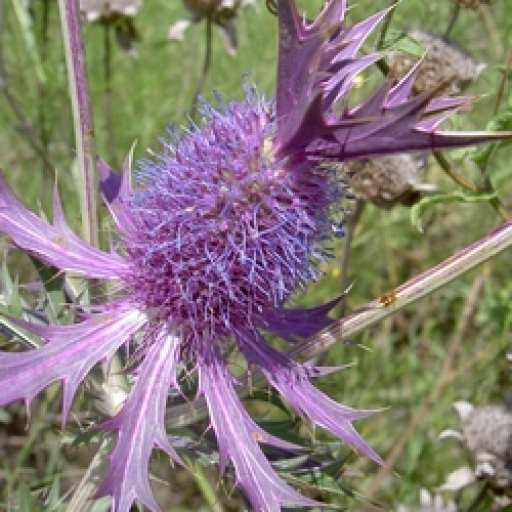
Often called "Leavenworth's Eryngo" or the "Purple Pineapple," this striking North American native looks like it belongs on a distant planet rather than a Texas prairie. Despite its prickly, thistle-like appearance, it is actually a member of the Carrot family (Apiaceae). It is a show-stopper in late summer, transforming from a subtle green to a vivid, metallic violet that commands attention.
🔍 How to Identify
- 🎨 The Bloom: A dense, cylindrical flower head that matures into an intense, glowing purple. It is surrounded by spiky, leaf-like bracts at the base and top.
- 🍍 The Topknot: A small tuft of purple, spine-tipped leaves grows directly out of the top of the flower cluster, creating a distinct "pineapple" silhouette.
- ⚔️ The Foliage: The leaves are stiff, deeply lobed, and armed with sharp points. They have a silver-green tint that provides a beautiful contrast to the violet flowers.
🏡 In Your Garden
- 🏜️ Survivor Instincts: This plant is a champion of dry, rocky, or sandy soils. It thrives in high heat and requires very little water once established, making it perfect for "xeriscaping" or low-maintenance rock gardens.
- 🚫 The Taproot Trap: Like many of its relatives, it grows a long, sturdy taproot. This makes it incredibly drought-resistant, but it also means it hates being moved. Once you plant it, avoid transplanting it, as the root is easily damaged.
- 🦋 Pollinator Magnet: While it looks intimidating to humans, bees and butterflies find the nectar-rich purple cones irresistible. It is a vital late-season food source for migrating insects.
⚠️ Safety & Toxicity
- 🛡️ Physical Hazard: This plant is not considered toxic if ingested by humans or pets, but it is physically "aggressive." The spines are quite sharp and can easily puncture skin or paws.
- 🧤 Handling: Always wear thick gardening gloves when pruning or collecting seeds. It is best planted away from high-traffic walkways where children or pets might accidentally brush against it.
✨ Fun Fact
Leavenworth's Eryngo is a favorite among florists because it is a true "everlasting" flower. Even after the plant dies or is cut, the flower heads retain their brilliant purple pigment for months, making them perfect for dried floral arrangements.

Detailed Care Instructions
To successfully grow Eryngium leavenworthii, also known as Leavenworth's eryngo or Eryngo cactus, follow the steps below:
- Obtain seeds or young seedlings: You can purchase seeds or young plants from local nurseries or online seed suppliers. It is essential to ensure that the plant is suitable for your climate.
- Select an appropriate location: Eryngium leavenworthii thrives in full sun, so select a location that receives at least six hours of direct sunlight daily. It prefers well-draining soil with a slightly acidic to neutral pH.
- Prepare the soil: Amend the soil with organic matter, such as compost, to improve drainage and nutrient content. Eryngium leavenworthii prefers slightly sandy soil, so adding coarse sand can help promote drainage.
- Planting: Sow the seeds directly into the prepared soil, or transplant young seedlings at least 12-18 inches apart, as they require sufficient space to grow. The ideal planting time varies depending on your climate, but it is generally recommended to plant in late spring or early summer.
- Watering: Eryngium leavenworthii has moderate water needs. Keep the soil consistently moist but not soggy. Water deeply once or twice a week, allowing the soil to dry out slightly between watering. During hot and dry periods, provide additional water to prevent drought stress.
- Mulching: Apply a layer of organic mulch around the plants to help conserve moisture, suppress weed growth, and moderate soil temperature. Keep the mulch a few inches away from the base of the plants to prevent stem rot.
- Fertilization: Eryngium leavenworthii does not require heavy feeding. However, you can apply a balanced, slow-release fertilizer in early spring to provide necessary nutrients. Follow the manufacturer's instructions for application rates.
- Pruning: You can trim back the spent flower stalks to encourage new blooms and maintain a more compact shape. Prune any damaged or dead foliage as needed.
- Protect from extreme weather: In regions with harsh winters, Eryngium leavenworthii may need protection from frost or freezing temperatures. Consider covering the plant with a frost cloth or bringing it indoors during winter.
- Pests and diseases: Eryngium leavenworthii is relatively resistant to pests and diseases. However, keep an eye out for common garden pests like aphids, spider mites, or snails. Apply organic pest control methods if necessary.
With proper care and suitable growing conditions, Eryngium leavenworthii should thrive and reward you with attractive blue or purple flowers and unique, spiky foliage.

Place in a bright room that is sun drenched almost all day. Or directly in a south-facing window.

- Find a suitable watering can or hose with a sprinkler attachment.
- Ideally, use a can or sprinkler with small holes or a gentle spray to mimic rainfall and prevent damage to the plant.
- Ensure that the watering can or hose is clean to avoid spreading any potential diseases.
- Fill the watering can with clean, room temperature water.
- Position yourself close enough to the plant, ensuring you can accurately water the soil without splashing the leaves excessively.
- Start watering from the base of the plant, directing the water towards the soil around the roots.
- Avoid watering the leaves directly as this can increase the risk of fungal diseases and damage delicate foliage.
- Water slowly and evenly, allowing the water to soak into the soil rather than running off.
- Ensure you water the entire root area, as Eryngium Leavenworthii plants have a deep root system.
- Monitor the soil moisture level and water the plant when the top inch of soil feels dry to the touch.
- Avoid overwatering the plant, as this can lead to root rot and other issues.
- During dry spells or in hot weather, water the plant more frequently to prevent drought stress.
- Mulching around the base of the plant can help retain moisture in the soil and reduce the frequency of watering.
- Take note of any specific watering recommendations or considerations for Eryngium Leavenworthii provided by the nursery or plant care guides.
- Adjust your watering routine based on the specific needs of your plant and the conditions in your environment.
To fertilize the Eryngium Leavenworthii plant, you can follow these instructions:
- Choose a balanced fertilizer with equal ratios of nitrogen (N), phosphorus (P), and potassium (K). A 10-10-10 or 20-20-20 fertilizer is suitable.
- Dilute the fertilizer according to the manufacturer's instructions. Generally, a ratio of 1 tablespoon of fertilizer per gallon of water is recommended.
- Water the Eryngium Leavenworthii plant thoroughly before applying the fertilizer to ensure the soil is moist.
- Pour the diluted fertilizer solution around the base of the plant, avoiding direct contact with the leaves or stems.
- Use a watering can or a low-pressure hose attachment to apply the fertilizer evenly and prevent excessive runoff.
- Repeat the fertilization process every 4-6 weeks during the growing season, typically from spring to early fall.
- Monitor the plant's response to the fertilizer. If the leaves become yellowish or show signs of burning, reduce the fertilizer concentration or frequency. On the other hand, if the plant appears stunted or lacks vigor, you can increase the fertilizer amount slightly.
Remember to always read and follow the instructions provided on the fertilizer packaging and adjust the fertilization schedule based on the specific needs of your Eryngium Leavenworthii plant.
Eryngium leavenworthii is a plant species that requires specific soil conditions to thrive. It is recommended to use a well-draining soil mix that is rich in organic matter. A suitable soil for Eryngium leavenworthii should have a neutral to slightly acidic pH level, ideally ranging from 6.5 to 7.5.
The soil should be loose and loamy, allowing for easy root penetration and sufficient aeration. It should also retain moisture well without becoming waterlogged, as excessive moisture can lead to root rot and other fungal diseases. Thus, a soil mix that provides adequate drainage is crucial.
Additionally, Eryngium leavenworthii prefers a soil that is fertile and nutrient-rich. You can enrich the soil with organic matter such as compost or well-rotted manure, which helps in improving soil fertility and supplying essential nutrients.
Overall, Eryngium leavenworthii thrives in a well-draining, slightly acidic to neutral, fertile, and nutrient-rich soil. Providing these optimum soil conditions will support the healthy growth and development of the plant.
Eryngium leavenworthii is a perennial plant belonging to the Apiaceae family. Propagation of this plant can be achieved through various methods such as seed propagation, division, or stem cuttings. Here are some details about each propagation method:
- Seed Propagation:
- Collect mature seeds from the plant: Wait for the plant to produce seed heads, which can be identified by their mature brown color.
- Harvest the seeds: Gently remove the seed heads and collect the seeds. Ensure that the seeds are dry and free from debris.
- Prepare the planting medium: Use a well-draining mix consisting of peat moss or coco coir, perlite, and vermiculite.
- Sow the seeds: Scatter the seeds on the surface of the planting medium and gently press them in. Do not cover the seeds with soil.
- Provide appropriate conditions: Place the planting tray in a warm and brightly lit area like a greenhouse or a sunny window sill. Maintain a temperature of around 70-75°F (21-24°C).
- Watering and care: Keep the planting medium consistently moist but avoid overwatering. Germination should occur within a few weeks.
- Transplanting: Once the seedlings have grown large enough, they can be transplanted into pots or directly into the garden.
- Collect mature seeds from the plant: Wait for the plant to produce seed heads, which can be identified by their mature brown color.
- Division:
- Choose a mature plant: Identify a well-established Eryngium leavenworthii plant with multiple crowns or clumps.
- Prepare the new planting site: Clear the area where you intend to replant the divided segments from any weeds or debris.
- Dig up the plant: Carefully dig around the base of the plant, ensuring not to damage the root system.
- Divide the plant: Use a sharp, clean knife or garden spade to separate the plant into smaller segments, ensuring that each segment has healthy roots.
- Replant the divisions: Dig individual holes for each divided segment, ensuring they are planted at the same depth as their original placement.
- Watering and care: Water the newly transplanted divisions thoroughly and keep the soil moist for a few weeks until they become established.
- Choose a mature plant: Identify a well-established Eryngium leavenworthii plant with multiple crowns or clumps.
- Stem Cuttings:
- Select a healthy stem: Identify a non-flowering stem that is at least 3-4 inches long with no signs of disease or damage.
- Prepare the cutting: Using a sterile pair of pruning shears, make a clean cut just below a node on the selected stem.
- Remove lower leaves: Strip off the leaves from the lower half of the cutting.
- Hormone treatment (optional): Some gardeners choose to dip the cut end of the stem in a rooting hormone powder to encourage root development.
- Planting the cutting: Insert the cut end of the stem into a well-draining soil medium or a mix of perlite and vermiculite.
- Provide appropriate conditions: Place the cutting in a warm and brightly lit area, preferably under a propagation dome or plastic bag to maintain humidity.
- Mist the cutting: Periodically mist the cutting to maintain humidity and prevent dehydration.
- Root development: Roots should start to form within a few weeks.
- Transplanting: Once the roots have developed, the cutting can be transplanted into a larger container or directly into the garden.
By following these propagation techniques, you can successfully propagate Eryngium leavenworthii and expand your garden with this unique and beautiful plant.
- Select a healthy stem: Identify a non-flowering stem that is at least 3-4 inches long with no signs of disease or damage.








