Plant Overview
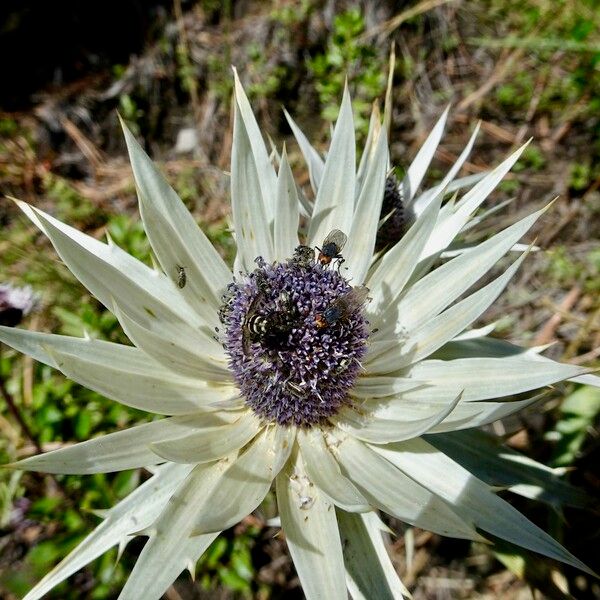
Known as the Protea-flowered Sea Holly, this striking perennial looks like it was forged from silver and steel rather than grown from soil. Hailing from the high-altitude mountains of Mexico, it brings an otherworldly, architectural beauty to any "moon garden" where its metallic bracts shimmer under the light of the stars. It is often nicknamed the "Silver Star" for its luminous, star-shaped flower heads that remain beautiful even after they have dried.
🔍 How to Identify
- ❄️ The Bracts: The most distinctive feature is the circle of 10–20 stiff, pointed, silvery-white bracts that frame the central flower like a jagged halo.
- 🛡️ The Foliage: It produces a basal rosette of narrow, sword-shaped leaves that are deep green with a leathery texture and sharp, spine-toothed margins.
- 🏗️ Growth Habit: It grows in a sturdy, clump-forming fashion, sending up thick, upright stems that can reach nearly 3 feet in height during the blooming season.
🏡 In Your Garden
- 🏜️ Drainage is Key: This plant thrives in "lean" soil that mimics its rocky mountain origins; it is highly susceptible to root rot if left in heavy, wet clay.
- ⚓ The Taproot: Like many in its genus, it develops a long, singular taproot. This makes it incredibly drought-tolerant once established, but it means the plant hates being transplanted—pick its "forever home" carefully!
- 🦋 Pollinator Magnet: Despite its prickly appearance, the central cones are packed with nectar, making it a favorite landing pad for bees and butterflies.
⚠️ Safety & Toxicity
- 🌵 Status: Non-toxic but physically defensive.
- 🧤 Details: While not poisonous to humans, cats, or dogs, the leaves and flower bracts are very sharp. Always wear thick gardening gloves when pruning or handling to avoid painful punctures.
✨ Fun Fact
Despite its thistle-like armor and exotic, desert-like appearance, Eryngium proteiflorum is actually a member of the Apiaceae family—making it a distant, prickly cousin to carrots, celery, and parsley!

Detailed Care Instructions
To grow Eryngium proteiflorum, also known as sea holly, you need to follow these steps:
- Location: Choose a sunny location in your garden or balcony as Eryngium proteiflorum requires full sunlight for proper growth.
- Soil: Ensure that the soil is well-draining and slightly acidic to neutral (pH 6.0 to 7.0). Work organic matter into the soil to improve its structure and fertility.
- Planting: Sow the seeds directly into the soil in spring after the last frost date, or you can start them indoors 8-10 weeks before the last frost date. Place the seeds shallowly in the soil, about 1/4 inch deep, and then lightly cover them with soil.
- Watering: Keep the soil evenly moist during the germination period, which usually takes 20-30 days. After the seedlings emerge, reduce watering frequency and allow the soil to dry partially between waterings. Avoid overwatering, as it can lead to rotting.
- Transplanting: If you started the seeds indoors, transplant the seedlings outdoors after the danger of frost has passed and the temperature is consistently above 50°F (10°C). Space the plants around 12-24 inches apart, depending on the specific variety.
- Fertilization: Eryngium proteiflorum doesn't require heavy fertilization. You can apply a balanced fertilizer, such as a 10-10-10 formula, in early spring or use compost as a natural source of nutrients.
- Mulching: Apply a layer of organic mulch around the base of the plant to help retain moisture and suppress weeds. Be careful to keep the mulch away from the stem to prevent rotting.
- Pruning: Prune the spent flower stalks to encourage continuous blooming and remove any dead or damaged foliage. You can also cut back the plant after flowering to promote a second flush of blooms.
- Pest and disease control: Eryngium proteiflorum is relatively resistant to pests and diseases. However, keep an eye out for aphids, slugs, or snails, and address any infestations promptly using suitable organic or chemical controls.
- Winter care: Eryngium proteiflorum is typically hardy in USDA Hardiness Zones 5-9. In colder climates, provide a layer of mulch around the base of the plant in late fall to protect it from harsh winter conditions.
By following these steps, you can successfully grow Eryngium proteiflorum and enjoy its unique and beautiful flowers.

Place in a bright room that is sun drenched almost all day. Or directly in a south-facing window.

To water the plant with the scientific name Eryngium proteiflorum, one should first ensure that the soil is not completely saturated or dry. To check soil moisture, simply insert a finger about an inch deep into the soil - if the soil feels dry, it is time to water the plant.
When watering, use room temperature water and pour slowly into the soil around the base of the plant, being careful not to get water on the leaves. It is important not to overwater as Eryngium proteiflorum prefers slightly drier soil. In general, it is better to underwater than overwater this plant.
During the growing season, water the plant frequently enough to keep the soil slightly moist. In the winter, however, the plant should be watered sparingly as it goes dormant.
For best results, fertilize this plant with a balanced fertilizer once a month during the growing season (spring and summer). Use a dilute solution to avoid burning the roots. Additionally, consider applying a slow-release fertilizer at the beginning of the growing season to provide nutrients throughout the year. Always follow the instructions on the fertilizer packaging and avoid over-fertilizing, as this can lead to excessive growth and weaker plants.
The Eryngium Proteiflorum plant prefers a well-draining soil that is slightly alkaline and has a high concentration of organic matter. The ideal soil type should be a sandy loam with good drainage properties. Adding compost or other organic matter to the soil can improve structure and provide essential nutrients. It is also important to ensure that the soil is not too compact, as this can hinder root growth and lead to poor plant performance. Overall, the ideal soil for this plant should provide good nutrient uptake, sufficient moisture and air circulation, and be free from any harmful contaminants or pollutants.
To propagate this plant, you will need to collect seeds from healthy and mature plants. Once you have collected the seeds, remove any debris or foreign objects from them. Then, you can sow them directly into well-draining soil in pots or planting trays.
After sowing the seeds, make sure to keep the soil consistently moist and warm. Avoid exposing the seeds to extreme temperatures or direct sunlight.
Once the seeds have germinated and the seedlings are large enough, you can carefully transplant them into individual pots or into your garden. Ensure that they are planted in well-draining soil with adequate sunlight and water.
Alternatively, you can propagate Eryngium Proteiflorum through stem cuttings. Take cuttings from mature and healthy plants, making sure to include a few nodes. Dip the cuttings in rooting hormone and plant them in well-draining soil. Keep them consistently moist and warm until they have developed roots and are ready for transplantation.
Overall, propagating this plant requires patience, attention to detail, and proper care. With the right techniques, you can successfully grow new and healthy plants from seeds or cuttings.








