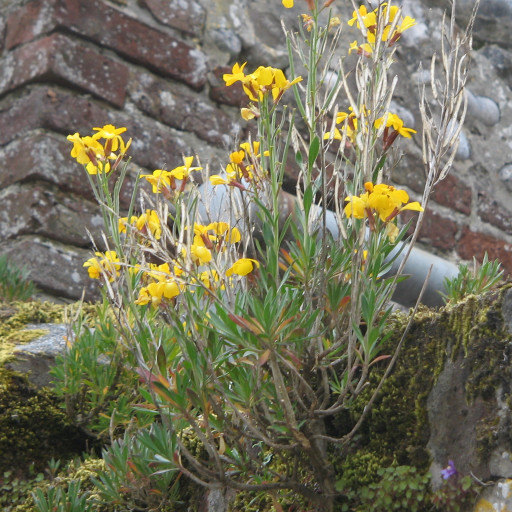
Plant Overview
Known as the "English Wallflower" or "Gillyflower," this hardy Mediterranean native has been a staple of romantic cottage gardens for centuries. Its name stems from its remarkable ability to sprout from the mortar cracks of old stone walls and castle ruins. In the Victorian "language of flowers," gifting a wallflower signified faithfulness in adversity, making it a symbol of enduring love.
🔍 How to Identify
- 🌸 Velvety Blooms: Features clusters of four-petaled flowers, often in rich shades of burnt orange, honey-yellow, or deep mahogany.
- 🍃 Slender Foliage: The leaves are narrow, lance-shaped, and a deep grayish-green, typically forming a bushy mound close to the ground.
- 👃 Intoxicating Scent: It is famous for a sweet, spicy fragrance reminiscent of cloves and violets, which becomes especially potent on warm spring afternoons.
🏡 In Your Garden
- 🧱 Crevice Specialist: True to its name, this plant thrives in well-drained, even lean or rocky soil. It prefers slightly alkaline (limy) conditions and hates "wet feet," which can quickly lead to root rot.
- ⏳ The Biennial Rhythm: While often sold in bloom, it is technically a biennial. This means it spends its first year growing lush foliage and its second year producing its spectacular floral show before dropping seeds for the next generation.
- 🦋 Pollinator Magnet: Because it blooms early in the spring, it provides a vital nectar source for bees and butterflies emerging from hibernation.
⚠️ Safety & Toxicity
- 🐾 Toxic to Pets: All parts of the plant, especially the seeds, contain cheiranthin, a cardiac glycoside. If ingested by dogs or cats, it can cause vomiting, tremors, or heart distress.
- 🧒 Caution for Kids: While not usually fatal in small amounts, ingestion can cause stomach upset and dizziness. It is a plant meant to be admired for its scent and color, never eaten.
✨ Fun Fact
Legend says a Scottish maiden once tried to climb down a castle wall to elope with her lover from a rival clan. She fell to her death, and a wallflower grew on the spot where she landed. Since then, it has been worn by wandering minstrels and troubadours as a sign of devotion.

Detailed Care Instructions
To grow Erysimum cheiri, or commonly known as wallflowers, you can follow these steps:
- Location: Choose a sunny spot in your garden where the plant will receive at least six hours of direct sunlight per day.
- Soil: Prepare well-draining soil with a pH level of 6-7. Wallflowers can tolerate a range of soil conditions, but they prefer slightly alkaline soil. Improve the soil by adding compost or well-rotted manure.
- Planting: Wallflowers can be grown from seeds or purchased as young plants. If starting from seeds, sow them indoors about 6-8 weeks before the last frost date. Transplant the seedlings outdoors when the soil has warmed up and there is no threat of frost. If using young plants, space them about 8-12 inches (20-30 cm) apart.
- Watering: Wallflowers are relatively drought-tolerant once established. Water them deeply about once a week, especially during dry periods. Avoid overwatering as it can lead to root rot.
- Mulching: Apply a layer of organic mulch around the plants to help retain moisture and suppress weed growth. Keep the mulch a few inches away from the plant stems to prevent moisture-related issues.
- Fertilizer: Apply a balanced, slow-release fertilizer in early spring or use a liquid fertilizer every 2-4 weeks during the growing season. Follow the package instructions for proper dosage.
- Deadheading: Regularly deadhead the spent flowers to encourage continuous blooming and prevent the plant from going to seed prematurely.
- Pruning: To maintain a compact and bushy shape, prune the plant lightly after flowering. Trim back any leggy growth or remove any damaged or diseased branches.
- Pests and diseases: Wallflowers are generally resistant to pests and diseases, but keep an eye out for aphids, snails, and slugs. Treat any infestations promptly to prevent damage.
- Winter care: In areas with cold winters, wallflowers may benefit from a layer of mulch or a floating row cover for protection. Cut back any dead foliage in early spring before new growth appears.
By following these guidelines, you should be able to successfully grow Erysimum cheiri and enjoy their vibrant and fragrant blooms in your garden.

Place in a bright room that is sun drenched almost all day. Or directly in a south-facing window.

Erysimum Cheiri plants thrive with consistent moisture levels in their soil. To properly water this plant, you should first check the soil with your finger or a moisture meter to determine if it is dry to the touch. If so, it is time to water the plant.
The best way to water Erysimum Cheiri plants is to provide a slow, deep watering at the base of the plant. This allows the water to fully saturate the soil and reach the plant's root system. Be careful not to water the leaves or flowers, as this can lead to fungal diseases.
To avoid overwatering, it is important to allow any excess water to drain away from the plant. Make sure there are drainage holes in the pot or planting area, and remove any standing water that remains.
During periods of hot weather or drought, Erysimum Cheiri may require more frequent watering to stay healthy. Monitor the soil moisture regularly and adjust your watering schedule as needed.
Overall, proper watering is essential for the health and longevity of Erysimum Cheiri plants. With the right care and attention, these plants can be a beautiful addition to any garden or landscape.
Fertilize the Erysimum Cheiri plant every four to six weeks with a balanced, all-purpose fertilizer. Apply the fertilizer at half the recommended strength to avoid over-fertilization, which can lead to burned roots and foliage. Water the plant before and after applying fertilizer to help prevent fertilizer burn. During the growing season, top-dress the soil with compost or well-rotted manure to provide additional nutrients. Avoid fertilizing the plant during the dormant season.
When planting Erysimum Cheiri, it is recommended to use well-draining soil that is neutral to slightly alkaline in pH. The soil should be enriched with organic matter, such as compost or aged manure, to provide necessary nutrients. It is also important to ensure that the soil is not too heavy or compacted, as this can prevent proper root growth and lead to issues with drainage. Adding sand or perlite to the soil mix can help improve drainage and prevent soil compaction. Overall, the soil should be loose and friable, with good aeration and drainage capabilities to promote healthy root development and encourage optimal growth of the Erysimum Cheiri plant.
Erysimum Cheiri plants can be propagated through several methods, including stem cuttings, layering, and seed propagation. To propagate Erysimum Cheiri using stem cuttings, select a healthy stem from the parent plant and cut it at a 45-degree angle just below a node. Remove the lower leaves and dip the cut end in rooting hormone. Place the stem cutting in a pot filled with damp soil and cover it with a clear plastic bag to provide humidity. Keep the cutting in a warm, bright area and mist it with water regularly until it develops roots.
To propagate Erysimum Cheiri using layering, select a healthy branch from the plant and bend it down to the soil surface. Make a shallow cut on the underside of the branch and cover the cut area with soil. Secure the branch to the soil surface using a U-shaped wire or a bent paper clip. Water the soil regularly and the branch will develop roots in several months. Once the roots are established, cut the branch from the parent plant and transplant it to a new location.
Finally, Erysimum Cheiri can also be propagated by seed. Collect ripe seed pods from the parent plant and separate the seeds from the chaff. Sow the seeds directly in well-draining soil in spring or fall, and cover them with a thin layer of soil. Water the soil regularly and keep it moist until the seeds germinate in 1-3 weeks. Thin the seedlings to allow space for growth and transplant them to their final location when they reach around 3 inches in height.
Common pests of the wallflower include Aphids, snails. Make a habit of checking your wallflower frequently for pests so that any infestations can be caught and managed early.








