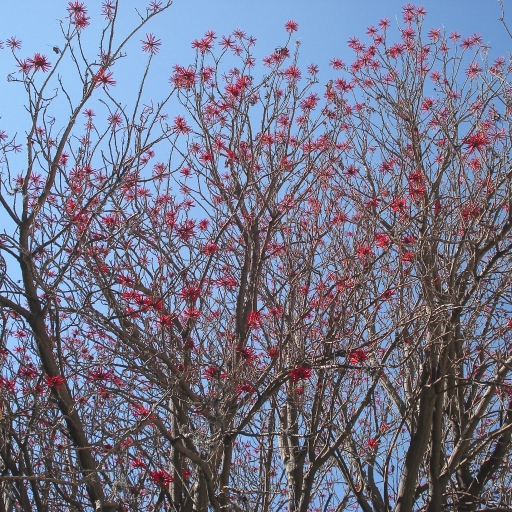
Plant Overview
Known as the Naked Coral Tree, this Mexican native is a true theatrical performer of the plant world. It earns its nickname because it produces stunning, sword-like crimson flowers on completely bare branches, creating a "flaming" silhouette before the foliage even appears. It is a favorite for those looking to add a dramatic, sculptural element to a sun-drenched landscape.
🔍 How to Identify
- 🔥 The Blooms: Densely packed, cone-shaped clusters of fiery red flowers that stand upright at the tips of branches, resembling sea coral or small torches.
- 🍃 Leaf Structure: Large, bright green leaves composed of three heart-shaped leaflets; these typically only emerge once the flowering period has finished.
- 🛡️ The Bark: Smooth, grayish bark that is often armed with short, stout woody prickles (thorns) along the trunk and older branches.
🏡 In Your Garden
- ☀️ Sun & Space: This tree is a sun-worshipper and thrives in intense heat. Because of its spreading canopy and thorny branches, it should be planted away from high-traffic walkways or play areas where someone might accidentally brush against it.
- 💧 Drought Strategy: Once established, it is remarkably drought-tolerant. It prefers "tough love"—well-draining soil and infrequent watering mimic its native dry forest habitat, preventing root rot and encouraging a more prolific bloom.
⚠️ Safety & Toxicity
- 🚫 Toxic Seeds: The bright red beans (seeds) produced in pods after flowering are highly toxic if ingested. They contain alkaloids that can affect the nervous system.
- 🐾 Pet & Child Safety: Keep a close eye on curious pets or children, as the colorful seeds can look remarkably like candy. The thorns also pose a physical puncture risk.
✨ Fun Fact
In many parts of Mexico, the wood of the Erythrina coralloides is so lightweight and easy to work with that it has been traditionally used by artisans to carve intricate ceremonial masks and lightweight figurines!

Detailed Care Instructions
To grow Erythrina coralloides, also known as the Naked Coral Tree, you can follow these steps:
- Choose an appropriate location: Erythrina coralloides thrives in full sun, so select a spot in your garden that receives at least 6 to 8 hours of direct sunlight per day.
- Prepare the soil: The plant prefers fertile, well-draining soil. Mix organic matter, such as compost or aged manure, into the soil before planting to improve its quality and drainage.
- Propagation: Erythrina coralloides can be grown from seeds or cuttings. If you have access to seeds, soak them in water for 24 hours prior to planting to help soften the seed coat and increase germination rates. For cuttings, select a healthy stem and make a clean cut just below a node. Remove any leaves from the bottom half of the cutting and dip it in a rooting hormone before placing it in moist soil or a well-draining propagation mix.
- Watering: While Erythrina coralloides prefers slightly moist soil, overwatering can be detrimental to its health. Water the plant thoroughly and deeply, allowing the soil to dry out slightly between watering sessions.
- Fertilization: Apply a balanced, slow-release fertilizer during the growing season to provide the plant with essential nutrients. Follow the instructions on the fertilizer package for proper application rates.
- Pruning: Pruning helps maintain the shape and size of the plant and encourages healthy growth and blooming. Prune Erythrina coralloides during the dormant season by removing dead or damaged branches and shaping it as desired.
- Pests and diseases: Erythrina coralloides is generally resistant to pests and diseases. However, keep an eye out for potential issues such as aphid infestations or root rot. If necessary, treat with appropriate organic or chemical remedies.
- Support: Erythrina coralloides is a legume tree and can develop a large root system that requires support. Ensure you provide a sturdy stake or support system to prevent the plant from leaning or falling over as it grows.
Remember to consult a local gardening expert or refer to specific information for your region for optimal care and growing conditions.

Place in a bright room that is sun drenched almost all day. Or directly in a south-facing window.

To provide optimal water requirements for the Erythrina Coralloides plant, you should consider the following factors:
1. Soil moisture: Erythrina Coralloides prefers well-draining soil, so ensure that the soil is not waterlogged. Before watering, check the moisture level by inserting your finger about one inch into the soil. If it feels dry, it's an indication that the plant requires watering.
2. Water quality: Use room temperature or lukewarm water for irrigating this plant. Avoid using cold water as it can shock the roots.
3. Watering frequency: The frequency of watering depends on various factors such as temperature, humidity, and the plant's growth stage. In general, water Erythrina Coralloides when the top inch of soil feels dry. However, it's important to strike a balance and avoid both overwatering and underwatering. Aim to water deeply, ensuring the water reaches the plant's root zone.
4. Watering technique: Rather than pouring water on the foliage, focus on delivering water directly to the soil. Take care not to splash water on the leaves or flowers, as this can lead to fungal diseases.
5. Drought tolerance: Although Erythrina Coralloides can withstand periods of drought, it's vital to water the plant during extended dry spells to maintain its health and vigor. Monitor the soil moisture level and adjust your watering schedule accordingly.
6. Container-grown plants: If you have Erythrina Coralloides in a container, ensure it has proper drainage holes at the bottom. When watering, allow excess water to drain away freely to prevent waterlogging, which can lead to root rot.
Remember, individual factors like climate, temperature, humidity, and plant maturity can affect watering needs. Always assess the plant's moisture requirement by observing its leaves, soil moisture, and overall growth, adjusting your watering routine accordingly.
To fertilize the Erythrina Coralloides plant, follow these instructions:
- Choose a balanced, water-soluble fertilizer with a ratio like 10-10-10 or 14-14-14 that contains equal parts of nitrogen, phosphorus, and potassium.
- Dilute the fertilizer according to the package instructions, usually mixing with water in a watering can or spray bottle.
- Apply the diluted fertilizer to the soil around the base of the plant, avoiding getting it on the leaves.
- Water the plant immediately after fertilizing to help the nutrients penetrate the soil and reach the plant's roots.
- Fertilize the Erythrina Coralloides plant every 4-6 weeks during the growing season, which is typically from spring to fall.
- Adjust the fertilization frequency based on the plant's response and the condition of the soil. If the plant shows signs of nutrient deficiency or if the soil lacks fertility, increase the frequency of fertilization.
Remember to read and follow the specific instructions provided with the fertilizer product you choose, as different brands may have varying guidelines. Additionally, monitor the plant for any signs of overfertilization, such as burnt or yellowing leaves, and adjust the amount of fertilizer accordingly.
When it comes to growing Erythrina Coralloides, also known as the plant with red flowers, it is essential to select the right soil composition for optimal growth. This species thrives in well-draining soil that is rich in organic matter. The soil should have a somewhat loamy texture with good water retention capacity but should never become waterlogged.
To prepare the ideal soil mix, start with a base of garden soil or potting soil that is specifically formulated for flowering plants. This provides a stable foundation for the plant's root system. Adding compost or well-rotted manure to the soil mix helps improve its fertility and organic content.
A crucial component is ensuring proper drainage, as Erythrina Coralloides does not tolerate standing water. To enhance drainage, incorporate perlite or coarse sand into the soil mixture. This helps prevent water from pooling around the roots and guards against root rot.
It is noteworthy that while Erythrina Coralloides enjoys moist soil, it also does not tolerate excessive watering. Hence, it is important to strike a balance between maintaining soil moisture and preventing waterlogged conditions. Regular watering, allowing the top few inches of soil to dry out between waterings, is typically recommended.
In terms of pH levels, Erythrina Coralloides thrives in slightly acidic to neutral soil, with a pH range of 6 to 7. To maintain the desired pH, garden lime or sulfur can be added to adjust the soil accordingly.
Lastly, it is beneficial to incorporate an organic mulch around the base of the plant. This helps conserve soil moisture, suppresses weed growth, and gradually enriches the soil as it decomposes.
By providing a well-draining, nutrient-rich, slightly acidic soil mixture, you will create an ideal growing environment for Erythrina Coralloides, resulting in optimal growth and the beautiful red flowers it is known for.
Propagation of Erythrina Coralloides can be done through several methods. One common method is by collecting and planting its seeds. When collecting the seeds, it is important to choose mature, healthy, and viable ones. After obtaining the seeds, they should be soaked in water for about 24 hours to enhance germination rates.
Once the seeds have been soaked, they can be directly sown into well-draining potting soil or a seed-starting mix. It is advisable to keep the soil consistently moist until germination occurs, which usually takes around two to four weeks. The seedlings should be provided with ample sunlight and maintained at a temperature of approximately 20-25°C (68-77°F).
Another propagation method for Erythrina Coralloides is through stem cuttings. For this method, a healthy stem should be chosen, preferably with a diameter of around 1-2 centimeters (0.4-0.8 inches). The cutting should be about 10-15 centimeters (4-6 inches) long and preferably taken from a branch that has not yet flowered.
After taking the cutting, any leaves on the lower half should be removed, leaving a few on the upper half to aid in photosynthesis. The base of the cutting should be treated with a rooting hormone to stimulate root development. The cutting can then be inserted into a well-draining potting mix, burying at least one node below the soil surface. It is recommended to keep the soil consistently moist until roots develop, which typically takes several weeks.
Additionally, Erythrina Coralloides can be propagated through layering. This method involves bending a lower, flexible branch towards the ground and covering a portion of it with soil, leaving the tip exposed. After securing the branch in place, it will start to develop roots within the covered section. Once sufficient root growth occurs, the rooted section can be detached from the parent plant and potted separately.
It is worth noting that Erythrina Coralloides can also be propagated through grafting, but this method requires more advanced knowledge and skills in horticulture. Therefore, it is recommended for experienced gardeners or professionals.








