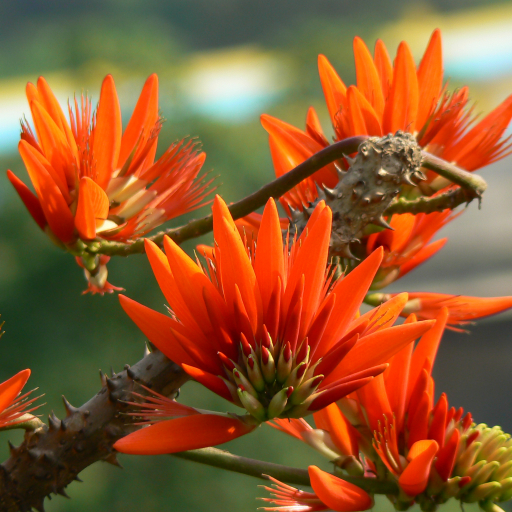
Plant Overview
Known as the Corky Coral Tree or Gul-e-Nishtar, this deciduous beauty is a rugged survivor with a flair for the dramatic. Often found gracing the landscapes of South Asia, it transforms from a prickly, bare-branched tree into a "living torch" of flaming red blossoms every spring. Its rugged appearance and brilliant floral display make it a favorite for both traditional medicine and ornamental landscaping.
🔍 How to Identify
- 🪵 Corky Bark: The most distinct feature is its thick, corky, and deeply furrowed light-grey bark. It feels spongy to the touch and provides the tree with incredible insulation against heat.
- 🔥 Scarlet Flowers: The flowers are pea-shaped, vibrant orange-red, and grow in dense, crowded clusters at the tips of the branches. They typically erupt in late winter or early spring while the tree is still leafless.
- 🍃 Trifoliate Leaves: When they appear, the leaves consist of three large, broad leaflets. They have a slightly velvety texture on the underside and often feature small, pale prickles along the midribs.
🏡 In Your Garden
- ☀️ Sun Worshiper: This tree thrives in full, direct sunlight. If planted in the shade, it will grow leggy and lose its ability to produce the dense clusters of flowers it is famous for.
- 🧱 Root Room: Because it develops a deep and powerful taproot, it is exceptionally drought-tolerant once established. However, this means it dislikes being moved; choose its permanent "forever home" in your garden carefully.
- 🐦 Wildlife Hub: The nectar-rich flowers are a massive draw for sunbirds, bees, and butterflies. If you want a garden buzzing with life during the spring, this is the tree to plant.
⚠️ Safety & Toxicity
- 🛑 Toxic Seeds: Most parts of the tree, particularly the seeds, contain erythroidine alkaloids. These can be dangerous if ingested by humans or animals.
- 🐾 Pet Warning: Keep a close eye on dogs that like to chew on sticks or seeds. Ingestion can lead to lethargy, drooling, or more serious neurological issues.
- 🌵 Prickly Defense: The branches are armed with small, sharp black prickles. It is best planted away from high-traffic walkways where people might accidentally brush against the thorns.
✨ Fun Fact
🎨 Natural Pigments: In traditional South Asian cultures, the bark of the Erythrina suberosa was historically boiled to create a natural yellow dye, while the vibrant flowers were used to produce a temporary red pigment for festive occasions.

Detailed Care Instructions
Erythrina suberosa, also known as the Indian coral tree, is a tropical plant that can be grown in warm climates. Here are some tips on how to grow Erythrina suberosa:
- Climate: Erythrina suberosa thrives in warm and humid tropical climates. It can tolerate some cooler temperatures, but frost should be avoided.
- Soil: The plant prefers well-draining soil that is rich in organic matter. A sandy loam soil is ideal for Erythrina suberosa.
- Sunlight: Erythrina suberosa requires full sunlight to thrive. Make sure to plant it in a sunny location with at least 6-8 hours of direct sunlight per day.
- Watering: Water the plant regularly, especially during dry periods. Make sure the soil is moist but not waterlogged.
- Fertilization: Apply a balanced fertilizer, such as a 10-10-10 formula, in the spring and summer months to promote healthy growth.
- Pruning: Regular pruning can help promote bushy growth and flowering. Remove dead or diseased branches and shape the plant as needed.
- Propagation: Erythrina suberosa can be propagated from seeds, cuttings, or by layering. Seeds should be sown in a warm, humid environment and will germinate in 1-2 weeks.
- Pests and diseases: Keep an eye out for common pests like aphids, spider mites, and scale insects. Treat any infestations promptly with insecticidal soap or neem oil. Watch for fungal diseases, such as powdery mildew or root rot, and take appropriate measures to prevent or treat them.
By following these tips, you can successfully grow and care for Erythrina suberosa in your garden or landscape.
Erythrina Suberosa plant should be watered regularly to keep the soil consistently moist, but not waterlogged. It is important to water the plant at the base of the stem rather than on the leaves to avoid causing damage. Check the soil moisture levels by inserting a finger into the soil to a depth of about an inch. If the soil feels dry, it is time to water the plant. During the summer months, the plant may require more frequent watering, while in the winter it may need less water. It is also important to ensure that the plant is not sitting in water as this can lead to root rot. Consider using a well-draining potting mix to prevent water-logging and allow excess water to drain away easily.
To fertilize the Erythrina suberosa plant, use a balanced liquid fertilizer diluted to half strength. Apply the fertilizer once a month during the growing season, which is typically spring and summer. Be sure to water the plant thoroughly before and after fertilizing to prevent root burn. Avoid overfertilizing, as this can cause nutrient imbalances and harm the plant.
Erythrina Suberosa plants thrive best in well-draining soil that is rich in organic matter. A sandy loam or loamy soil mixture is ideal for promoting healthy root growth and preventing waterlogging. The soil should have a slightly acidic to neutral pH level. Adding perlite or sand to the soil mixture can help improve drainage and prevent the soil from becoming compacted. It is also recommended to periodically amend the soil with organic fertilizers to provide essential nutrients for the plant's growth and development.
Erythrina Suberosa can be propagated through various methods such as seed propagation, cutting propagation, and division.
To propagate Erythrina Suberosa from seeds, harvest ripe seeds from the plant and sow them in well-draining soil. Keep the soil evenly moist and place the seeds in a warm, bright location. Germination can take several weeks to months.
Cutting propagation involves taking stem cuttings from a healthy Erythrina Suberosa plant and planting them in a well-draining potting mix. Keep the soil moist and place the cutting in a warm, bright location. Rooting can take a few weeks to a couple of months.
Division is another method of propagating Erythrina Suberosa. This involves dividing the plant into smaller sections, each with a portion of the root system. Plant the divided sections in individual pots with well-draining soil and keep them evenly moist. Place the pots in a warm, bright location to encourage new growth.
Overall, Erythrina Suberosa can be easily propagated through seeds, cuttings, or division, allowing you to propagate new plants and expand your collection.








